

What plants grow in the winter depends on how cold your soil gets. In mild climates, cool-season leafy plants such as kale keep producing new leaves through December and January. In cold climates, almost nothing grows above ground, but roots and evergreen leaves are still working.
That difference changes what you plant and when. A gardener in USDA Zone 8 can set out new leafy plants in late fall. A gardener in Zone 4 spends the same weeks protecting what is already in the ground.
What plants grow in the winter, and which only survive it?
Plants that actively grow in winter are cool-season species, mostly in the cabbage family, in places where the ground rarely freezes. Everything else either holds its leaves while dormant, like evergreens, or grows only underground. Knowing which group a plant belongs to tells you what to expect from it until spring.
Cool-season leaves that keep growing
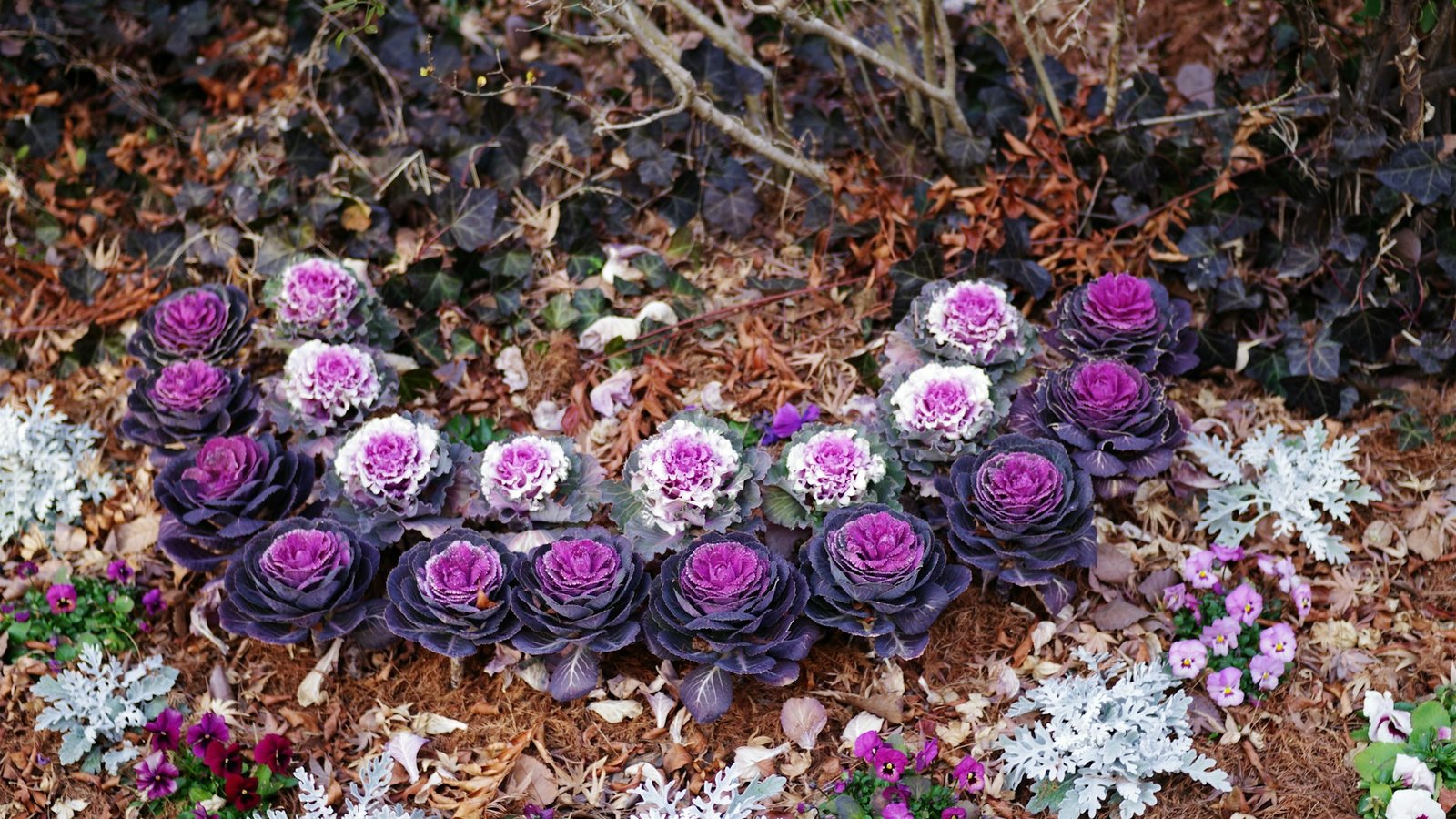
Kale and its ornamental cousins are the clearest example. Missouri Botanical Garden describes kale as a cool weather plant that performs poorly once daytime temperatures stay above 80°F. In mild winter climates it often survives winter and keeps producing leaves until it bolts in spring.
Ornamental cabbage and kale are foliage plants in the strict sense, grown for leaf color rather than harvest. NC State Extension notes that their white, pink, or red pigments begin to develop when temperatures dip below 50°F. Once acclimated, they can survive temperatures as low as 5°F.
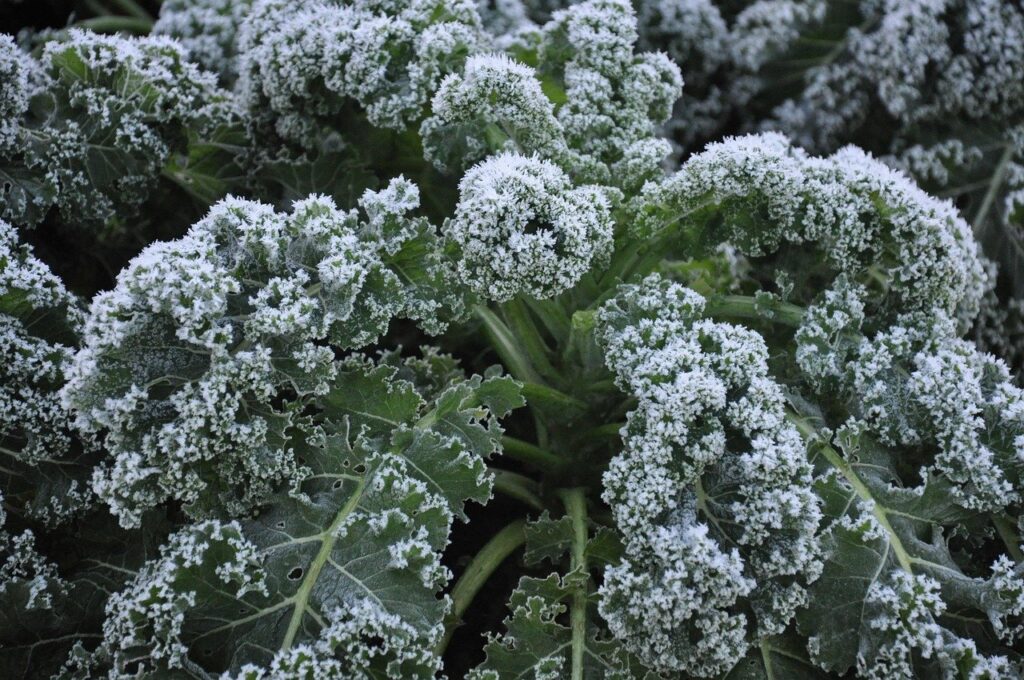
These are annuals, so they do the job for one cool season. In Zone 8a, NC State suggests buying transplants in fall and planting them in a sunny spot as temperatures start to cool.
Evergreens that hold their leaves
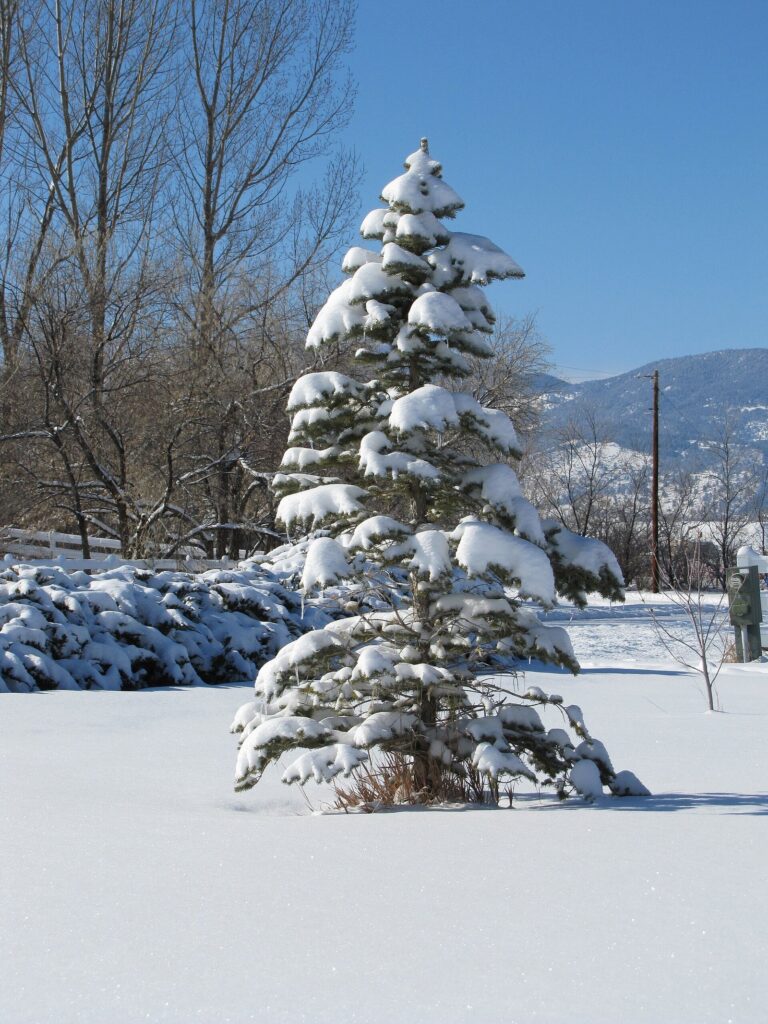
Evergreen shrubs and conifers keep their foliage all winter, but they are not growing much. Their needles and leaves still lose water on sunny, windy days. That is why they need moisture in the soil going into winter.
Colorado blue spruce, Picea pungens, is rated by Missouri Botanical Garden for USDA Zones 2 to 7. Inkberry holly, Ilex glabra, is a broadleaf evergreen rated for Zones 4 to 9. For a longer list of tough picks that handle both seasons, see our guide to plants that survive winter and summer.
Roots that keep working underground
Trees and shrubs go dormant above ground, but their roots sit in soil that stays warmer than the air. Where that soil does not freeze, roots keep growing on mild winter days.
Texas A&M AgriLife uses that fact to time planting. Its fruit specialists name December through February as the best time to plant most fruit trees in Texas. Winter planting lets trees build roots before they break dormancy in spring.
Plants to plant for winter, by climate
The right planting date depends on whether your ground freezes. Use the table as a starting point, then check your exact zone on the USDA Plant Hardiness Zone Map.
| Climate | Ground in winter | What to plant | When |
|---|---|---|---|
| Zones 8 to 10 | Rarely freezes | Ornamental kale and cabbage, leafy cool-season crops | Fall, as nights cool |
| Zones 8 to 10 | Rarely freezes | Dormant fruit trees and shrubs | December to February |
| Zones 6 to 7 | Freezes for weeks | Hardy perennials, evergreens, ground covers | Early fall, before hard frost |
| Zones 3 to 5 | Freezes for months | Hardy perennials and shrubs only | Late summer to early fall |
Cold-zone gardeners get the most from plants that cover soil and come back on their own. A low maintenance perennial ground cover planted in early fall has time to root before freeze-up. It also shields bare soil from winter erosion.
Field note
Fall-planted perennials and shrubs need water until the ground freezes. University of Minnesota Extension notes that dry conditions going into winter make plant tissue more prone to cold damage, especially on evergreens.
Protecting plants of winter from cold damage
Most winter losses happen below ground or through drying wind, not from cold air alone. University of Minnesota Extension explains why roots deserve the most attention.
Roots do not become dormant in the winter as quickly as stems, branches and buds. And roots are less hardy than stems.
University of Minnesota Extension, Protecting trees and shrubs in winter
University of Minnesota Extension adds that roots of most trees and shrubs grown in Minnesota die between 0°F and 10°F. Soil normally stays much warmer than the air, which is why those plants survive. Snow cover and mulch keep it that way.
Most of these steps cost nothing but good timing. They protect plants through a cold winter:
- Water heavily before the ground freezes if fall has been dry. Moist soil holds more heat than dry soil.
- Spread 3 to 4 inches of shredded wood mulch over the roots of new trees and shrubs, kept 6 inches from the trunk.
- Use a 4 to 6 inch mulch layer where repeated freezing and thawing heaves plants out of the ground.
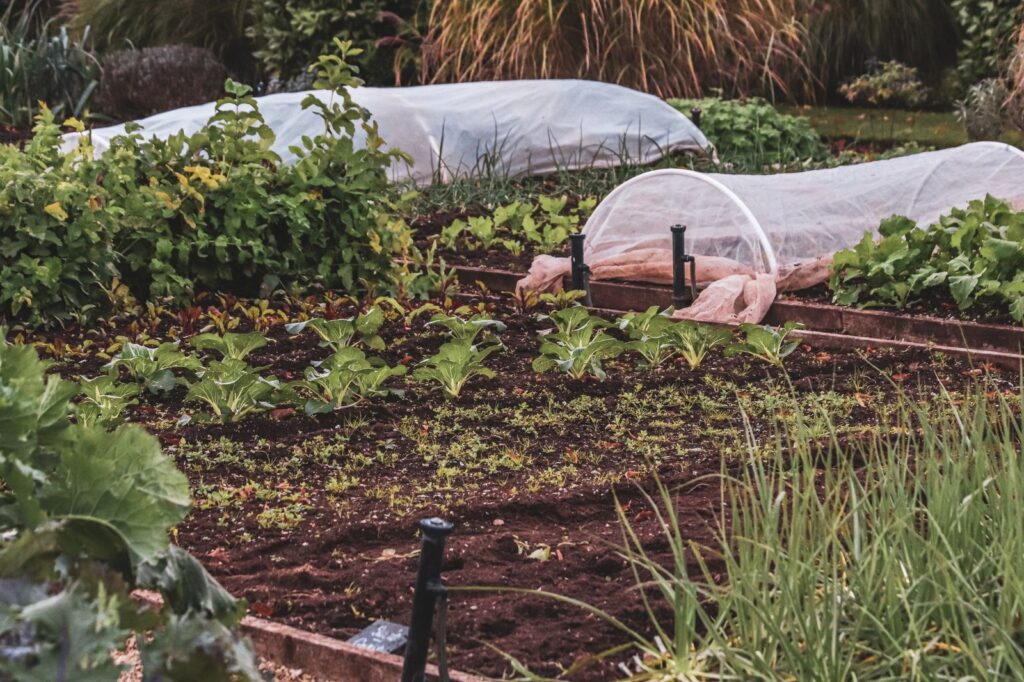
- Cover cool-season leafy plants with row cover fabric on the coldest nights.
Row cover weight matters. University of Maryland Extension rates lightweight fabric at about 2°F of frost protection. Medium weight gives 4°F to 6°F, and heavyweight up to 8°F, the two grades it recommends for overwintering crops.
Caution
Container plants lose the insulation that soil provides. Their roots sit closer to air temperature on every side. Move pots against a sheltered wall or into an unheated garage when a hard freeze is forecast.
Unlike tropical foliage that suffers chilling injury above freezing, hardy winter plants remodel their cell membranes to stay active in the cold.
Winter is the slowest season for most plants, but it is not idle. Roots settle in, evergreens hold their ground, and cool-season leaves keep growing where the soil allows. Plant with that rhythm, and spring starts with plants already established.
Questions & observations