

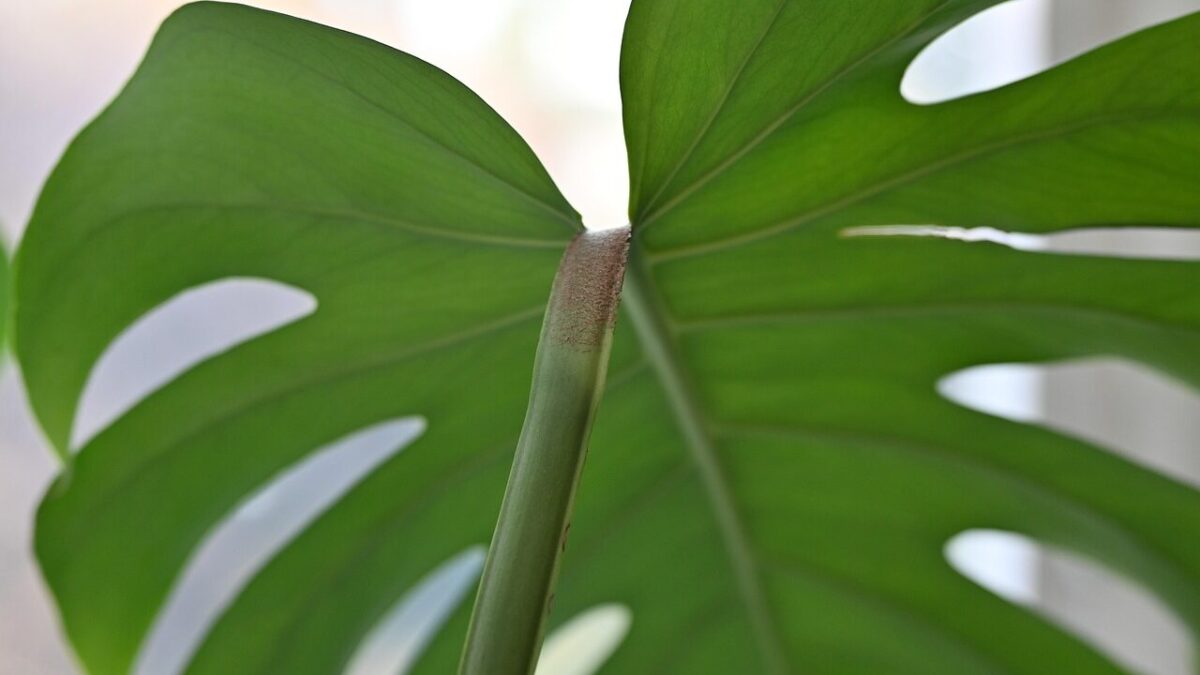
What is petiole in leaf anatomy? It is the stalk that joins a leaf blade to the stem and holds it out toward the light. On most foliage plants, this stalk also moves water in, sends sugar out, and marks where the leaf will later break away.
Gardeners tend to notice the petiole only when something goes wrong. A floppy stalk, a long pale one, or a leaf that drops at a touch each has a cause. Each one points to a specific process inside this small organ.
What Is Petiole in Leaf Anatomy?
The petiole is the leaf’s own stalk, and botanists count it as part of the leaf. The NC State Extension Gardener Handbook calls it a stem-like appendage that supports the leaf away from the stem. Its length varies widely between species.
That position matters for how foliage leaves function. A blade held a few inches out shades its neighbors less and catches more moving air. Both effects support photosynthesis and help the leaf surface dry after watering.
Petiolate and sessile leaves
Leaves with a stalk are called petiolate. Leaves without one attach directly to the stem, and NC State Extension calls them sessile, or stalkless. Most aroids, begonias, and prayer plants carry obvious petioles.
Stipules and the axillary bud
Two small features help you find where a leaf truly begins. Stipules are leaflike flaps that often grow in pairs near the base of the petiole. Willow, strawberry, and geranium carry them on the stem node, while rose and crabapple have them fused to the petiole.
The second marker is the bud tucked into the angle between petiole and stem. The NC State handbook explains why it matters:
“Although compound leaves may resemble a branch stem with several leaf blades attached, leaflets do not have an axillary bud at their base. An axillary bud demarcates the true base of the entire leaf organ structure.”
NC State Extension Gardener Handbook, Chapter 3: Botany
This rule settles a common houseplant puzzle. A compound frond with a central stalk counts as one leaf. Its leaflets have no buds, so the whole frond shares a single petiole.
Inside the Stalk: Plumbing and Support
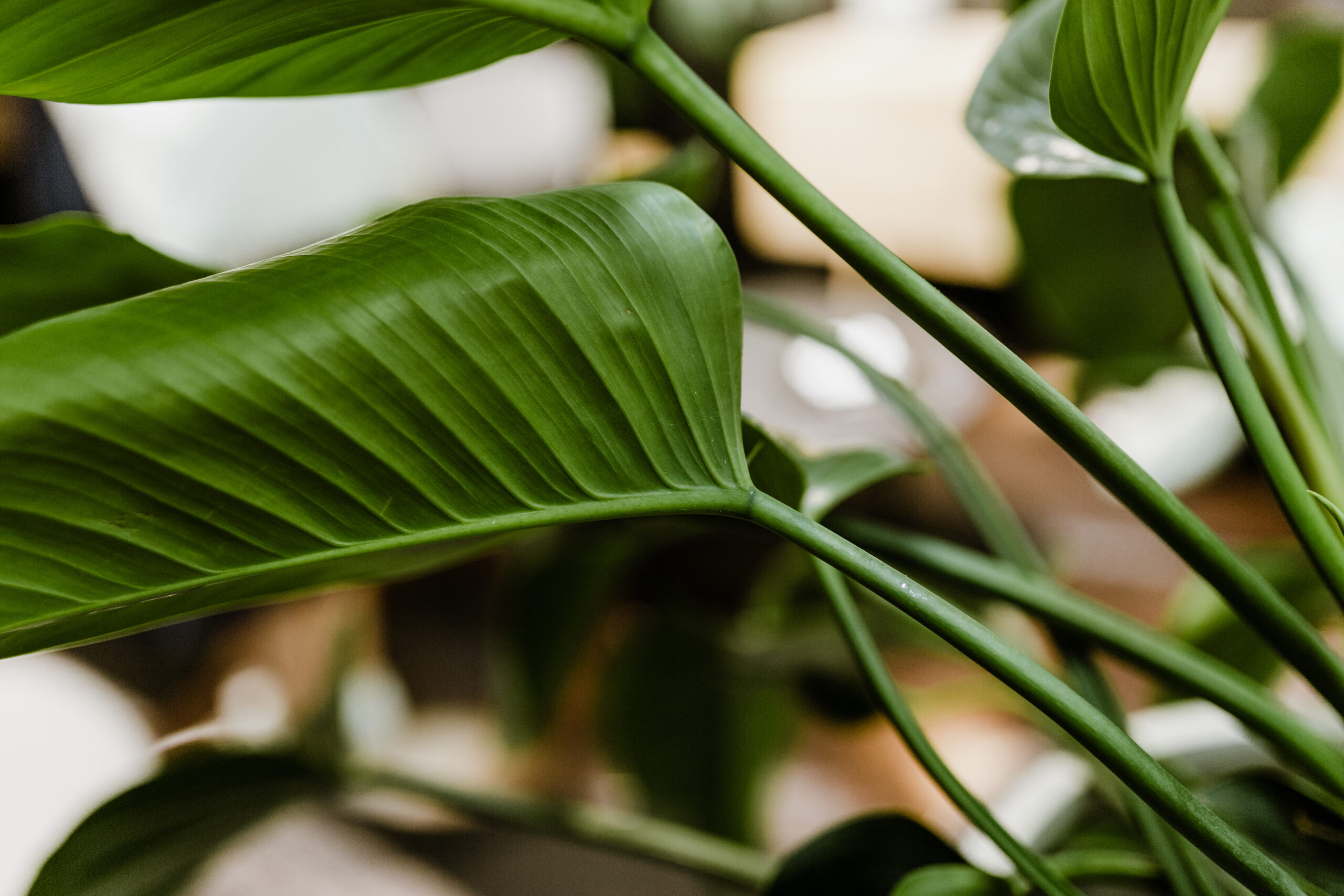
Every petiole carries vascular bundles that link the blade to the rest of the plant. Xylem moves water and dissolved minerals up into the leaf. Phloem carries the sugars made in the blade back toward roots, buds, and new growth.
The same tissues also bear weight. A large aroid leaf hangs from its petiole like a sign on a bracket. The stalk must stay firm yet flex in wind, so when water runs short, this support often fails first, and the leaf droops at the stalk.
Petioles shaped for special jobs
Some plants have reshaped the petiole for tasks well beyond holding a leaf. Four examples show how far the design can stretch:
| Plant | Petiole feature | What it does | Source |
|---|---|---|---|
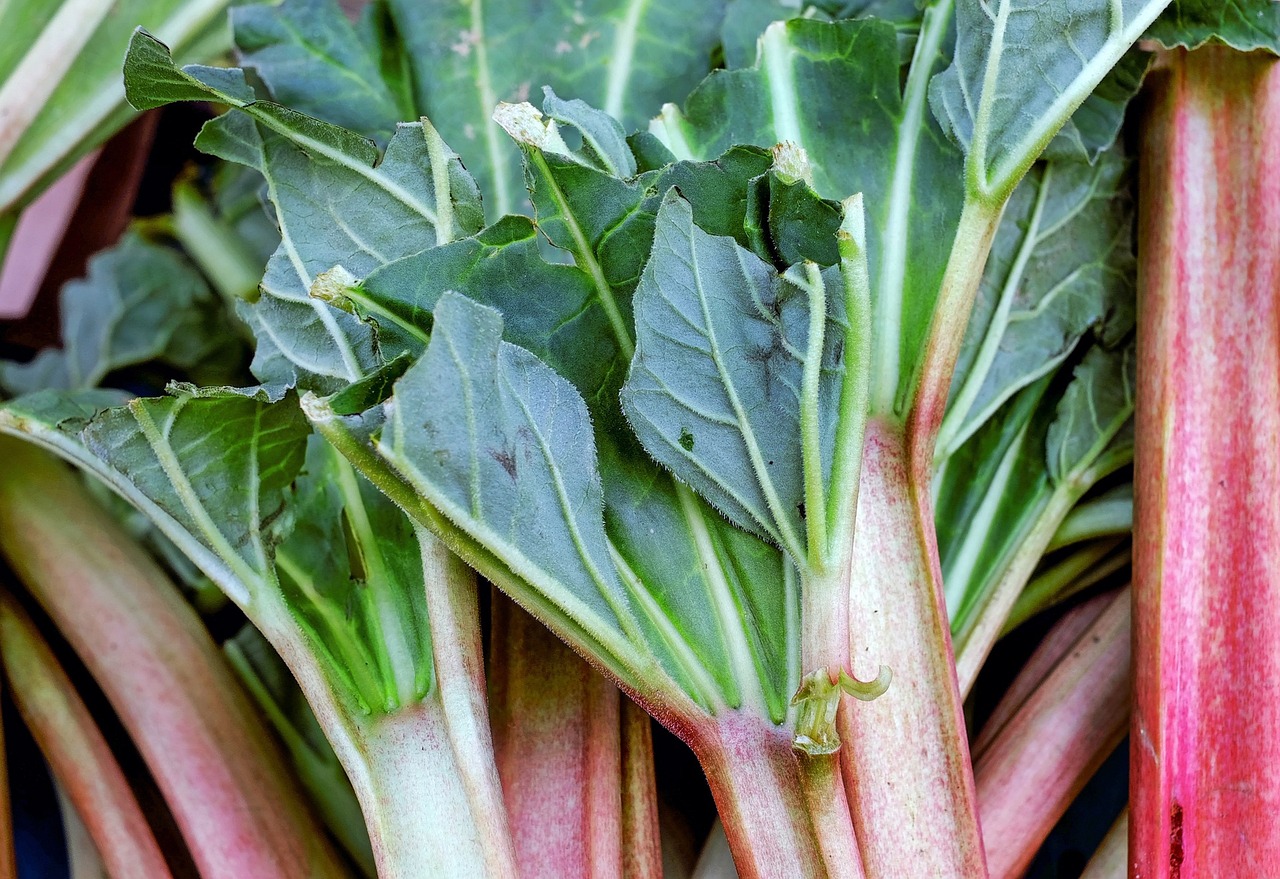
| Rhubarb (Rheum rhabarbarum) | Thick, fleshy leaf stalks | The edible part; the blades hold toxic levels of oxalic acid | Purdue University |
| Water hyacinth (Pontederia crassipes) | Spongy, inflated stalks | Keeps the rosette afloat; stalks grow thinner and more rigid when crowded | UF/IFAS Extension |
| Sensitive plant (Mimosa pudica) | Swollen pulvinus at the petiole base | Drops the leaf after touch through turgor loss | Plants (2020) |
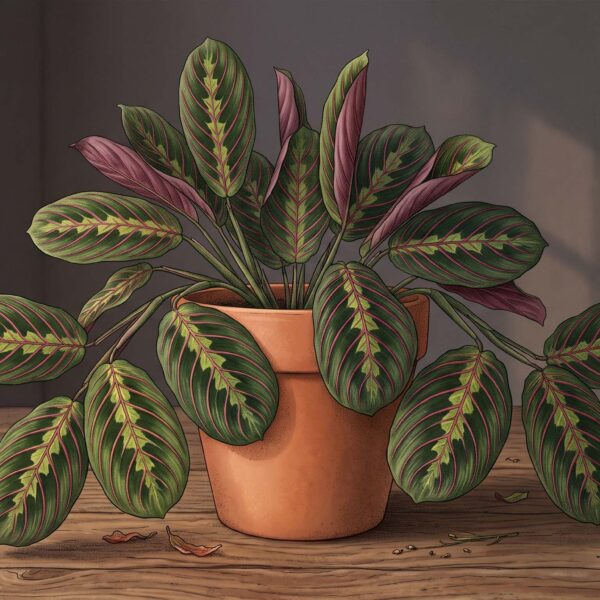
| Prayer plant (Maranta leuconeura) | Pulvinus at the top of the petiole | Raises the blade at night and lowers it at dawn | Phytophile |
UF/IFAS Extension reports inflated water hyacinth stalks when plants have room to spread. Rhubarb is a warning for edible gardens. Purdue University notes that people eat the petioles, while the blades are unsafe raw or cooked.
Joints That Move: The Pulvinus
Some petioles end in a swollen joint called a pulvinus, which works as a hinge. It holds motor cells that gain or lose water on command. Because these cells change shape rather than grow, the leaf can move and return many times.
A 2020 review in Plants traces Mimosa pudica movement to ions leaving the motor cells. Potassium and chloride flow out, water follows, and the leaf falls. The same turgor model drives nyctinasty, the evening fold seen in prayer plants.
A pulvinus only works when its cells are fully hydrated. A Maranta that stops folding at night is often a dry plant. The petiole joint shows the problem before the leaf edges brown.
How Petioles Respond to Light
The petiole is the part of the leaf that sets its angle. A 2024 imaging study found petioles shifting through the day to balance light capture, leaf temperature, and water loss. An upward tilt of the petiole is called hyponasty.
Shade changes the stalk itself. Under a canopy, plants sense less red light (660 nm) relative to far-red light (730 nm). A 2017 review on shade avoidance links this signal to longer stems and petioles.
This response differs from phototropism, where a stem bends toward a bright window. Both rely on uneven cell elongation, but shade avoidance stretches the whole petiole. A pothos kept far from a window often shows it as long, thin stalks.
Where the Leaf Lets Go
Most leaves form an abscission zone at the base of the petiole. This band of cells is built to separate on cue. A 2001 review in New Phytologist notes that not every species forms one.
That clean break explains why a yellow leaf on a healthy houseplant comes away with a gentle tug. The plant has already sealed the wound behind it. Petioles also tell you a lot during routine care:
- Long, pale petioles with small blades usually mean the plant needs more light.
- Soft, collapsing petioles at soil level often point to overwatering and crown rot.
- Drooping stalks on firm, green blades usually signal thirst rather than disease.
- Leaves dropping at the petiole base after a move reflect stress from sudden changes in light or temperature.
When you prune, cut close to the stem but leave the axillary bud intact. That bud is where the next shoot will come from. How many repotting jobs, then, could have been solved by moving a plant closer to the window?
Questions & observations