

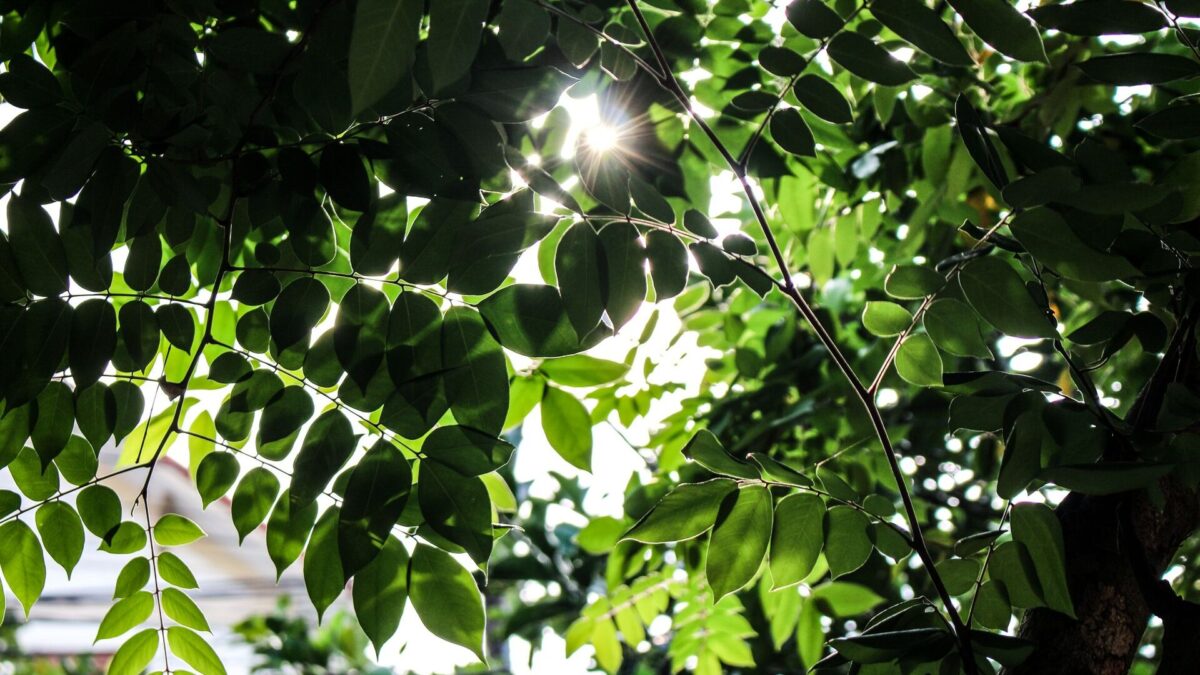
Sun leaves vs shade leaves is the botanical reason a houseplant looks so different from the same species growing outside. A leaf builds its anatomy around the light it develops in. Bright sun produces small, thick leaves, while dim light produces large, thin ones.
That design is mostly locked in while the leaf is still forming. A finished leaf can adjust only a little afterward. Once you know which traits shift with light, the size, thickness, and color of your indoor foliage stop looking random.
Sun Leaves vs Shade Leaves at a Glance
The contrast can show up on a single plant. Park Nobel measured leaves on one desert shrub, Hyptis emoryi, in 1976. Leaves that grew in full sun stayed under 1 cm long, while leaves grown in deep shade passed 7 cm.
Those tiny sun leaves held three times more chlorophyll per unit of area. Their mesophyll, the green working tissue inside, was also three times thicker. Similar patterns appear in Mediterranean shrubs and European forest trees, as the comparison below shows.
| Trait | Sun leaf | Shade leaf | Source |
|---|---|---|---|
| Leaf size | Small (under 1 cm in Hyptis) | Large (over 7 cm in Hyptis) | Nobel, 1976 |
| Mesophyll thickness | About 3 times thicker in Hyptis | Thinner | Nobel, 1976 |
| Overall thickness | 38.7% thicker in myrtle | Thinner | Mendes et al., 2001 |
| Stomatal density | Higher | Lower | Mendes et al., 2001 |
| Chlorophyll per leaf area | Higher | Lower | Lichtenthaler et al., 2007 |
| Peak photosynthesis in full sun | Higher | Lower | Lichtenthaler et al., 2007 |
Not every species follows every rule. The myrtle study, for example, found no shift in the chlorophyll a/b ratio between sun and shade plants.
Inside the Leaf: How Mesophyll Tissue Changes
Mesophyll is the green middle layer between the upper and lower skin of a leaf. Tall, column-shaped palisade cells sit on top, with an airy spongy layer below. See how foliage leaves function for each layer’s basic job.
Palisade Cells Stack Up in Strong Light
In bright light, a developing leaf builds a taller palisade layer. Maria Mendes and colleagues grew myrtle in full sun and in 30% of full light. The sun leaves came out 38.7% thicker, mostly because of extra palisade tissue.
More palisade cells mean more chloroplasts under each square inch of surface. Strong light reaches deep enough to feed all of them. In a dim room, the same investment would sit in the dark and cost the plant more than it returns.
Chlorophyll Gets Packed Differently
Hartmut Lichtenthaler’s team compared sun and shade leaves on four tree species in a 2007 paper. Sun leaves carried more chlorophyll per unit of leaf area and a higher chlorophyll a/b ratio. They also reached higher peak photosynthesis under saturating light.
Shade leaves held more chlorophyll per gram of dry tissue instead. Chlorophyll b sits mainly in the light-harvesting antenna that gathers weak light. A lower a/b ratio suits a leaf that lives on whatever light filters down to it.
Chloroplasts Can Move Out of the Way
Leaves also respond within minutes. Under intense light, chloroplasts slide from the cell surface to the side walls, a response called avoidance movement. Plants unable to do this bleach and die back faster, a 2002 Nature study found.
That quick fix has limits. Nobel left a 6.9 cm shade leaf in strong sun for 30 minutes, and it ran nearly 8°C (about 14°F) above air temperature. Shuffling chloroplasts cannot protect a thin leaf from that kind of heat.
Why Does the Same Plant Grow Different Leaves Indoors?
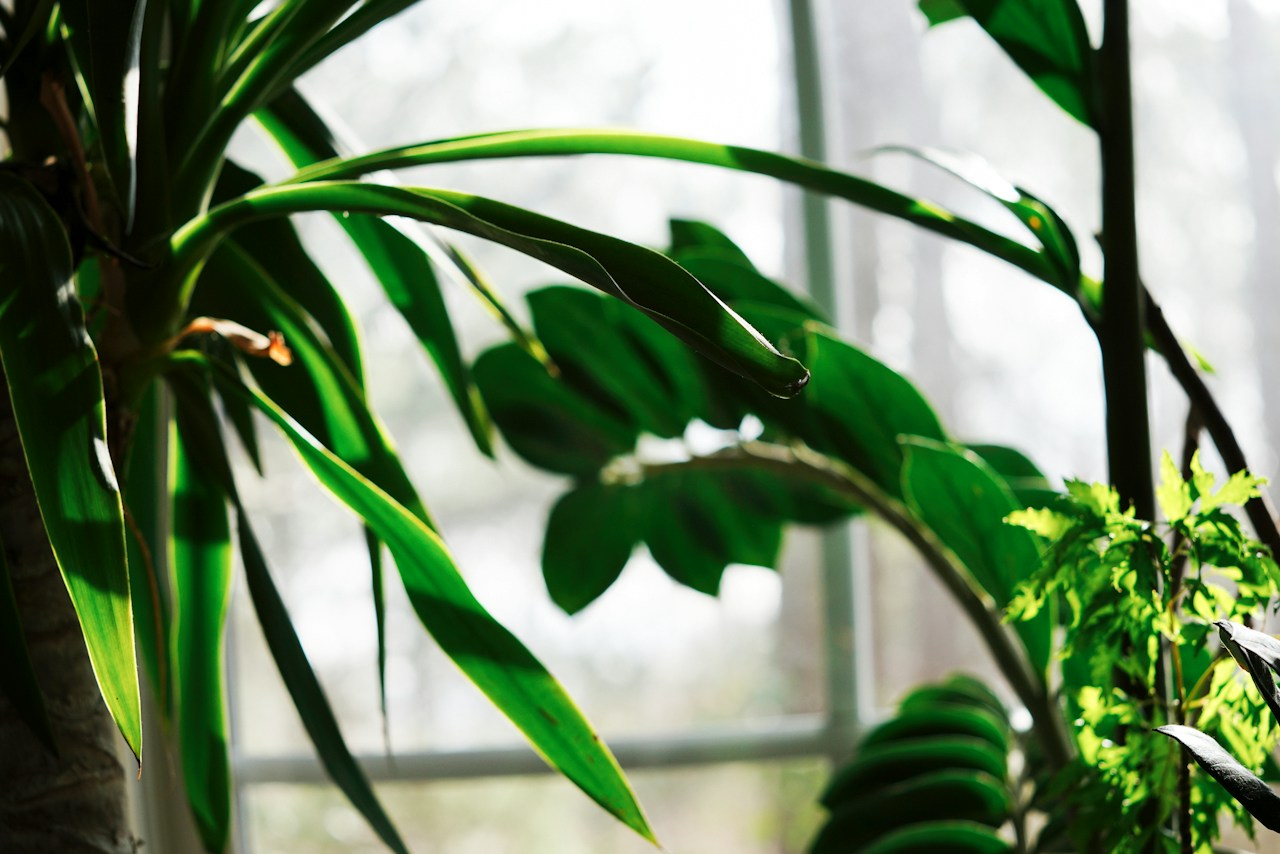
The plant reads the light level while each new leaf forms and builds to match it. Indoor light is a small fraction of outdoor sun, even beside a window. So a philodendron in a living room keeps producing thin, broad shade leaves.
Botanists track this with leaf mass per area (LMA), a leaf’s dry weight divided by its surface. A 2009 meta-analysis by Hendrik Poorter’s team found LMA varies more than 100-fold among species. Light was among the factors that shifted it most.
Acclimation Happens Leaf by Leaf
Leaves that already exist cannot fully rebuild, so a plant acclimates through its next flush of growth. That is why moving a plant takes weeks, not days. For timing and night temperatures, see our routine for moving green leaf plants outdoors.
Watch the new growth rather than the old. A plant adjusting to lower light usually shows a few clear signs:
- New leaves come out larger and thinner than the ones it arrived with.
- Gaps between leaves along the stem grow longer.
- Older, thicker leaves yellow and drop within weeks of a move indoors.
- New growth leans toward the brightest window.
Full-Sun Foliage Is Built to Handle Glare
Plants from open, sunny habitats keep many sun-leaf traits wherever they grow. They tend to have small, thick, or waxy leaves, and some carry fine hairs or a gray coating. For a hot, bright bed, browse these full sun foliage plants.
Thicker leaves also pack more pores. Mendes’s sun-grown myrtle had higher stomatal density and higher leaf conductance to water vapor all season. More water leaving the leaf means more evaporative cooling, as long as the roots keep up.
Shade Foliage Catches Scraps of Light
Shade leaves trade toughness for reach. Nobel’s measurements describe the bargain in one line:
“Large thin shade leaves captured photosynthetically active radiation effectively (less than 7% passed through), but were not adapted to full sunlight.”
Park S. Nobel, Plant Physiology, 1976
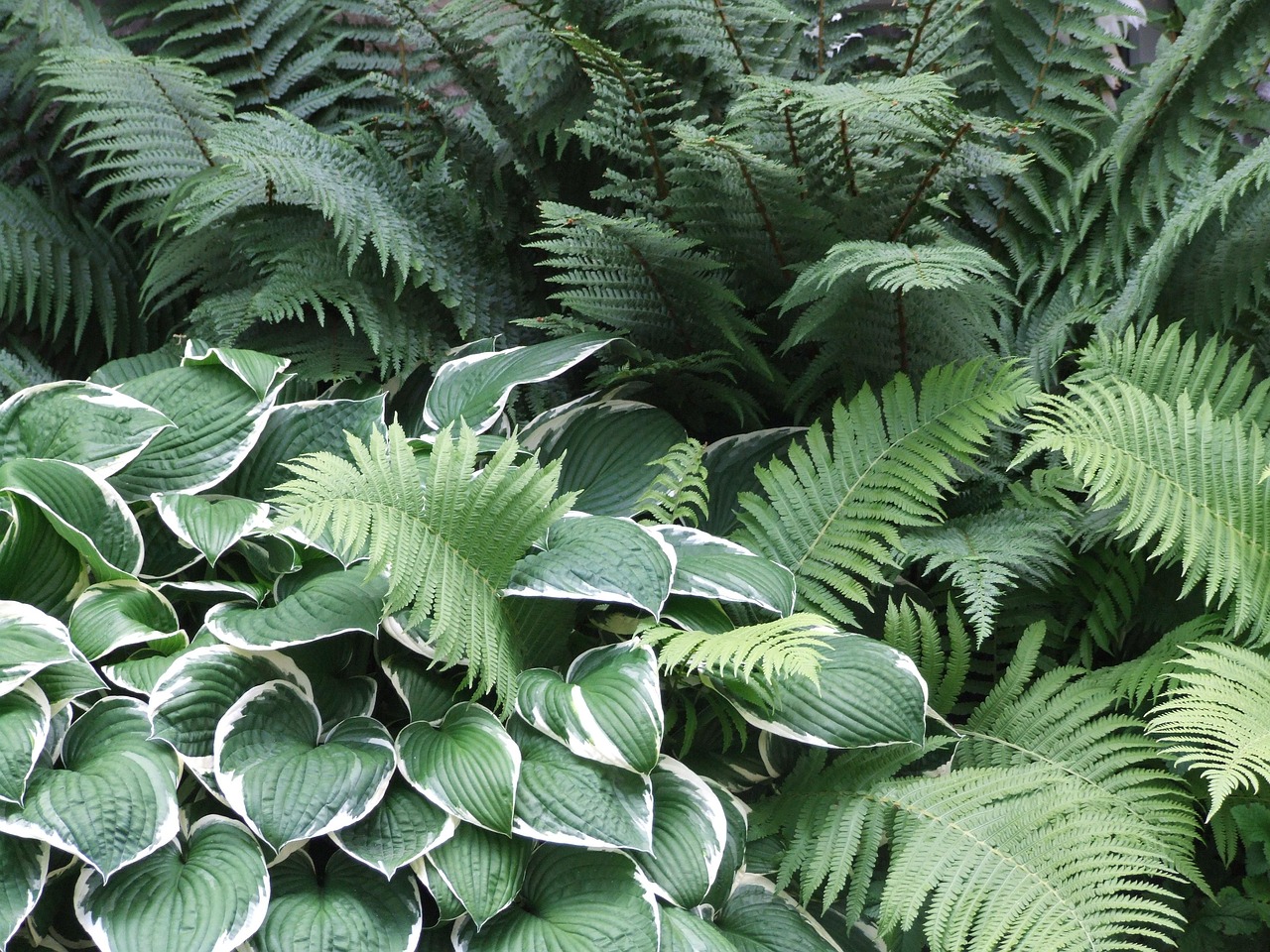
That trade-off defines hostas, ferns, and most tropical houseplants that evolved under a forest canopy. Their wide, thin blades capture light cheaply and scorch when the canopy disappears. Our picks of garden plants that like shade draw on this group.
Reading Your Plant’s New Leaves
Judge a moved plant by the leaves it grows next, not the ones it brought along. Old leaves record the light the plant came from. New ones show whether your spot suits it.
Picture a fern pushing out smaller, paler fronds after a month by a sunny window. It needs less light, not more water. Which plant on your windowsill is growing leaves that no longer match the ones it came with?
Questions & observations