

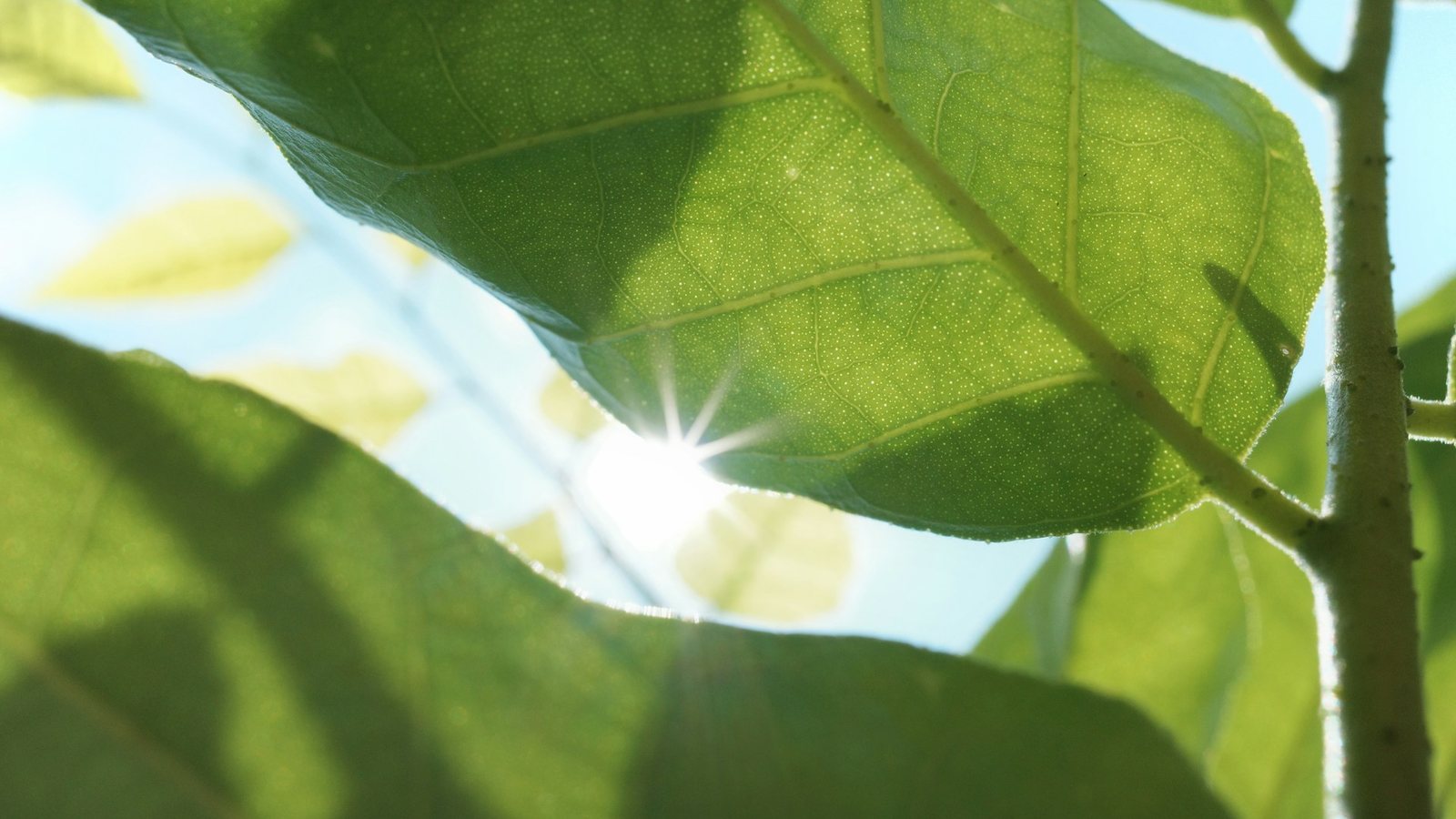
What are foliage leaves used for? Above all, they make food by turning light, carbon dioxide, and water into sugar. They also move water, exchange gases, and in some plants store reserves.
Foliage is simply the collective word for a plant’s leaves. Gardeners talk about broad-leaved and narrow-leaved plants, and plants grown mainly for their foliage make up most houseplants. Whatever the shape, every green leaf runs the same basic chemistry.
What are foliage leaves used for?
Their main job is photosynthesis, the process that makes sugar from light. Leaves also release water vapor through tiny pores, which pulls water and minerals up from the roots. Some leaves take on extra roles, such as storing food, climbing, or protecting buds.
“The principal function of leaves is to absorb sunlight to manufacture plant sugars.”
Ann Marie VanDerZanden, Oregon State University Extension
Every other function supports that one. A leaf’s shape, thickness, and pores all balance light capture against water loss.
Inside a leaf: the parts that do the work
A leaf looks like a single green sheet, but it is built in layers. Oregon State University Extension’s guide to plant parts describes each one:
- Epidermis: a layer of tough cells on the top and bottom that protects the tissue inside.
- Cuticle: a waxy coating made by the epidermis that guards against drying out and disease.
- Palisade mesophyll: a dense upper layer of cells packed with chloroplasts.
- Spongy mesophyll: a looser lower layer full of air spaces for gas movement.
- Stomata and guard cells: pores that open and close to let carbon dioxide in and water vapor out.
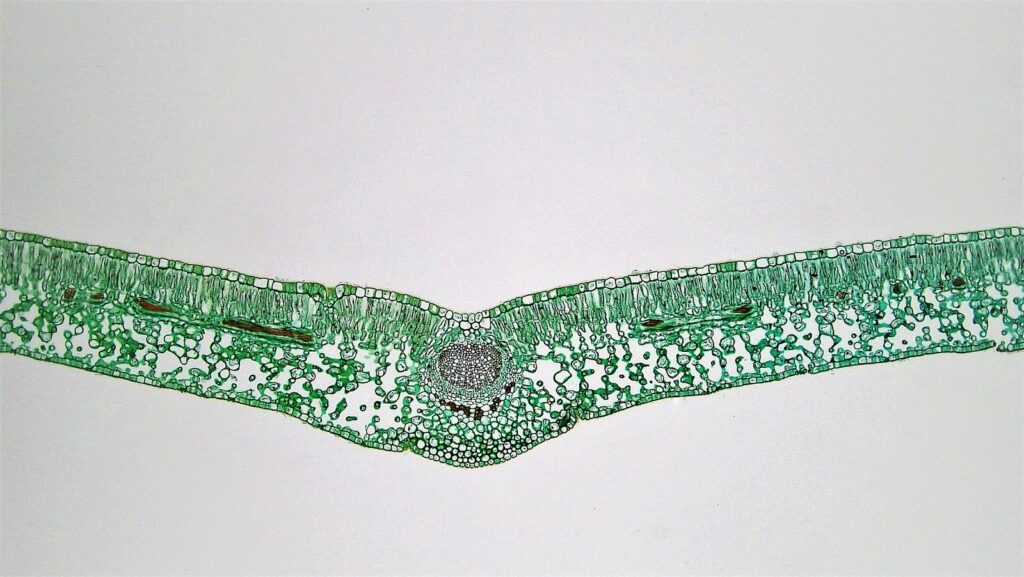
These layers change with the growing conditions. Leaves grown in strong sun build a thicker palisade layer. That is why green leaf plants outdoors often look tougher than the same species indoors.
Photosynthesis: turning light into sugar
Chloroplasts in the mesophyll hold chlorophyll, the green pigment that absorbs light. They use that energy to combine carbon dioxide from the air with water from the roots. The products are sugar, which feeds the whole plant, and oxygen, which escapes through the stomata.
Only green tissue does this work. The white zones of variegated leaves lack working chloroplasts. They draw sugar from the green parts instead of making their own.
Why it works
A leaf held flat toward the light catches more energy, but it also loses more water. Stomata let a plant trade between the two. They open when light and moisture allow photosynthesis, and close when the plant needs to conserve water.
Transpiration: moving water through the plant
Leaves lose far more water than most people expect. The US Geological Survey notes that a leaf transpires many times its own weight in water during a growing season.
The totals scale up fast. USGS estimates that an acre of corn gives off about 3,000 to 4,000 gallons of water a day. A large oak tree can transpire around 40,000 gallons a year.
That flow does real work. As water evaporates from the leaf, it pulls a column of water up from the roots. Dissolved minerals travel up with it.
10 Core Functions of Foliage Leaves Explained
Foliage leaves do far more than look green. Here are the ten main jobs they do for a plant, in short:
- Photosynthesis. Chloroplasts use sunlight to turn carbon dioxide and water into sugar, which fuels the whole plant, and give off oxygen as a by-product. That’s why full sun foliage plants tend to grow thicker leaves packed with more chloroplasts.
- Transpiration. Water evaporates from inside the leaf and leaves as vapor through the stomata. The rate depends heavily on the surrounding air, which is why humid tropical plants suffer quickly in dry indoor rooms.
- Gas exchange via stomata. Tiny pores controlled by guard cells let carbon dioxide in and oxygen out. They open when conditions favor photosynthesis and close to save water.
- Water transport pull. The water lost through transpiration creates tension that draws water and dissolved minerals up from the roots through the xylem. This is often called the “transpiration pull.”
- Temperature regulation. Evaporation from the leaf surface cools the plant, much like sweating. Leaves have limits in the other direction too, as seen in chilling injury in tropical plants, where damage appears well above freezing.
- Nutrient remobilization. When a nutrient runs short, leaves send mobile nutrients like nitrogen from older leaves to new growth, so older leaves are the first to show the shortage.
- Light and season sensing. Leaves detect light direction, day length, and light quality. These signals drive phototropism, explain why prayer plants fold their leaves at night, and tell the plant when to flower, go dormant, or drop its leaves.
- Climbing and support. In some plants, leaves become tendrils that coil around supports and lift the plant toward the light.
- Storage. Succulent leaves, bulb scales, and seed leaves store water and food for dry spells or for a sprouting seedling.
- Protection. The waxy cuticle guards against drying out and disease. Some leaves also become spines or scales that protect the plant.
Storage and other specialized jobs
Some leaves have changed shape to take on very different tasks. OSU Extension groups several of these modified leaves.
Storage leaves
Bulb scales and succulent leaves store food and water. An onion bulb is a short underground stem wrapped in fleshy leaf scales around a central bud. Thick-leaved houseplants, covered in our guide to long leafy plants, use the same strategy to ride out dry spells.
Climbing and protective leaves
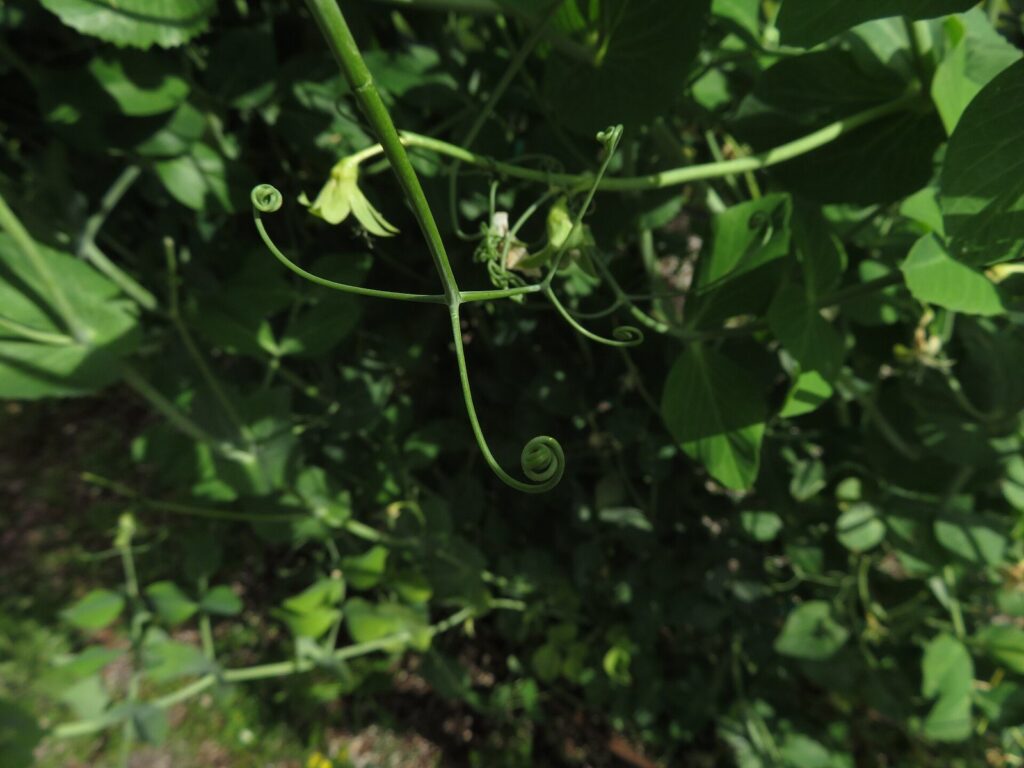
Pea tendrils are modified leaves that coil around supports and hold the stem up. Barberry spines are leaves turned into defenses. Scale leaves on rhizomes and buds enclose and protect the growing tissue inside.
Seed leaves
Cotyledons, the first leaves on a seedling, store food for the young plant. They often look nothing like the true leaves that follow.
Signs your foliage leaves are in trouble
Leaves report problems early, and the position of the damage narrows down the cause. The Royal Horticultural Society explains that some deficiencies start on young leaves and others on old ones.
| Symptom | Where it starts | Likely cause |
|---|---|---|
| General yellowing, poor vigor | Older leaves | Nitrogen deficiency |
| Yellowing between green veins | Youngest leaves | Iron deficiency |
| Yellowing between veins | Older leaves | Magnesium or manganese deficiency |
| Sudden leaf drop after a move | Leaves grown before the move | Abrupt change in light |
Position matters because plants move some nutrients, such as nitrogen, from old leaves to new growth when supplies run short. Iron stays where it was first used, so new leaves go without it.
Caution
Yellow leaves are not always a feeding problem. Check light, watering, and recent moves before adding fertilizer, since extra feed will not fix a root or light issue.
Every leaf on a plant is doing a measurable job. Once you know what each layer does, a pale patch or dropped leaf becomes a usable clue.
Questions & observations