

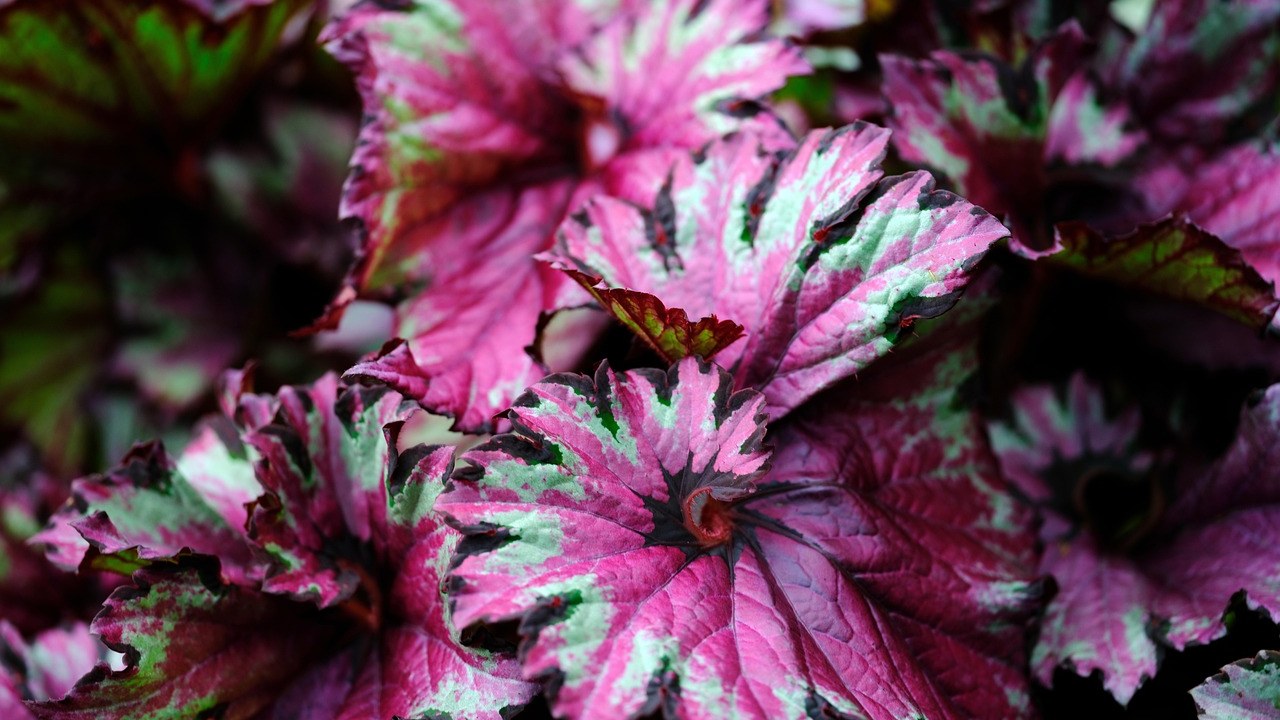
Are begonias full sun or shade? Most begonias grow best in partial shade or bright, indirect light, and strong midday sun scorches their leaves. Bronze-leaved wax begonias are the main exception and handle full sun well.
The answer changes with the type of begonia you own. Begonias are foliage plants as much as flowering ones, and leaf thickness predicts how much sun each group can take.
FAQ: Do Begonias Need Full Sun?
No, most begonias do not need full sun. The vast majority of begonias—including Rex, rhizomatous, cane, and tuberous varieties—thrive best in partial shade or bright, indirect light, as direct midday sun will quickly scorch their leaves. The only major exception is the bronze-leaved wax begonia (Semperflorens group), which can tolerate full sun if watered adequately.
Are begonias full sun or shade?
Begonias are mostly shade-to-part-shade plants. Rex, rhizomatous, and tuberous begonias need protection from direct sun. Wax begonias tolerate full sun, and cane types like a little morning sun.
Missouri Botanical Garden counts about 1,300 species in the genus and sorts them into seven informal groups by growth habit. Those groups differ more in light tolerance than in anything else, so identify yours before choosing a spot.
Light needs by begonia group
The table below pulls together the light and hardiness ratings for the four groups you are most likely to buy. Every one of them is tender, so outdoor planting year-round only works in the warmest US zones.
| Begonia group | Best light | USDA zones | Source |
|---|---|---|---|
| Wax (Semperflorens) | Full sun to part shade | 10–11 | Missouri Botanical Garden |
| Rex and rhizomatous | Bright, no direct sun | 10–11 | Missouri Botanical Garden, Clemson HGIC |
| Cane (angel wing) | Good light, some morning sun | 8–10 for ‘Gryphon’ | Missouri Botanical Garden, Clemson HGIC |
| Tuberous | Part shade, never full sun | 9–11 | Missouri Botanical Garden |
Wax begonias handle the most sun
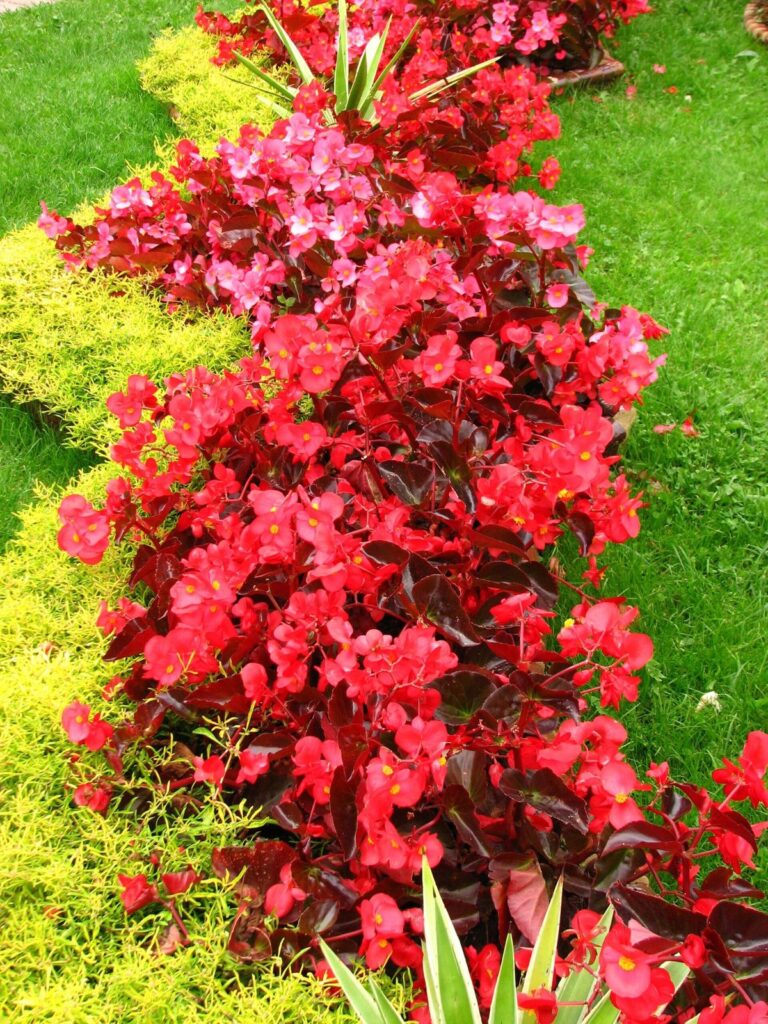
Wax begonias are the bedding begonias sold in flats every spring. Missouri Botanical Garden rates them for full sun to part shade and notes that bronze-leaved varieties are more tolerant of full sun.
Hot summers change that rating. The same profile recommends dappled part shade and mulch in hot climates such as St. Louis. Their thick, waxy leaves help them ride out short dry spells.
Rex and rhizomatous begonias want bright shade
These are the begonias grown for their leaves, with silver, burgundy, and spiral patterns. Clemson Cooperative Extension advises placing foliage begonias in a bright spot away from direct sunlight.
Direct sun bleaches and burns the colored zones of a rex leaf within days. An east window, or a spot a few feet back from a south window, gives light without the burn.
Cane begonias take a little direct sun
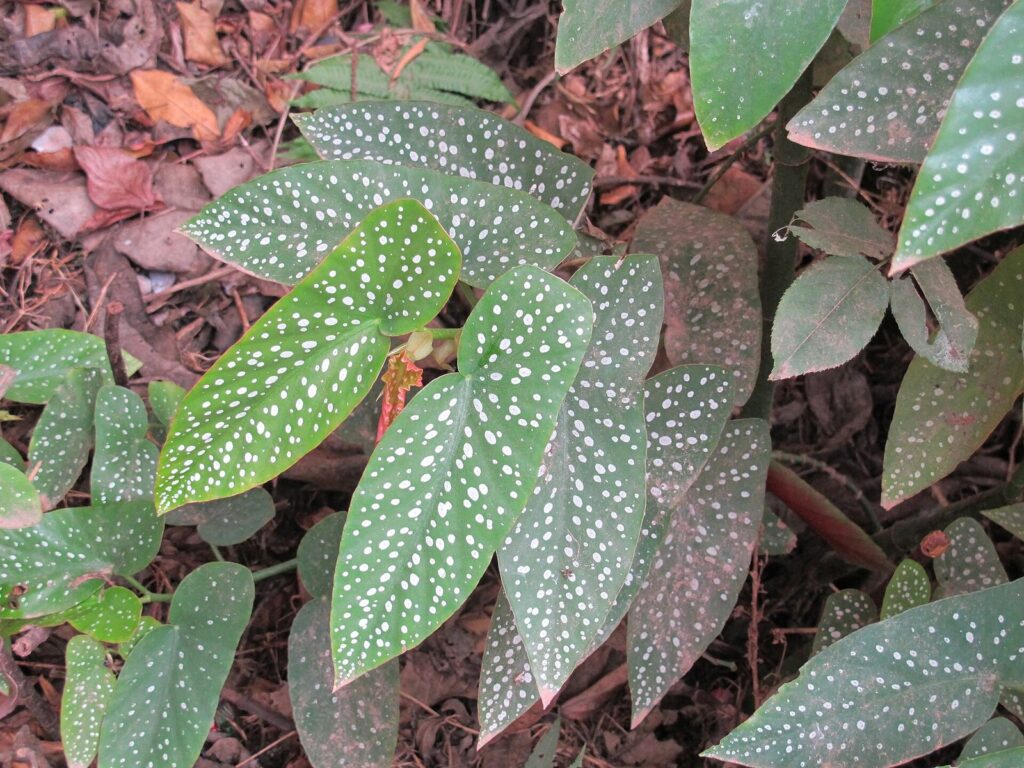
Cane begonias grow upright on bamboo-like stems, and the spotted Begonia maculata is the best-known example. Clemson notes that many cane and shrub types flower best with some direct sun.
The Royal Horticultural Society adds a limit. Cane begonias need good light for sturdy stems, yet hot direct sun scorches their leaves.
Tuberous begonias need cool shade
Tuberous begonias carry the large, rose-like summer flowers. Missouri Botanical Garden’s guidance is direct: grow them in dappled sun or bright shade and avoid full sun or full shade.
They also dislike heat and humidity and perform best in cool summers. Gardeners in warm regions often get better results with the garden plants that like shade in deeper cover.
How often to water a begonia
Water a begonia when the top of the potting mix feels dry, not on a calendar. The interval depends on pot size, light, and room temperature, so it shifts with the seasons.
Clemson’s guidance is to keep the soil evenly moist and let it dry only slightly between waterings. In winter, the RHS advises letting the surface of the compost dry out before watering rhizomatous begonias again.
Use these checks before you water:
- Push a finger about an inch into the mix; water only if it feels dry at that depth.
- Lift the pot; a light pot means the root zone has dried.
- Water at the soil line and keep the leaves and crown dry.
- Empty the saucer after 15 minutes so roots never sit in water.
- Cut back sharply in autumn for tuberous begonias, which Clemson advises drying off for winter.
Caution
Overwatering kills more begonias than drought. Missouri Botanical Garden warns that tubers may rot if soils stay too moist. Fleshy stems that turn soft and dark at the base are the usual first sign.
Growing a begonia as a houseplant
Rex, rhizomatous, and cane begonias are the easiest types to grow as houseplants. They want steady warmth, bright filtered light, and moist air without wet leaves.
Clemson recommends 66 to 73°F for foliage begonias. The RHS sets a winter minimum of 13°C (55°F) for Begonia rex. Keep pots off cold windowsills on winter nights.
“A humid environment is needed, but misting is not recommended.”
Clemson Cooperative Extension
Begonias respond to the same humidity and temperature routine as other humid tropical plants. A humidifier or a pebble tray works better than a spray bottle, which leaves water sitting on hairy leaves.
Why it works
Leaf scorch happens when roots cannot replace water as fast as sun and wind pull it from the leaves. Missouri Botanical Garden describes this imbalance as the cause of scorch. Thin begonia leaves hold little reserve water, so they brown first.
Begonias and pets
The ASPCA lists begonias as toxic to dogs, cats, and horses. The plants contain soluble calcium oxalates, and the ASPCA notes that the most toxic part grows underground.
Ingestion can cause vomiting and salivation in dogs and cats. Keep tuberous begonias and repotting scraps well out of reach.
Moving begonias between shade and sun
Sudden sun burns even sun-tolerant begonias. Missouri Botanical Garden documents scorched, sunburned leaves on a newly planted begonia that was never hardened off.
Move plants outdoors into shade first, then add an hour or two of morning sun every few days. A hardened wax begonia can eventually take a full day of sun. A rex begonia should never be pushed that far.
Questions & observations