

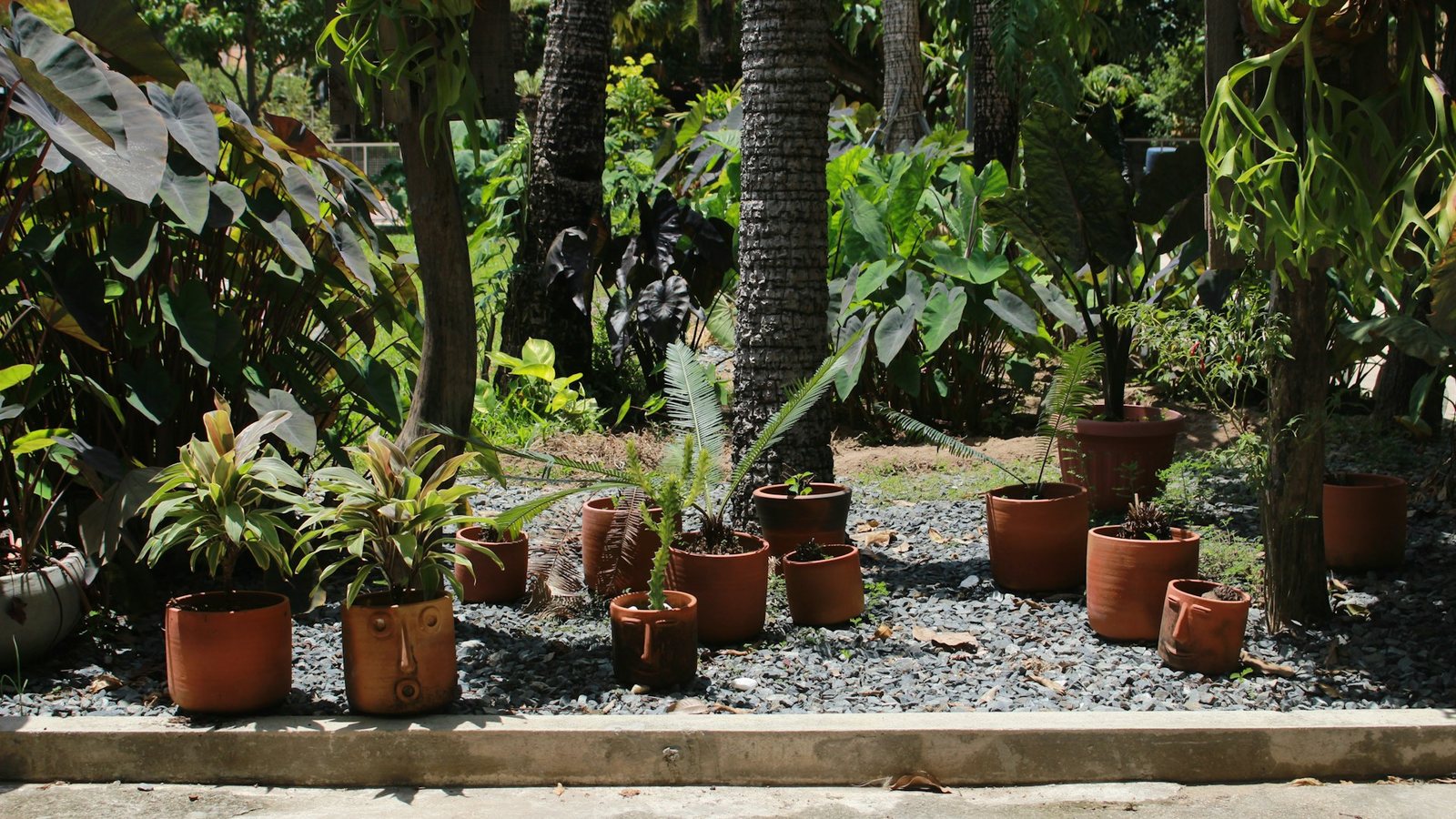
Green leaf plants outdoors build different leaves from the same species grown indoors. Strong sun produces thick, compact leaves, while dim rooms produce thin, broad ones. That single adaptation explains most of the trouble people have when they move a plant in either direction.
A leaf is tuned to the light it grew in, and it cannot fully rebuild itself later. The plant adjusts by growing new leaves, which takes weeks. Knowing that timeline is the whole trick to moving foliage plants between a patio and a living room.
Sun leaves and shade leaves
Plant physiologists call the two forms sun leaves and shade leaves. A 2011 study in Plant Physiology by Chuang-Dao Jiang and colleagues summarized the difference plainly.
“Leaves developed under high light are thicker and smaller, with more developed palisade tissue and higher stomatal density.”
Jiang et al., Plant Physiology, 2011
Palisade tissue is the tightly packed layer of column-shaped cells under the upper surface. It holds most of the chloroplasts that do the work of photosynthesis. Sun leaves stack more of it, so they reach higher photosynthetic capacity per square inch than shade leaves.
| Trait | Sun leaf | Shade leaf |
|---|---|---|
| Thickness | Thicker | Thinner |
| Size | Smaller | Larger |
| Palisade tissue | More developed | Less developed |
| Stomatal density | Higher | Lower |
| Photosynthetic capacity per leaf area | Higher | Lower |
A shade leaf spreads thin tissue over a large area to catch whatever light reaches it. That design is cheap to build, but it has little protection against direct sun.
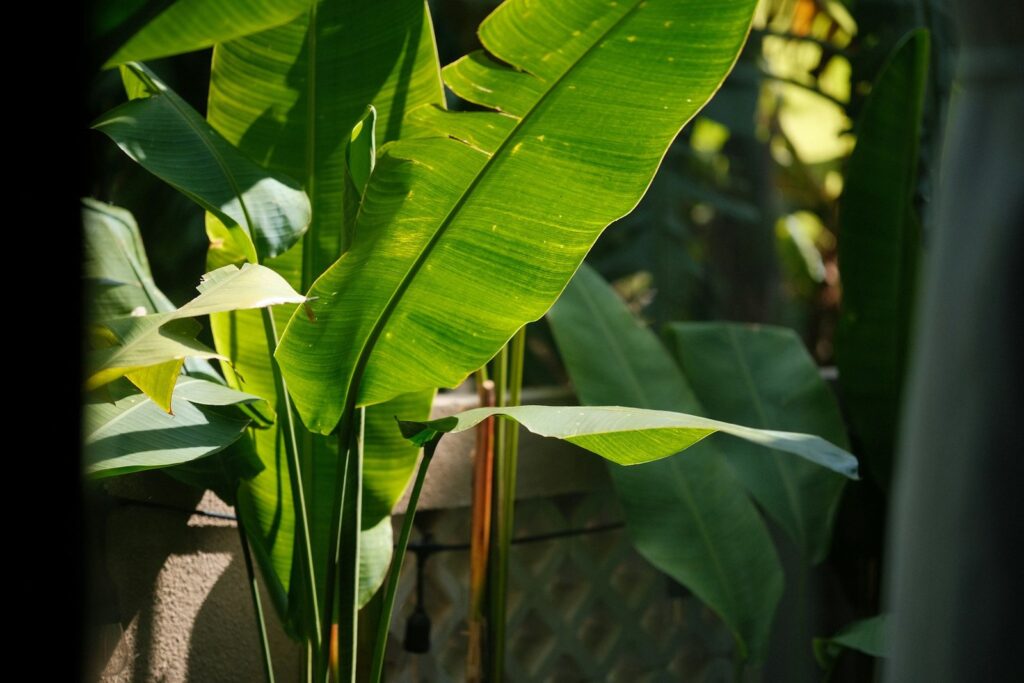
How much light green leaf plants get outdoors and indoors
The gap between outdoor and indoor light is far larger than it looks to the eye. University of Maryland Extension puts peak direct sunlight outdoors at about 10,000 foot-candles (FC). Indoors, the numbers drop sharply:
- Low light, 25–100 FC: north-facing windows or rooms lit mainly by lamps.
- Medium-bright light, 100–500 FC: east- or west-facing windows.
- High light, 500–1,000 FC: south-facing and some west-facing windows.
- Direct indoor sun, over 1,000 FC: sunrooms and unshaded south-facing bay windows.
A bright south window at 1,000 FC delivers a tenth of peak outdoor sun. Most green foliage indoor plants live at 1 to 5 percent of it. Their leaves are built for exactly that.
The same extension guide lists ZZ plant, snake plant, and cast-iron plant for low light. Their thick or leathery leaves, covered in our guide to long leafy plants, already tolerate stress well. That makes them the least fussy plants to move.
Moving green leaf plants outdoors for summer
A summer outside can build a stronger plant, as long as the leaves get time to adjust. Most problems come from moving too fast.
Wait for warm nights
The Royal Horticultural Society advises that subtropical houseplants go outside only when nights stay above 10–12°C (50–54°F). Calathea and Maranta, two humid tropical plants from rainforest floors, need nights of at least 15°C (59°F).
Start in bright shade
Put the plant under a tree, on a covered porch, or on the north side of a building first. Then add direct sun a little at a time over the following weeks. The RHS notes that even cacti can burn when moved straight from indoors into full sun.
Why it works
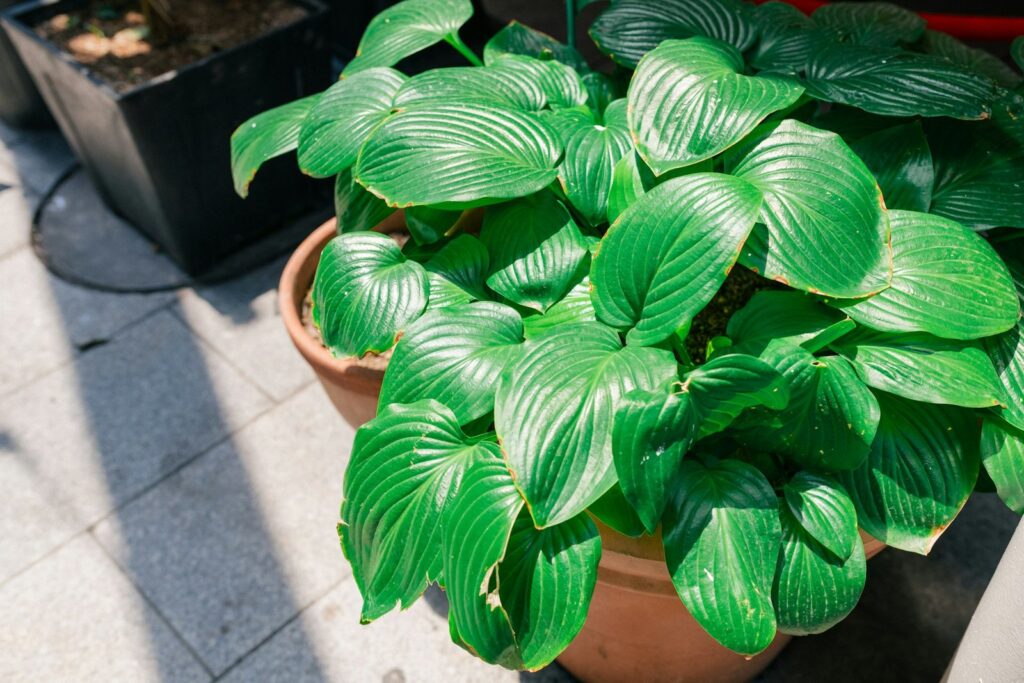
Old leaves do not convert from shade leaves to sun leaves. In the 2011 sorghum study, the light reaching mature leaves set the anatomy of the new leaves forming above them. A plant therefore adapts through its next flush of growth, while existing leaves may scorch and drop.
Know your hardiness zone
Most tropical foliage plants can stay outside year-round only in the warmest parts of the US. Snake plant, for example, is rated for USDA Zones 10a through 12b by NC State Extension. Everywhere colder, the summer stay is temporary.
Why do leaves drop when a plant comes back indoors?
Leaves drop because the plant is carrying sun leaves into a room with a fraction of the light. Those leaves cost more to maintain than they earn. The plant sheds them and grows thinner shade leaves instead.
UF/IFAS Extension researchers advise growers to acclimatize interior plants under 80–90% shade for at least two months. That shade cuts light to about 1,250 to 2,500 FC. They list excess leaf drop as a symptom of plants produced under high light.
Caution
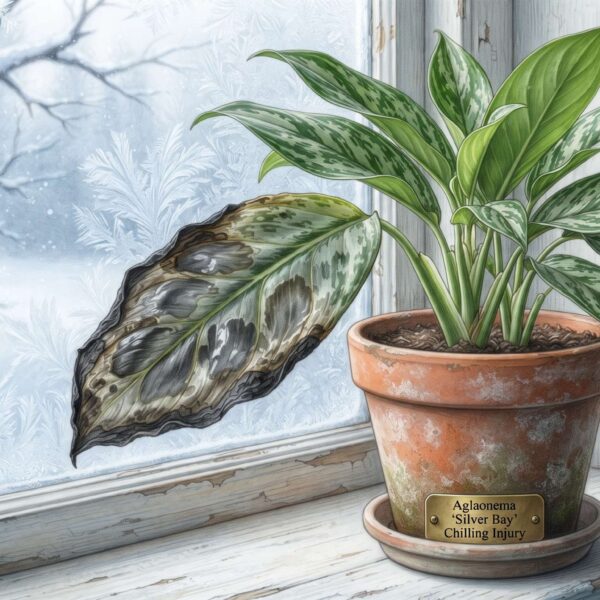
Bring plants back in before nights fall below 10°C (50°F). A sudden cold night can damage tropical leaves faster than any light change.
The return trip needs the same patience as the move outside. A short routine softens the change:
- Move the plant to the brightest indoor spot you have, not its final dim corner.
- If possible, keep it in a cool room first; the RHS says re-acclimatization usually takes two to three weeks.
- Avoid repotting, pruning, or fertilizing for about four weeks, as UF/IFAS advises for newly placed interior plants.
- Shift it toward its permanent spot in stages over the following month.
Some leaf loss after the move is normal and usually not a sign of disease. Judge the plant by the leaves it grows over the next two months. Those are the ones built for your room.
Questions & observations