

Plants that survive winter and summer share one trait: a wide hardiness range on both ends of the thermometer. A plant rated for USDA Zones 4 to 9 has proven it can take a hard freeze and a long, hot August. That range matters more than any label that says “tough.”
Most plant tags only tell half of that story. They list cold hardiness, then leave you to guess how the plant copes with heat, humidity, and drought. The plants below were picked because they handle both seasons in the same bed, without being dug up or wrapped.
Why winter hardiness is only half the answer
The USDA Plant Hardiness Zone Map is built on one number: the average annual extreme minimum winter temperature. The 2023 edition uses 1991 to 2020 data from 13,625 stations. Each zone spans 10°F, split into 5°F half zones.
That map says nothing about summer. A hosta or a fir can be perfectly cold-hardy in your yard and still scorch, stall, or rot in a humid July. Many foliage plants sold for gardens fail this way, long after their first winter went fine.
The American Horticultural Society filled that gap in 1997 with its Plant Heat Zone Map. Iowa State University Extension explains that heat zones count the average number of days each year above 86°F.
This temperature was chosen because it is the point at which plants begin to suffer physiological damage from heat.
Iowa State University Extension and Outreach, Yard and Garden
Why it works
Cold injures tissue through ice formation and the dehydration it causes in cells. Heat works through water loss and respiration that outpaces photosynthesis. A plant needs separate defenses for each stress, so one rating cannot predict the other.
Which plants handle both cold winters and hot summers?
The safest picks are perennials, grasses, and evergreens rated across five or more USDA zones. Missouri Botanical Garden lists creeping juniper and Christmas fern for Zones 3 to 9. Switch grass, Adam’s needle, and eastern prickly pear also span wide ranges and tolerate summer drought.
These cold weather plants share a pattern. Five of them are native to North America, from regions with hard winters and hot summers. Native range is often the best predictor of year-round toughness.
Evergreen structure plants
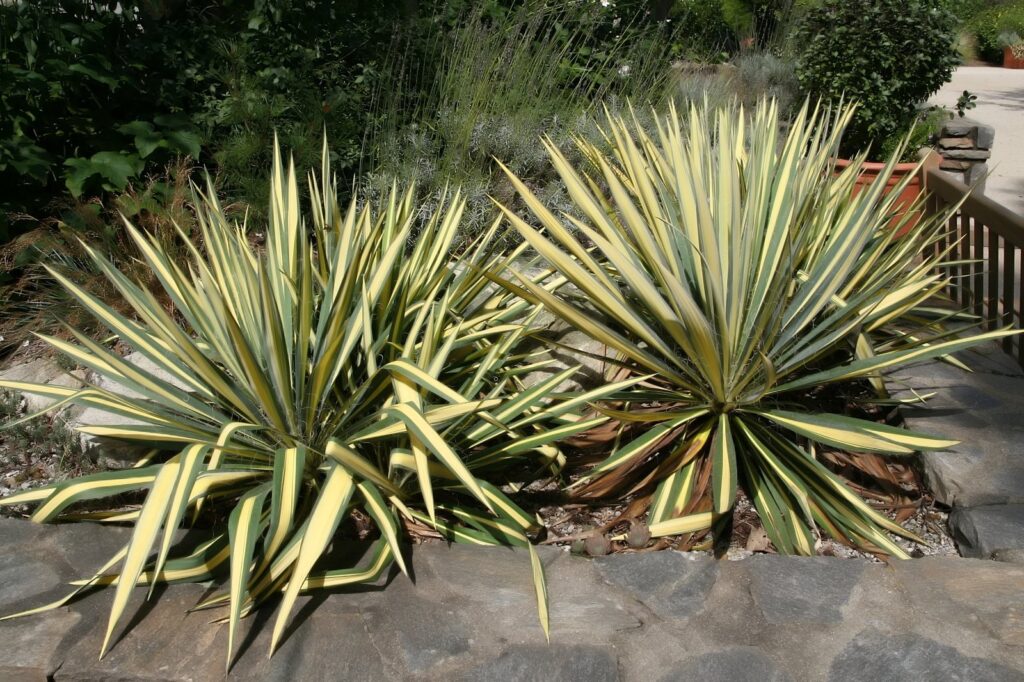
Yucca filamentosa, Adam’s needle, is native to the central and eastern United States. Missouri Botanical Garden rates the species for Zones 5 to 10. It holds its sword-shaped rosettes through snow and tolerates drought, dry soil, and rocky ground.
The variegated cultivar ‘Color Guard’ carries a creamy yellow center stripe. It is rated a little colder, Zones 4 to 10, and pairs well with other full sun foliage plants in a hot, dry bed.
Creeping juniper, Juniperus horizontalis, covers ground in full sun, and its Plant Finder profile gives Zones 3 to 9. It tolerates hot, relatively dry conditions, and its blue-green foliage often turns purplish in winter. Wet soil is the one condition it will not accept.
Grasses that keep their form
Switch grass, Panicum virgatum, is a tallgrass prairie native rated for Zones 5 to 9. It accepts clay, dry soil, wet soil, and occasional flooding. The leaves turn yellow in autumn and fade to tan, so cut clumps back in late winter.
Blue fescue, Festuca glauca, is smaller and more particular. It is rated for Zones 4 to 8 and wants full sun with well-drained soil. Missouri Botanical Garden warns that clumps may decline in hot, humid summers.
Succulent ground covers
Succulents store water in their leaves, which helps them through dry summers. Hens and chicks, Sempervivum tectorum, are rated for Zones 3 to 8 and stay evergreen. They need sharp drainage more than any protection from cold.
Eastern prickly pear, Opuntia humifusa, surprises most gardeners. It is the only cactus widely found in the eastern United States, growing north into southern Ontario. Missouri Botanical Garden rates it for Zones 4 to 9.
Shade-tolerant evergreens
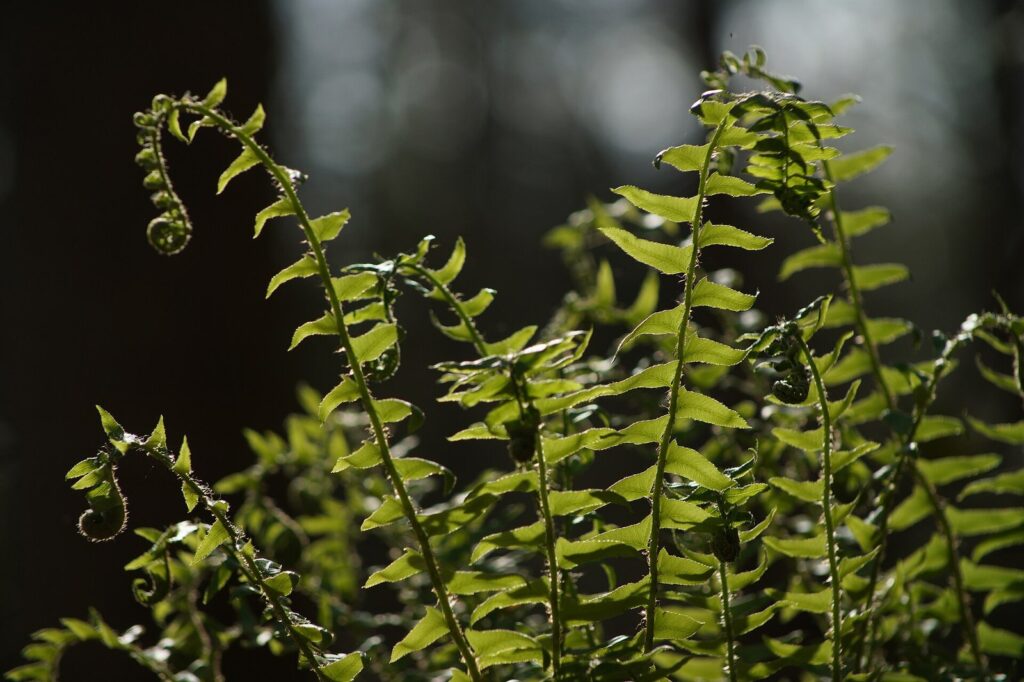
Shady beds need different survivors. Christmas fern, Polystichum acrostichoides, keeps leathery fronds green through winter in Zones 3 to 9. It tolerates heavy shade, drought, and dry soil.
Heartleaf bergenia, Bergenia cordifolia, is rated for Zones 3 to 8 in part to full shade. Its foliage turns purplish-bronze in winter, though it can be damaged in cold, open sites. For more options sorted by light, browse these garden plants that like shade.
| Plant | Type | USDA zones | Sun | Tolerates |
|---|---|---|---|---|
| Juniperus horizontalis | Needled evergreen | 3 to 9 | Full sun | Drought, erosion, rocky soil |
| Polystichum acrostichoides | Evergreen fern | 3 to 9 | Part to full shade | Heavy shade, dry soil |
| Yucca filamentosa ‘Color Guard’ | Broadleaf evergreen | 4 to 10 | Full sun | Drought, dry soil, deer |
| Opuntia humifusa | Cactus | 4 to 9 | Full sun | Drought, rocky soil |
| Panicum virgatum | Ornamental grass | 5 to 9 | Sun to part shade | Clay, dry or wet soil |
| Sempervivum tectorum | Succulent | 3 to 8 | Full sun | Drought, shallow soil |
| Bergenia cordifolia | Perennial | 3 to 8 | Part to full shade | Heavy shade, deer |
| Festuca glauca | Ornamental grass | 4 to 8 | Full sun | Drought, dry soil |
Matching plants that survive winter and summer to your yard
A plant rated for Zones 3 to 9 does not perform equally well everywhere in that range. It usually grows best in the middle and struggles near either edge. The goal is to place your yard comfortably inside the range, not at its limit.
Winter outdoor plants and anything sold as year-round deserve the same checks. Use this sequence before you buy:
- Look up your zone at the USDA map by ZIP code, including the half zone (for example, 6a or 6b).
- Choose plants whose range extends at least one full zone colder and one zone warmer than yours.
- Check summer heat separately, using the AHS heat zone if the tag lists one.
- Match soil drainage, since dry-climate plants rot faster in wet clay than they freeze.
- Plant in spring or early fall so roots establish before the next hard season.
Fall and winter plants sold in garden centers often fail step two. Ornamental kale looks hardy in October, yet Missouri Botanical Garden classes it as an annual. Our guide to what plants grow in the winter covers those seasonal plantings.
Where year-round plants still fail
Caution
Roots are less hardy than stems. University of Minnesota Extension notes that roots of most trees and shrubs grown in Minnesota die at temperatures between 0°F and 10°F. In the ground, soil protects them, but a pot exposes roots to air temperature on every side.
That warning comes from University of Minnesota Extension, which also advises watering heavily before the ground freezes after a dry fall. Moist soil holds more heat than dry soil, so frost penetrates less deeply.
Summer and winter failures often share a cause: wet soil. Missouri Botanical Garden flags crown rot in Christmas fern on poorly drained ground, particularly in winter. Creeping juniper, blue fescue, and hens and chicks are all listed as intolerant of wet soil.
Tropical foliage plants sit at the other end of the scale. They need steady warmth and humidity and stay indoors wherever winter falls below Zone 10. The plants in this guide ask for drainage and the right zone, then handle both seasons on their own.
Questions & observations