

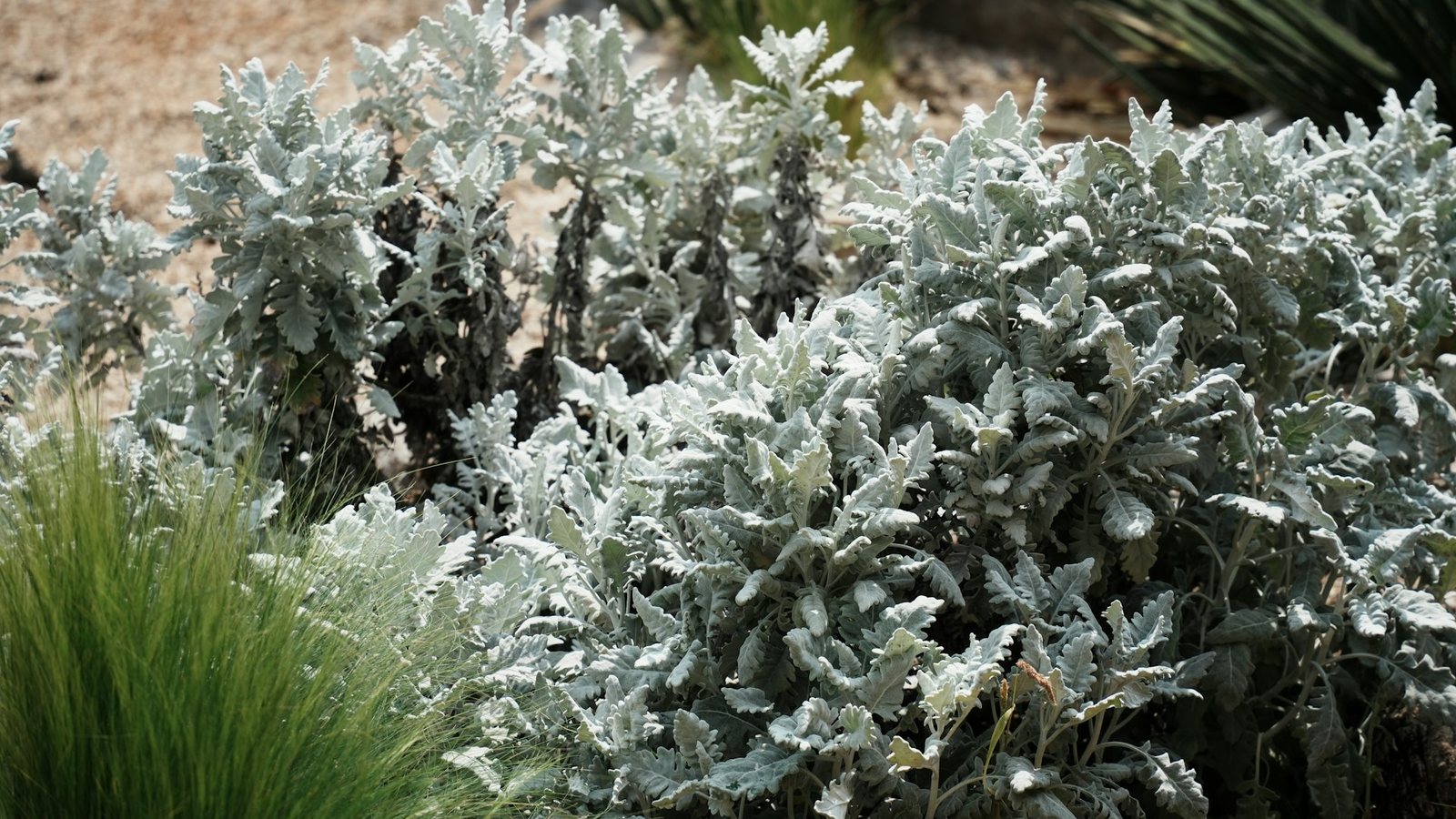
Full sun foliage plants keep colorful, intact leaves under six or more hours of direct sun a day. Lamb’s ears, Adam’s needle, purple smoketree, switchgrass, and culinary sage are reliable starting points in most US gardens.
Most share a visible trait: silver hairs, a waxy coat, thick tissue, or narrow blades. Those features slow water loss. That is why they hold up where typical leafy houseplants would scorch.
What counts as full sun for foliage plants?
Full sun means six or more hours of direct sunlight per day. UC Master Gardeners of Placer County cite that figure as the common definition, with partial sun at roughly four to six hours.
Count the hours in midsummer, when the sun sits highest. A bed that gets morning sun until noon and shade after lunch is partial sun, even if it feels bright. Beds with fewer hours suit garden plants that like shade far better.
Afternoon sun is the harder test. It arrives when air temperature peaks, so leaves lose water fastest at exactly that time.
Full sun foliage plants sorted by leaf type
Gardeners searching for “hearty outdoor plants” usually mean hardy ones, and hardiness depends on your USDA zone. Every rating below comes from Missouri Botanical Garden’s Plant Finder, and plants that survive winter and summer are covered separately.
| Plant | Leaf feature | USDA zones | Sun rating |
|---|---|---|---|
| Lamb’s ears (Stachys byzantina) | Woolly, silver | 4–8 | Full sun |
| Common sage (Salvia officinalis) | Gray-green, aromatic | 4–8 | Full sun |
| Southernwood (Artemisia abrotanum) | Finely cut, aromatic | 4–8 | Full sun |
| Stonecrop (Hylotelephium ‘Blade Runner’) | Thick, succulent | 3–9 | Full sun |
| Adam’s needle (Yucca filamentosa) | Rigid, sword-shaped | 5–10 | Full sun |
| Smoketree (Cotinus coggygria) | Rounded, purple in some cultivars | 5–8 | Full sun |
| Switchgrass (Panicum virgatum) | Narrow grass blades | 5–9 | Full sun to part shade |
| Dusty miller (Jacobaea maritima) | Felted, silver | 7–10 | Full sun to part shade |
| Sweet potato vine (Ipomoea batatas) | Lime, purple, or variegated | 9–11 | Full sun |
| New Zealand flax (Phormium tenax) | Strap-shaped, evergreen | 9–11 | Full sun to part shade |
Silver and gray leaves
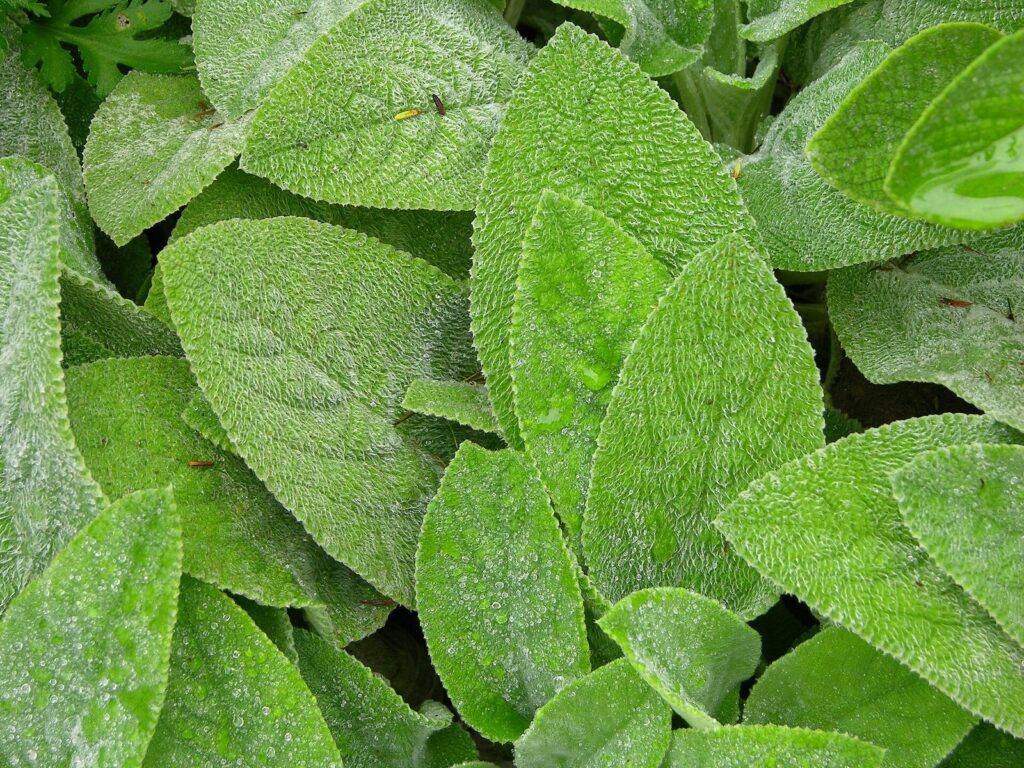
Silver foliage is the classic sign of a sun plant. Lamb’s ears forms a low mat of woolly leaves, and Missouri Botanical Garden rates it for Zones 4 to 8 in full sun.
The same hairs that protect it from sun trap moisture in humid summers. Missouri Botanical Garden warns of rot and leaf spot in humid climates. It also suggests light afternoon shade where summers run hot.
Dusty miller and southernwood fill similar roles. Dusty miller is a tender perennial for Zones 7 to 10 and an annual elsewhere. Its silver color is best with some sun.
Sword-shaped and succulent leaves
Adam’s needle is the toughest plant on this list. Missouri Botanical Garden rates it for Zones 5 to 10 and lists tolerance of poor sandy soil, heat, drought, and salt spray.
Stonecrop handles the same conditions with thick, water-storing leaves. It grows in Zones 3 to 9, though too much shade makes it weak and floppy.
New Zealand flax brings the same upright shape to warm gardens in Zones 9 to 11. Its variegated forms usually color best in filtered sun.
Purple and colored leaves
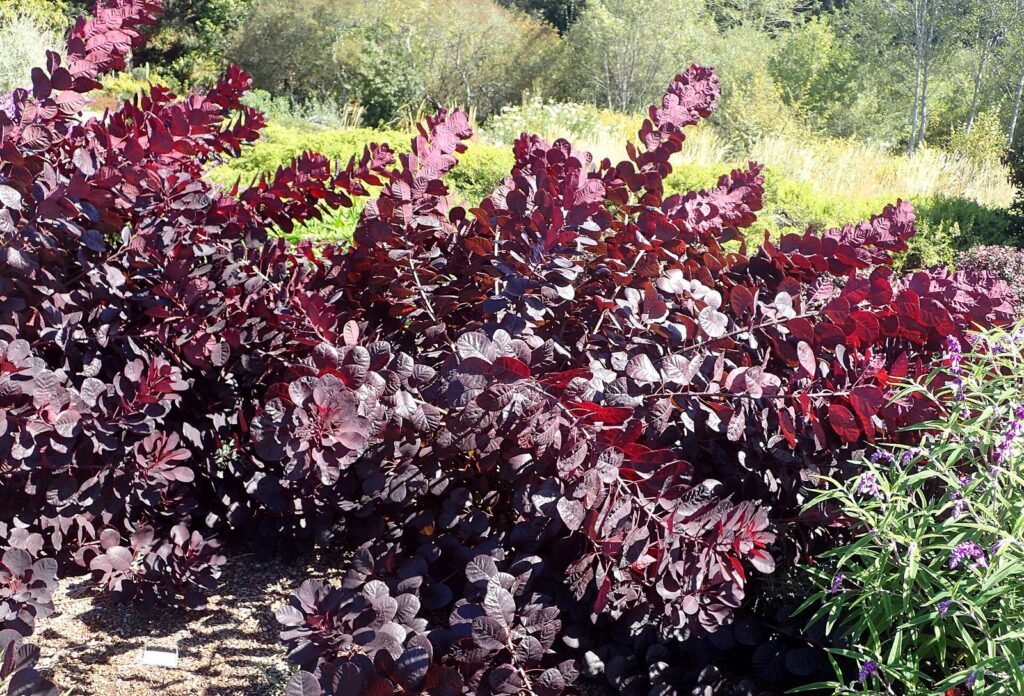
Purple-leaved smoketree cultivars such as ‘Royal Purple’ give the strongest color in full sun. The species is rated for Zones 5 to 8, and hard pruning in early spring produces larger leaves.
Sweet potato vine is the summer-container version of that idea. Missouri Botanical Garden notes that its best leaf color usually occurs in full sun and rates it hardy only in Zones 9 to 11.
Coleus deserves a caution. Missouri Botanical Garden rates the species for part shade, with only some newer cultivars tolerating full sun, so read the tag before planting it in an open bed.
Grasses and full sun leafy plants for borders
Switchgrass is a native prairie grass rated for Zones 5 to 9. It grows in part shade, yet it keeps an upright shape best in full sun.
Culinary sage earns a place as an edible foliage plant. Its gray-green leaves suit full sun in Zones 4 to 8, and wet soil can kill it.
Why it works
Thick, waxy, or hairy leaves lose water more slowly than thin, smooth ones. Missouri Botanical Garden credits the thick, waxy leaves of wax begonias with helping them tolerate drought in hot weather. The same principle explains why silver and succulent foliage dominates sunny borders.
Preventing leaf scorch on full sun foliage plants
Leaf scorch happens when roots cannot replace water as fast as leaves lose it. Missouri Botanical Garden lists prolonged dry, windy weather and bright sunshine as the usual triggers.
Look for browning along leaf margins and yellowing between the main veins. Damage tends to appear first on the sunny, south side of a plant and on the side facing the wind.
These habits prevent most scorch in sunny beds:
- Water deeply and less often, so roots grow down into cooler, moister soil.
- Mulch the bed to slow evaporation from the soil surface.
- Give new plants an extra season of attention while their roots establish.
- Harden off nursery and indoor-grown plants before they face full sun.
- Keep thin-leaved plants away from pavement and walls that reflect heat.
Hardening off catches many gardeners out. Greenhouse-raised plants, like any green leaf plants moved outdoors, carry leaves built for lower light. The Royal Horticultural Society advises starting them in bright shade and adding direct sun gradually.
Caution
Reflected heat adds to direct sun. Missouri Botanical Garden notes that turf beside hardscaping suffered most during extreme heat and drought. A plant rated for full sun can still scorch against a south-facing wall or driveway.
“Scorch most often occurs following prolonged periods of dry, windy weather or bright sunshine when the roots are unable to supply water to the foliage as rapidly as it is lost by transpiration from the leaves.”
Missouri Botanical Garden
Matching sun plants to your zone
Choose by zone first and by leaf color second. In Zone 5, lamb’s ears, sage, switchgrass, smoketree, and Adam’s needle all work as permanent plantings.
Gardeners in Zones 9 to 11 gain New Zealand flax and sweet potato vine as year-round options. Everyone else can still grow those two as summer annuals or in containers brought indoors before frost.
A sunny bed rarely needs exotic plants. It needs leaves designed to hold water, planted where their zone rating and the real hours of sun both match.
Questions & observations