

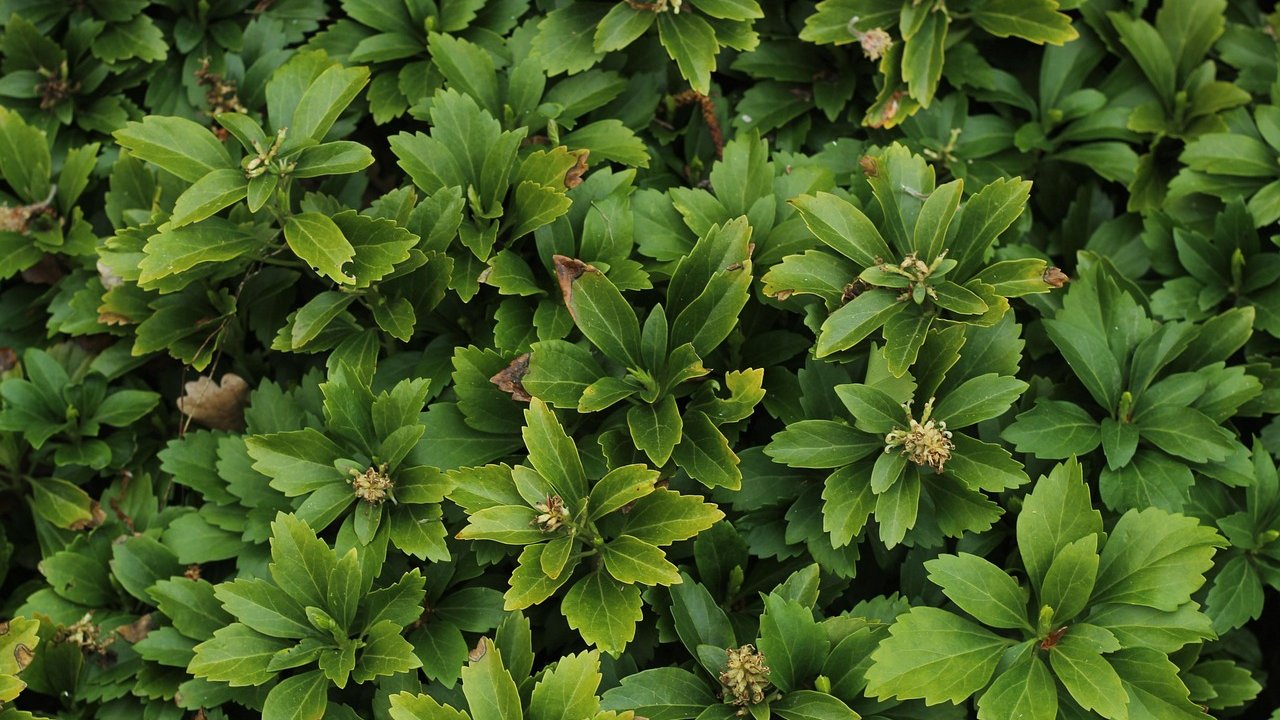
A low maintenance perennial ground cover is a spreading plant that knits into a dense mat and shades out weeds. Pick it by light first, then by USDA zone. Plant it thickly into weed-free soil, and it will need little more than a spring tidy once it fills in.
That last condition matters. Clemson Cooperative Extension notes that a groundcover area may take up to two years to establish. The work you put in during those two seasons decides how little you do afterward.
Choosing a low maintenance perennial ground cover by light
Light narrows the list faster than any other factor. A sun-loving mat sulks in shade, and a woodland plant scorches on a hot slope. Measure how many hours of direct sun the area gets in midsummer before you shop.
Ground covers for shade
Shady ground under trees is where ground covers earn their keep, since lawn grass struggles there. Our guide to garden plants that like shade explains how to read shade levels. These spreaders handle partial to deep shade:
- Japanese pachysandra (Pachysandra terminalis, USDA Zones 4a to 9b): evergreen rosettes that spread by rhizomes into large colonies.
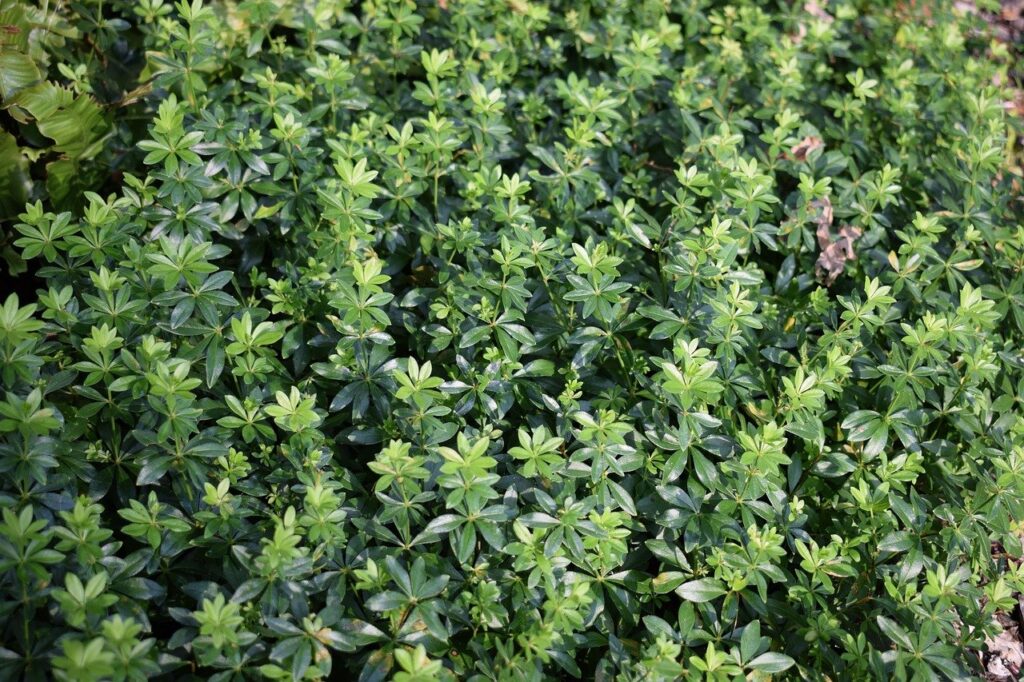
- Sweet woodruff (Galium odoratum, Zones 4a to 8b): fine, whorled leaves for partial to deep shade.
- Spotted dead nettle (Lamium maculatum, Zones 3a to 8b): silver-marked leaves that brighten dark ground.
- Barrenwort (Epimedium, Zones 5a to 8b): heart-shaped leaves that tolerate root competition under trees.
- Canadian wild ginger (Asarum canadense, Zones 4a to 6b): a North American native with soft, kidney-shaped leaves.
Low-growing perennials for full sun
Sunny banks and gaps between stepping stones need a different set of plants. These low-growing perennials for full sun stay close to the ground:
- Creeping thyme (Thymus serpyllum, Zones 4a to 9b): tiny aromatic leaves for sunny gaps and walls.
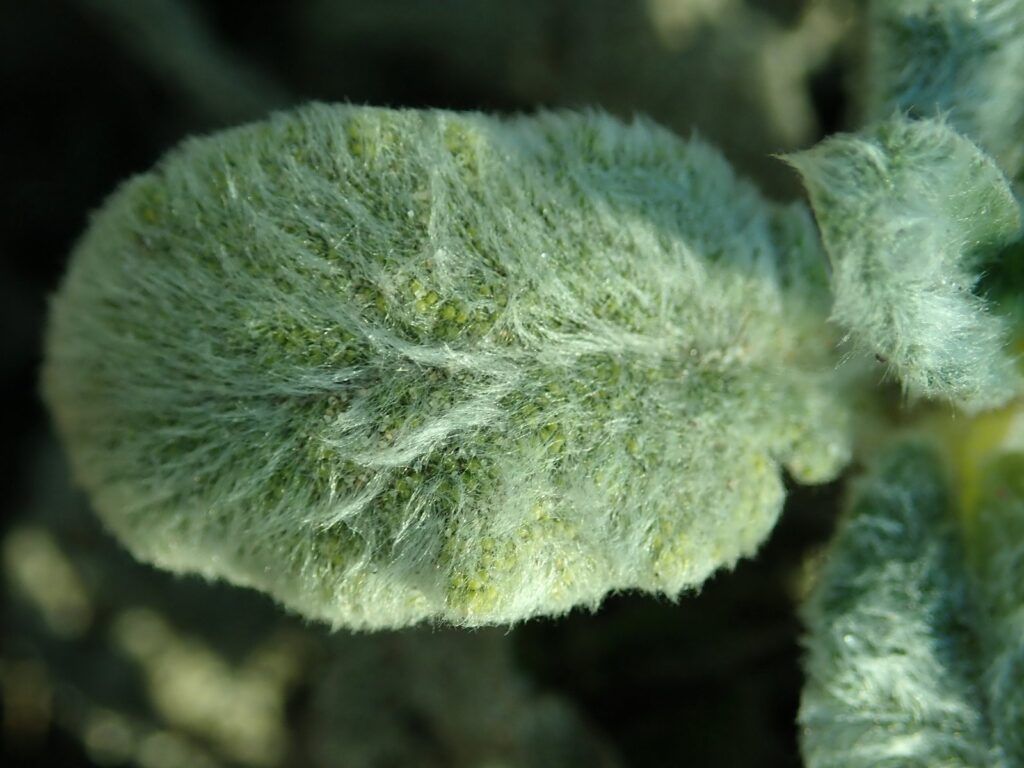
- Lamb’s ears (Stachys byzantina, Zones 4a to 9b): woolly silver leaves for full sun to partial shade.
- Plantain-leaf pussytoes (Antennaria plantaginifolia, Zones 3a to 8b): a native mat of gray-green rosettes.
- Hens and chicks (Sempervivum, Zones 4a to 8b): succulent rosettes for dry, gravelly spots.
All zone ranges come from the NC State Extension Plant Toolbox. Cold hardiness and heat tolerance are separate questions. For sites that swing between extremes, see our guide to plants that survive winter and summer.
How long does ground cover take to fill in?
Most perennial ground covers take one to two growing seasons to close ranks. Clemson’s guidance is to space plants so the bed is completely covered by the end of the third growing season. A staggered, zigzag planting pattern fills in fastest.
Closer spacing gives quicker cover at a higher cost. Slow spreaders such as wild ginger justify tighter spacing. Fast rhizomatous plants such as pachysandra can go farther apart.
Planting ground cover step by step
The steps below follow Clemson’s groundcover fact sheet. Most of the effort happens before the first plant goes in:
- Remove perennial weeds and their roots, since they are almost impossible to pull out of a mat later.
- Work the soil to a depth of 8 to 10 inches.
- Mix in a 2-inch layer of compost or well-rotted manure to improve drainage and moisture retention.
- Set plants in staggered rows at the spacing on the plant tag.
- Spread a 2-inch layer of mulch between the plants to hold back weeds.
- Water often enough that the new plants never wilt, especially after summer planting.
Weed control is a must until the groundcover is fully established.
Clemson Cooperative Extension, Home and Garden Information Center
Field note
Weed little and often during the first two seasons. A ten-minute pass each week stops seedlings before they root into the crowns. That beats a full weekend of weeding each month.
Easy ground covers that bring hard problems
Some ground covers are low maintenance because nothing stops them. That trait becomes a problem once they leave your bed. NC State Extension reports that periwinkle (Vinca minor) is classified as invasive by the North Carolina Invasive Plant Council.
English ivy (Hedera helix) is listed as an invasive species in North Carolina. Bugleweed (Ajuga reptans) is rated a low threat there. Other parts of the country list it as invasive.
Caution
Before you plant any fast spreader, check your state’s invasive plant list. Japanese pachysandra also forms large colonies, so edge it with a buried barrier near lawns and woodland.
What low maintenance looks like from year three
Once the mat closes, the routine shrinks to spring work. Rake fallen leaves off evergreen covers, trim dead stems, and cut back the edges along paths.
Every few years, check for clumps that have thinned in the center. Divide them in spring and replant the vigorous outer pieces to close the gaps.
Why it works
A closed canopy of leaves shades the soil surface. Many weed seeds need light to germinate, so a dense ground cover stops them early. Gaps in the mat are where weeds return first.
Ground covers sit at the bottom layer of a planting, under shrubs and the taller plants valued for their leaves. Choose the layer first, and the rest of the bed becomes easier to plan.
Questions & observations