

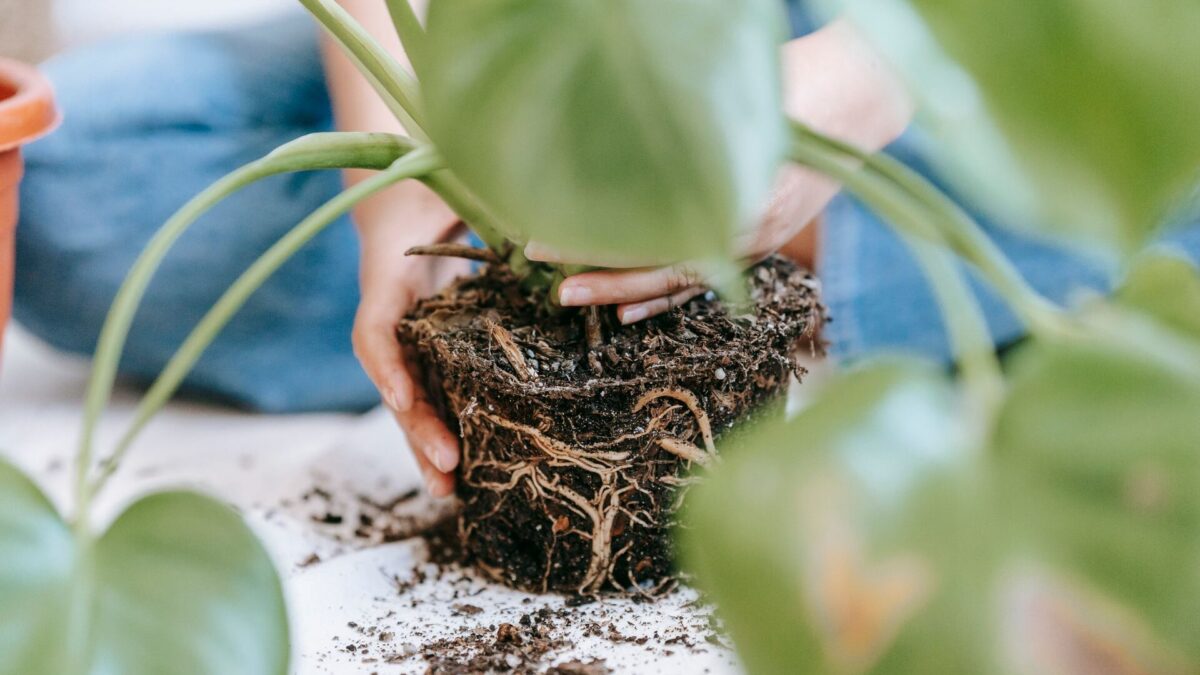
A good soil mix with perlite and bark gives tropical foliage roots steady moisture and open air pockets. For most aroids, start with equal parts bark, peat or coir, and perlite. Cornell University developed that ratio for epiphytic plants.
Bagged potting soil alone usually stays too dense for these plants. The fix is to learn what each ingredient does. Then adjust the ratio to the plant, the pot, and your watering habits.
What Each Ingredient Does in the Pot
Roots need oxygen as much as water. Clemson Cooperative Extension lists four traits of a quality container mix. It supports the plant, holds nutrients, drains freely, and stays free of pests and weed seeds.
No single ingredient covers all four. That is why nearly every recipe for foliage plants combines a fine, water-holding base with one or two coarse materials.
Peat and Coir Hold the Water
Sphagnum peat moss is the classic base of soilless mixes. It holds water and nutrients well, but on its own it packs down and can stay soggy around the root ball.
Coconut coir now fills the same role in many home mixes. Clemson notes that coir is a lower-cost and more sustainable alternative to peat. Rinse it thoroughly before use, because unwashed coir can raise salt levels in the pot.
Bark Opens Large Pores
Pine or fir bark adds chunky particles that leave wide gaps between them. Water drains through those gaps quickly, and air moves back in behind it.
Bark matters most for epiphytes. Many philodendrons, monsteras, and hoyas climb trees in the wild, where their roots grip bark and dry quickly between rains. A bark-heavy mix copies that pattern in a pot.
Perlite Keeps the Mix From Collapsing
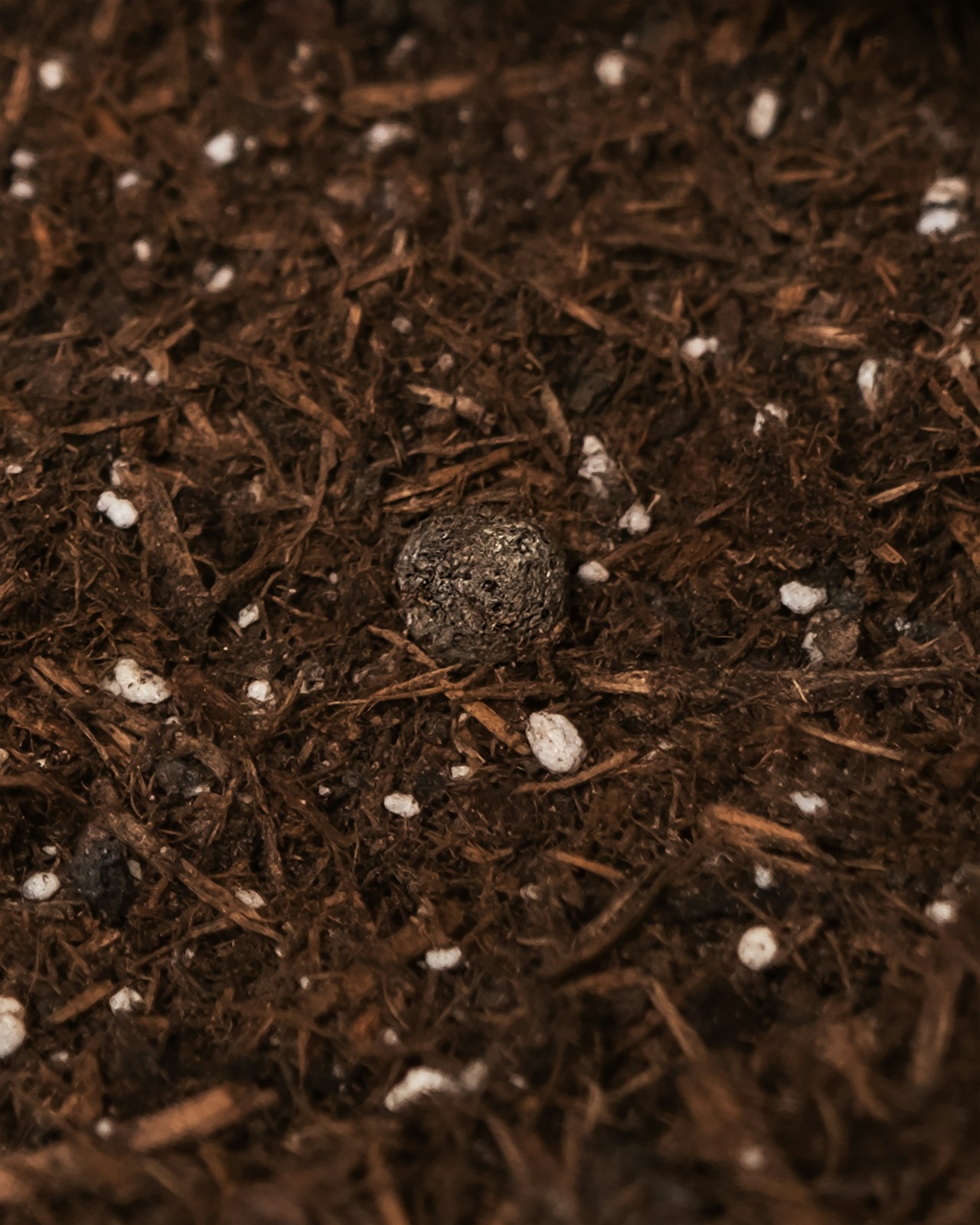
Perlite is expanded volcanic glass. It holds water only on its surface and does not break down. That keeps air spaces open long after peat and bark start to settle.
The tradeoff is weight and nutrition. Perlite adds no nutrients and floats to the surface when you water heavily, so it works best mixed evenly through the whole pot.
Building a Soil Mix With Perlite, Bark, and Peat
Extension services have published tested recipes for decades. They hold up better than viral “aroid mix” formulas with eight ingredients. The table below collects the recipes from Clemson’s factsheet HGIC 1456, updated in October 2024.
| Recipe (by volume) | Source | Suited to |
|---|---|---|
| 1 part fir bark, 1 part peat, 1 part perlite | Cornell Epiphytic Mix | Monstera, Philodendron, Hoya, Peperomia, Dieffenbachia |
| 2 parts peat, 1 part vermiculite, 1 part perlite | Cornell Foliage Plant Mix | Ferns, Begonia, Maranta, Ficus, Pilea |
| 1 part peat, 1 part pine bark, 1 part perlite | Clemson foliage mix | General foliage plants |
| 2 parts pine bark, 1 part peat, 1 part sand | Clemson Plant Mix | All foliage plants in Clemson’s trials |
The two Cornell recipes also call for dolomitic lime and starter fertilizer per bushel. Clemson adjusts its own bark mix to a pH of about 6.0. It adds a balanced water-soluble fertilizer every seventh watering.
Mixes for Aroids and Other Epiphytes
Many popular tropical houseplants belong to the aroid family. Nearly all of them want the epiphytic end of the scale. Start with the Cornell ratio of one-third bark, one-third peat or coir, and one-third perlite.
Adjust from there by watching the plant. If the mix stays wet for more than a week in a bright room, add another part of bark. If it dries out in two days, add back some peat or coir.
Mixes for Ferns, Begonias, and Prayer Plants
Plants with fine, thin roots need a softer blend. Ferns, begonias, and marantas sit on Cornell’s foliage plant list, and that mix is half peat with only a quarter perlite.
These plants also suffer first in dry indoor air. Their mix should work with the humidity routine in our guide to humid tropical plants. Keep it evenly damp, never waterlogged.
Why Does Gravel in the Bottom of a Pot Make Drainage Worse?
Gravel at the bottom raises the wet zone instead of removing it. Water moving down through a fine mix stops at the boundary with a coarser layer. It stays perched there until the mix above is saturated.
Dr. Linda Chalker-Scott, Extension Urban Horticulturist at Washington State University, has written about this “perched water table” for years. She points to an old soil experiment with silt loam layered over sand.
“When water moving through a soil reaches a horizontal or vertical interface between different soil types, it stops moving. […] Water is finally forced into the sand layer by gravitational pressure, after, of course, saturating the silt loam.”
Linda Chalker-Scott, Washington State University, The Garden Professors
The practical rule is simple. Use one uniform mix from top to bottom. If soil spills out, cover the drainage hole with mesh or a bark chip.
What Soggy Media Does to Roots
Roots sitting in saturated mix run short of oxygen and begin to rot. The first sign usually shows above ground, as lower leaves fade and drop.
That pattern overlaps with nutrient problems. Learn why plant leaves turn yellow before you reach for fertilizer. If the mix smells sour or feels wet an inch down days after watering, the soil is the problem.
How to Mix and Repot Without Compaction
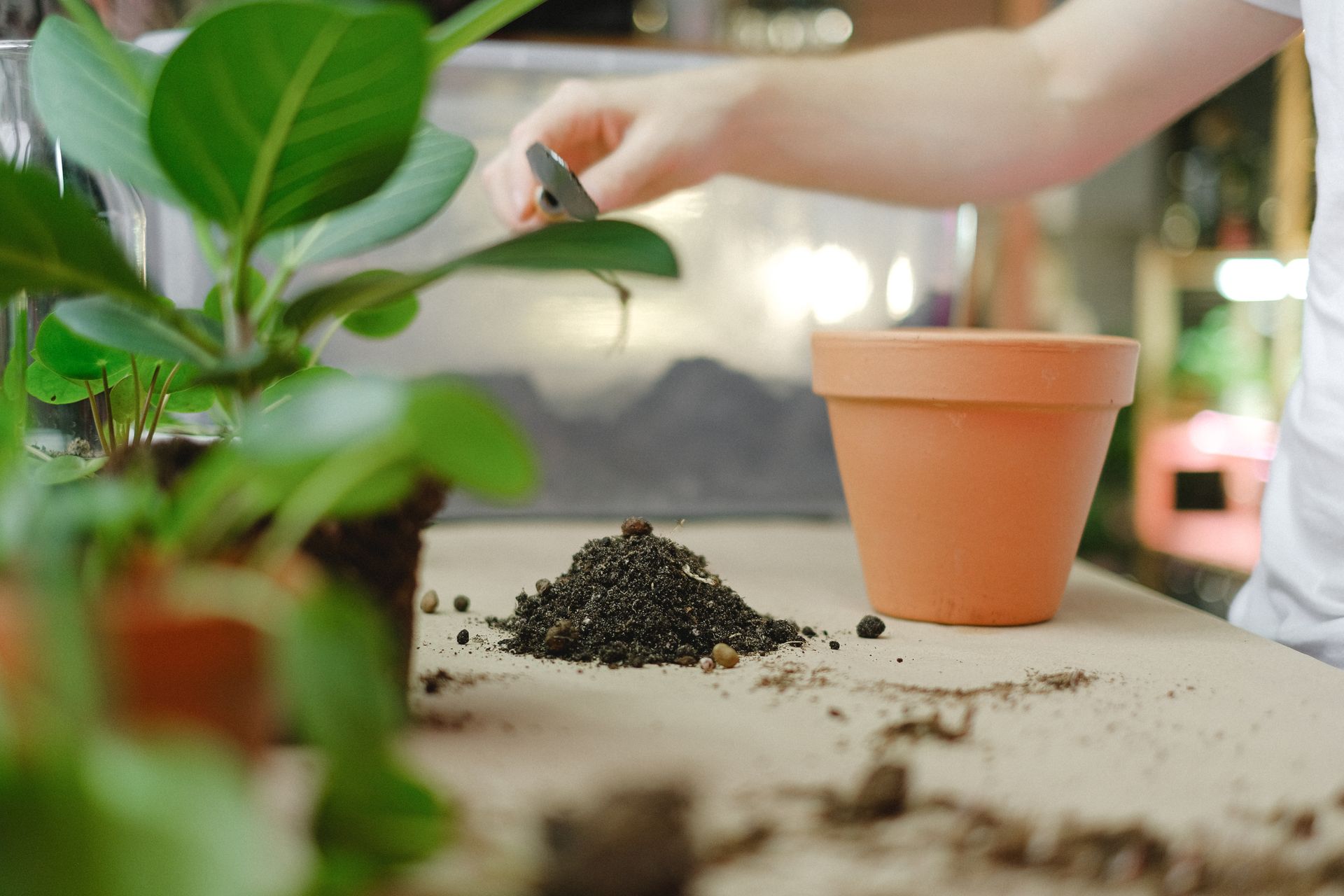
Measure by volume, not weight, since bark and perlite are far lighter than peat. A clean bucket or a plastic storage tub works fine for small batches.
- Moisten peat or coir before mixing, because dry peat repels water.
- Combine the base, bark, and perlite until the color looks even throughout.
- Choose a pot with a drainage hole. University of Minnesota Extension says this lets excess water escape and prevents root rot.
- Move up no more than 2 to 3 inches (5 to 8 cm) in pot diameter, as UMN Extension recommends.
- Firm the mix gently with your fingers instead of pressing it down hard.
Water slowly until it runs from the hole, then empty the saucer. A plant in a fresh, airy mix often needs water less often than it did in old, compacted soil.
Treat your first ratio as a test batch. Track how many days your pots take to dry at the top inch, and change one ingredient at a time. Which of your plants is still sitting in the dense mix it came home in?
Questions & observations