

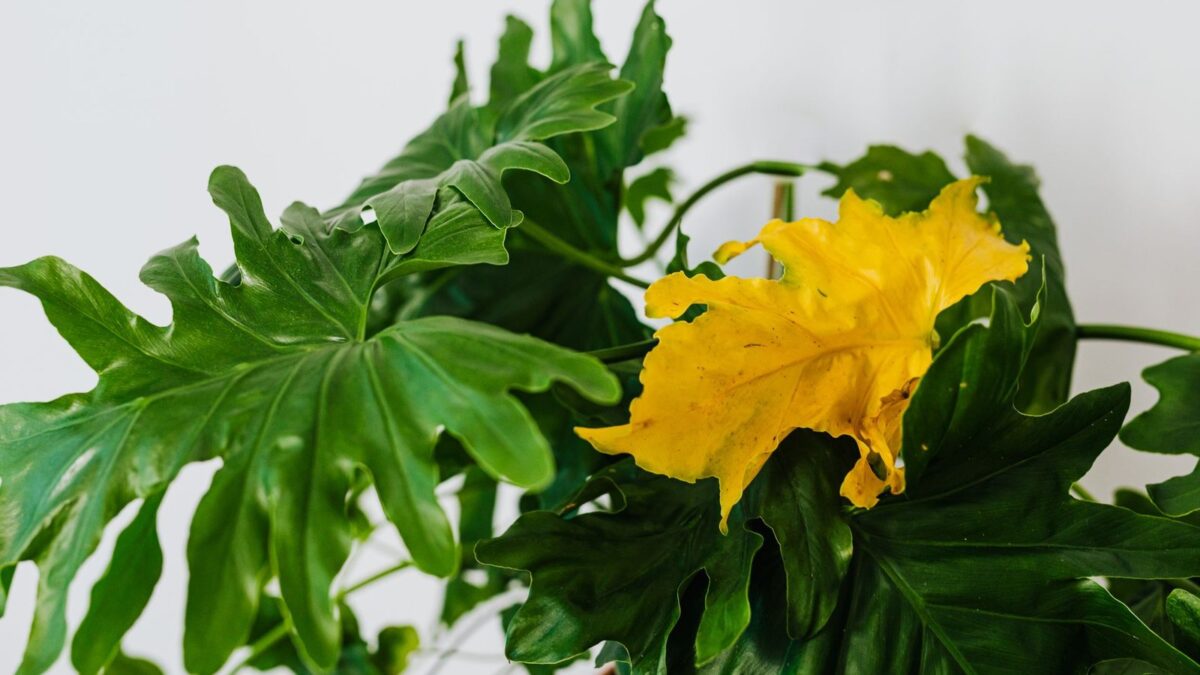
Plant leaves turn yellow when they lose chlorophyll faster than the plant can replace it. The usual causes are waterlogged roots, a nutrient shortage, or too little light. Sometimes a leaf is simply reaching the end of its life.
The yellow itself looks much the same in every case. What separates the causes is where the yellowing starts and what pattern it leaves on the blade.
Why do plant leaves turn yellow?
Yellowing means the green pigment is breaking down or not being made. The Royal Horticultural Society puts it simply: “Chlorosis is simply another term for yellowing.” Roots, nutrients, light, pests, and viruses can all trigger it.
Do not confuse yellowing with a pale pattern the plant was born with. The cream zones on variegated leaves are stable and grow that way from the start. Chlorosis is a change in leaves that used to be green.
A yellow leaf has lost most of its ability to make food. Our guide to what foliage leaves are used for explains that job. A spreading yellow patch is a real cost to the plant.
Start with where the yellowing begins
The single most useful clue is leaf age. Dorivar Ruiz Diaz and colleagues explain why in a Kansas State University Research and Extension guide. They sort nutrients by how freely each one moves inside the plant.
Oldest leaves first: mobile nutrients
Some nutrients can be pulled out of old leaves and shipped to new growth. When supply runs short, the plant strips its lower leaves to feed the tip, so the oldest leaves yellow first. The K-State guide lists four of these mobile nutrients:
- Nitrogen: pale, yellowish-green older leaves, often with slow growth.
- Phosphorus: older leaves stay dark green but turn reddish-purple at the tips and margins.
- Potassium: yellowing and dead tissue along the margins of the lowest leaves.
- Magnesium: yellowing between the veins of the oldest leaves, starting near the tips.
Newest leaves first: immobile nutrients
Other nutrients stay where the plant first put them. If supply dries up, the existing leaves keep their share and the new leaves go without. Iron, sulfur, calcium, zinc, copper, manganese, molybdenum, and boron fall in this group.
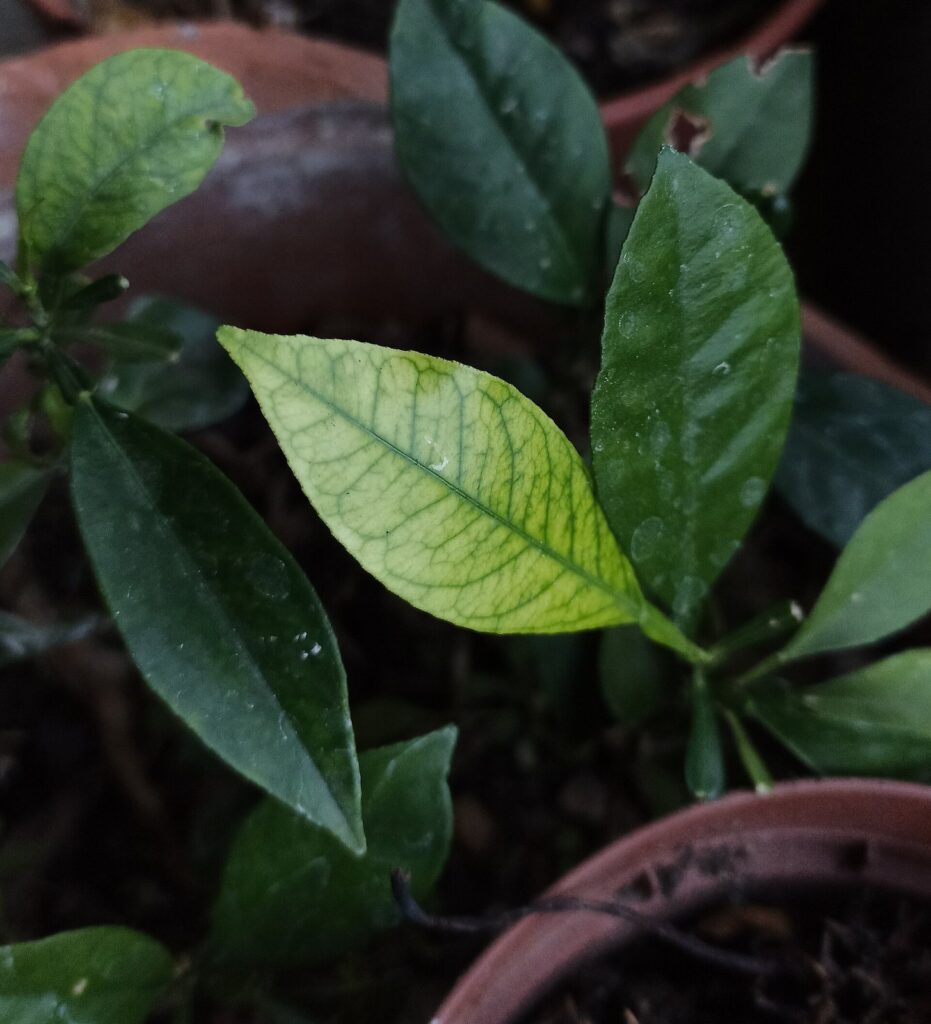
Iron shortage gives the most recognizable picture. New leaves turn pale yellow while the veins stay sharply green. The K-State guide notes that iron problems are worse in alkaline, cold, wet, or poorly aerated soil.
Sulfur shortage looks like nitrogen shortage at first glance. K-State points out that sulfur yellowing shows more on the younger upper leaves. Sulfur does not move easily within the plant.
Why it works
Leaf position works as a test because the plant rations scarce nutrients. A mobile nutrient gets moved to where growth is happening, which leaves old leaves short. An immobile one cannot be moved, so only the leaves made after supply ran out go without.
Sources do not agree on every nutrient. K-State lists manganese as immobile, which points to young leaves. The RHS says manganese deficiency tends to start on older ones.
Treat manganese as a lab-test question, not a visual diagnosis. A soil or leaf test settles what the leaf pattern cannot.
Wet roots cause more yellow leaves than hungry ones
In containers, the most common cause of yellowing is often the roots, not the soil’s nutrient content. The K-State guide warns that nutrients in the soil are no guarantee of uptake. Excessively wet soil, cold, and compaction all restrict root growth and access to nutrients.
Iowa State University Extension horticulturist Aaron Steil lists the signs of overwatering. They include “yellowing or browning of leaves, leaf drop, wilting,” along with crown rot and fungus gnats. Wilting from damaged roots often prompts more watering, which makes the damage worse.
Steil recommends checking soil moisture before every watering instead of following a calendar. Water when the soil is dry an inch or two down. If you are unsure, wait one more day.
Caution
Do not reach for fertilizer at the first yellow leaf. If the roots are waterlogged or rotting, they cannot use the extra feed. Iowa State Extension also warns that salts from excess fertilizer can damage roots, adding a second problem to the first.
Low light and the natural end of a leaf
Not every yellow leaf signals a problem. A plant drops old leaves all the time, and it recovers what it can from them first.
Normal leaf aging
Before a leaf falls, the plant pulls nutrients back out of it. Rien Aerts measured how much in a 1996 review in the Journal of Ecology, pooling published data on perennials. Plants withdrew about 50 percent of a leaf’s nitrogen on average, and 52 percent of its phosphorus.
That recovery is part of why old leaves turn yellow before they drop, usually at the bottom of the plant. One or two old leaves going yellow while new growth looks healthy is usually routine.
Too little light
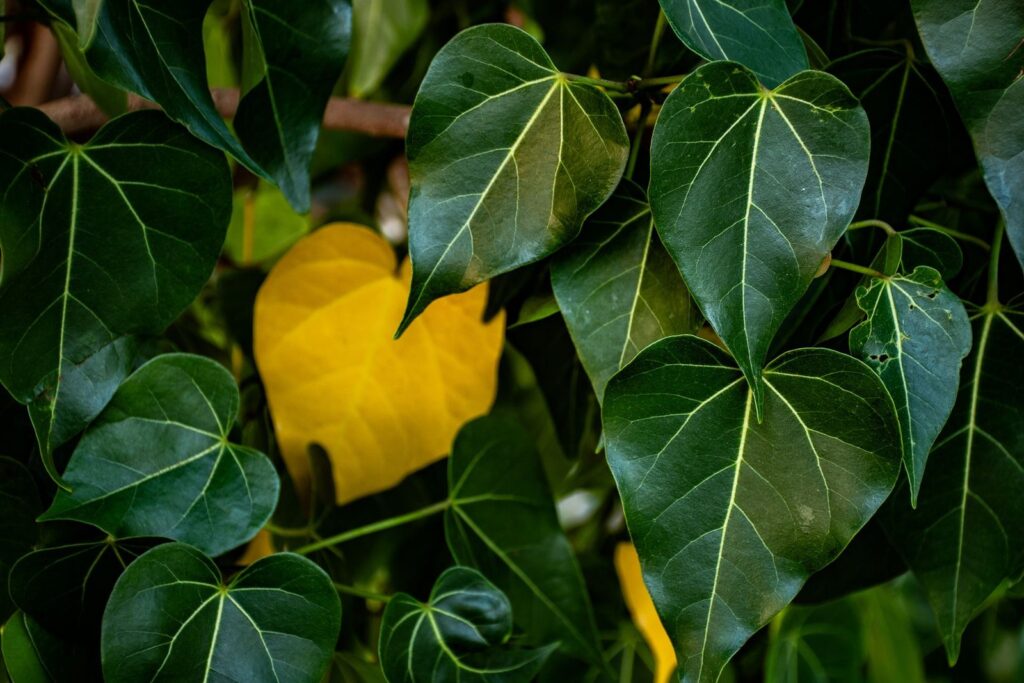
Low light adds to that turnover. Illinois Extension’s Richard Hentschel notes that in dim winter rooms, “Older leaves may begin to yellow and drop.” The plant sheds leaves it can no longer support with the light available.
Other signs of low light usually appear alongside it. New leaves come in smaller, and stems stretch toward the brightest window.
Pests, viruses, and cold
Some yellowing comes from damage to the leaf itself rather than from roots or nutrients. The pattern here is usually patchy rather than tied to leaf age.
The RHS describes glasshouse red spider mite as one of the most troublesome pests of houseplants. Infested leaves show “a fine pale mottling on the upper leaf surface,” often with fine webbing. The mites thrive in warm, dry rooms.
Viruses leave mosaic or mottled patterns and pale rings. University of Maryland Extension warns that these symptoms can be confused with nutrient deficiencies. It adds that “there is no cure for infected plants,” so removal protects the neighbors.
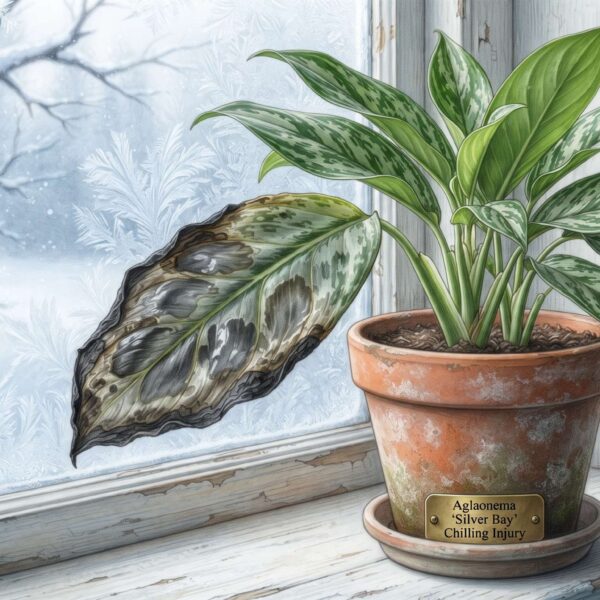
Cold can also look like a watering problem at first. Chilling injury on tropical foliage, such as an alocasia elephant ear, starts as water-soaked patches before the tissue browns. Our guide to keeping humid tropical plants healthy indoors covers the safe temperature range.
Reading the pattern: a diagnostic table
Use the table as a first sort, then confirm by checking the soil and roots. Several causes can overlap, especially in a plant that has been overwatered for weeks.
| Where it starts | Pattern | Likely cause | What to check |
|---|---|---|---|
| Oldest, lowest leaves | Even yellow, slow growth | Nitrogen shortage | Months since last feeding |
| Oldest leaves | Yellow between veins | Magnesium shortage | Feeding history, soil test |
| Newest leaves | Yellow with green veins | Iron shortage | Soil pH, cold or soggy mix |
| Newest leaves | Even pale yellow | Sulfur shortage | Feeding history, soil test |
| Leaves all over, with wilting | Yellow or brown, drooping in wet soil | Waterlogged or rotting roots | Soil moisture, root color and smell |
| Lower leaves, one or two at a time | Even yellow, then drop | Normal aging | New growth looks healthy |
| Lower leaves, plus small new leaves | Yellow and drop, leggy stems | Too little light | Distance from the window |
| Scattered leaves | Fine pale speckles, webbing | Spider mites | Leaf undersides with a hand lens |
| Scattered leaves | Mosaic, mottling, or pale rings | Virus | Isolate the plant |
Low light deserves a second look whenever the table points there. A plant that also leans hard toward the glass is showing phototropism at work. Moving it closer to the window fixes both signs.
A yellow leaf rarely turns green again, so judge your fix by the new growth. If the next two or three leaves come in green, the cause has been dealt with.
Questions & observations