
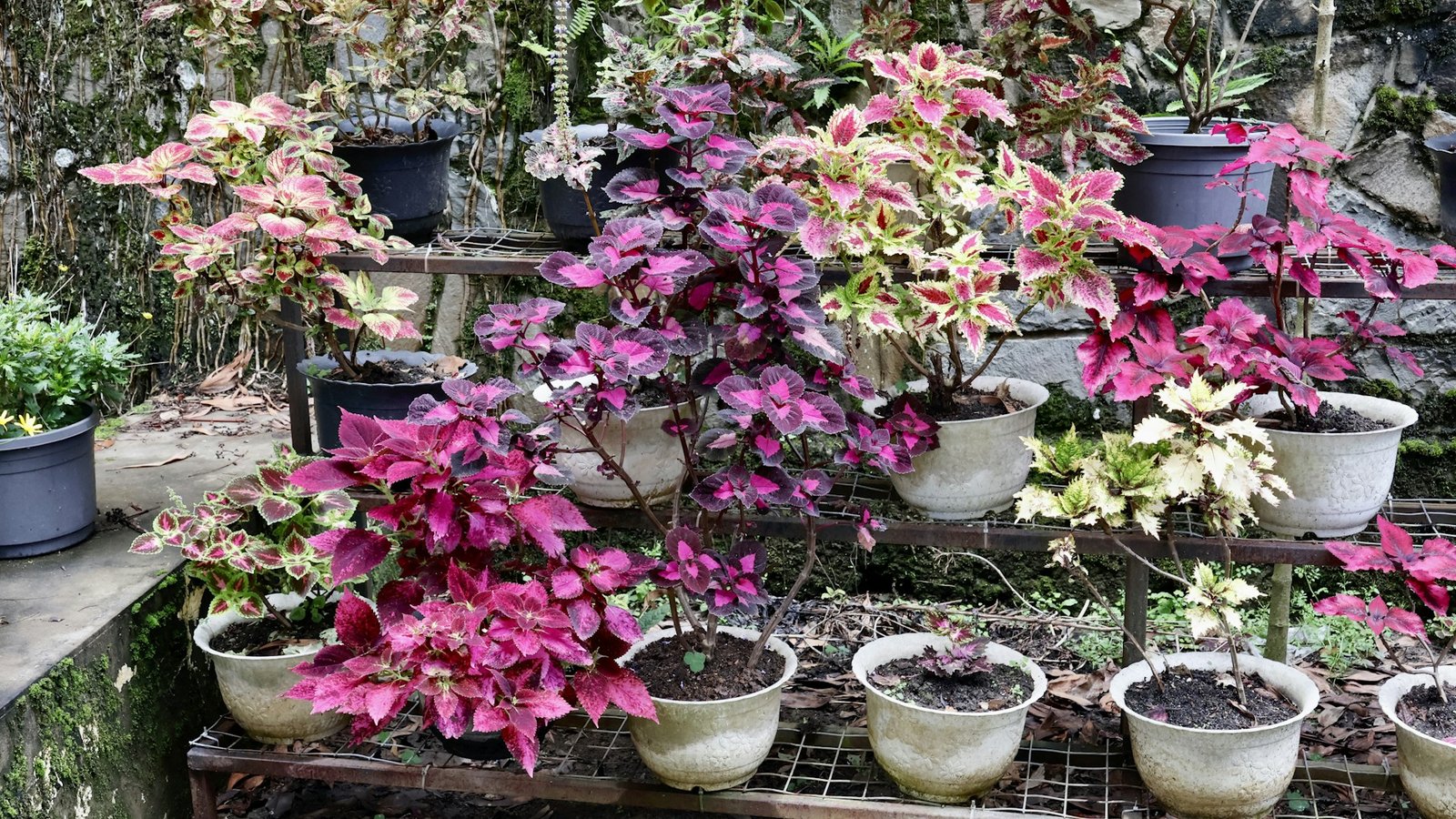
The most dependable shade plants for pots are compact foliage plants such as coral bells, hostas, coleus, and caladiums. Their leaves hold color all season. Choose them by pot size and by whether the container stays outside over winter.
Pots solve problems that open ground cannot. They fit on a shaded porch, a north-facing step, or a patch of roots under a maple. For in-ground beds, start with our guide to garden plants that like shade sorted by shade level and zone.
What makes a good shade plant for container growing?
A good shade plant for container growing has compact roots, tolerates deep shade, and gets its color from leaves. Flowers fade in low light, while patterned leaves hold steady until frost. The plant must also cope with fast-drying mix and cold winter roots.
Rutgers Cooperative Extension sets the bar for shade at less than two hours of direct sun per day. Its fact sheet adds a blunt warning that rarely can a plant survive in a dark, totally shaded spot. If your corner gets no direct sun at all, choose the toughest plants on this list and expect slower growth.
Size and soil come before the plants
Small pots are the most common mistake. Rutgers fact sheet FS1215 notes that most beginners underestimate the container size they need. It recommends at least 3 inches of potting mix below the root balls.
- Drainage: every pot needs holes, and Rutgers suggests drilling extra ones in any pot that drains slowly.
- Mix: use a packaged soilless potting mix. Rutgers says garden soil is never recommended because it compacts and blocks drainage.
- Volume: a larger pot holds more water and buffers roots against heat and cold.
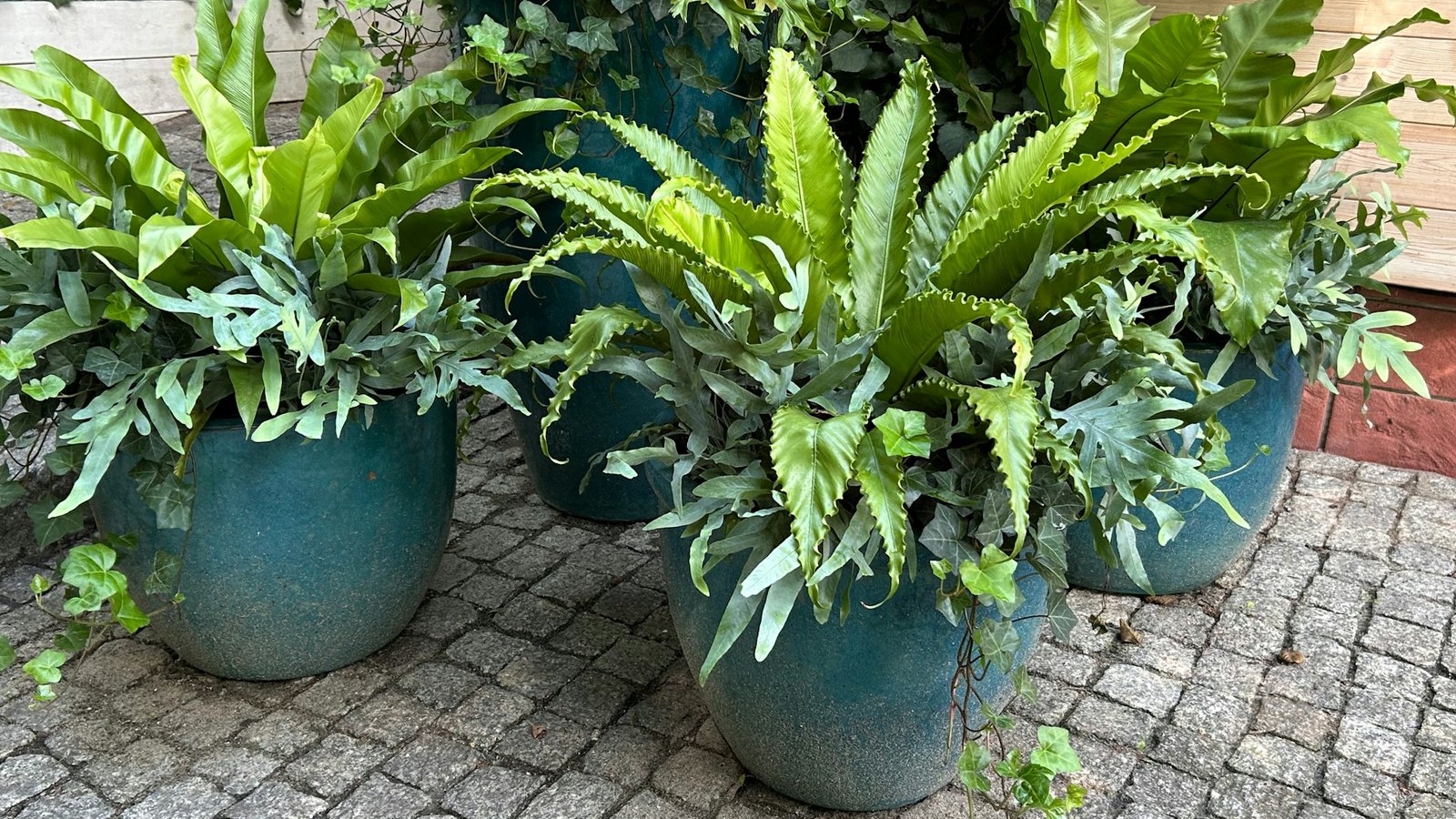
For a three-plant combination, choose the widest pot the space allows. A single large hosta needs a similar volume on its own. To group several finished pots, borrow from these shaded flower pot ideas.
Thriller, filler, and spiller plants with leaves
Rutgers calls the thriller the focal point and the filler the body of the pot. The spiller trails over the edge. In shade, foliage can fill all three roles without a single flower.
Thrillers: upright and bold
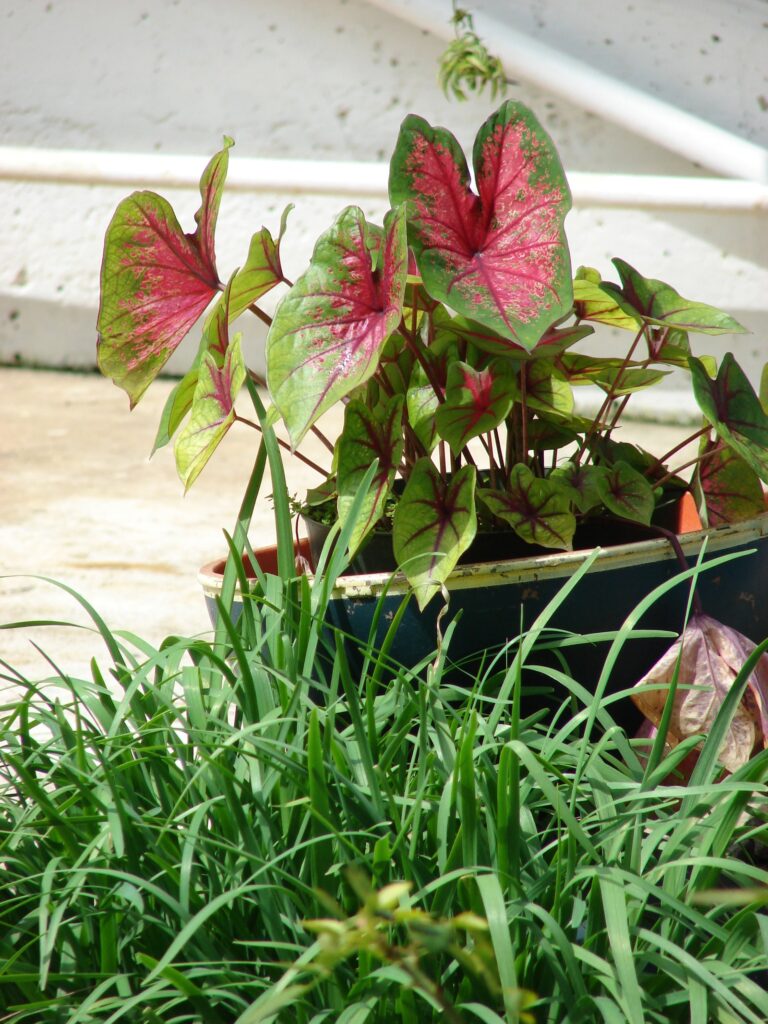
Caladiums are the classic shade thriller, with arrow-shaped leaves splashed in red, pink, or white. NC State Extension rates Caladium bicolor for USDA Zones 9a to 10b.
Like other humid tropical plants, caladiums stall in cold weather. Outside those zones, dig the tubers up after the first frost and store them indoors.
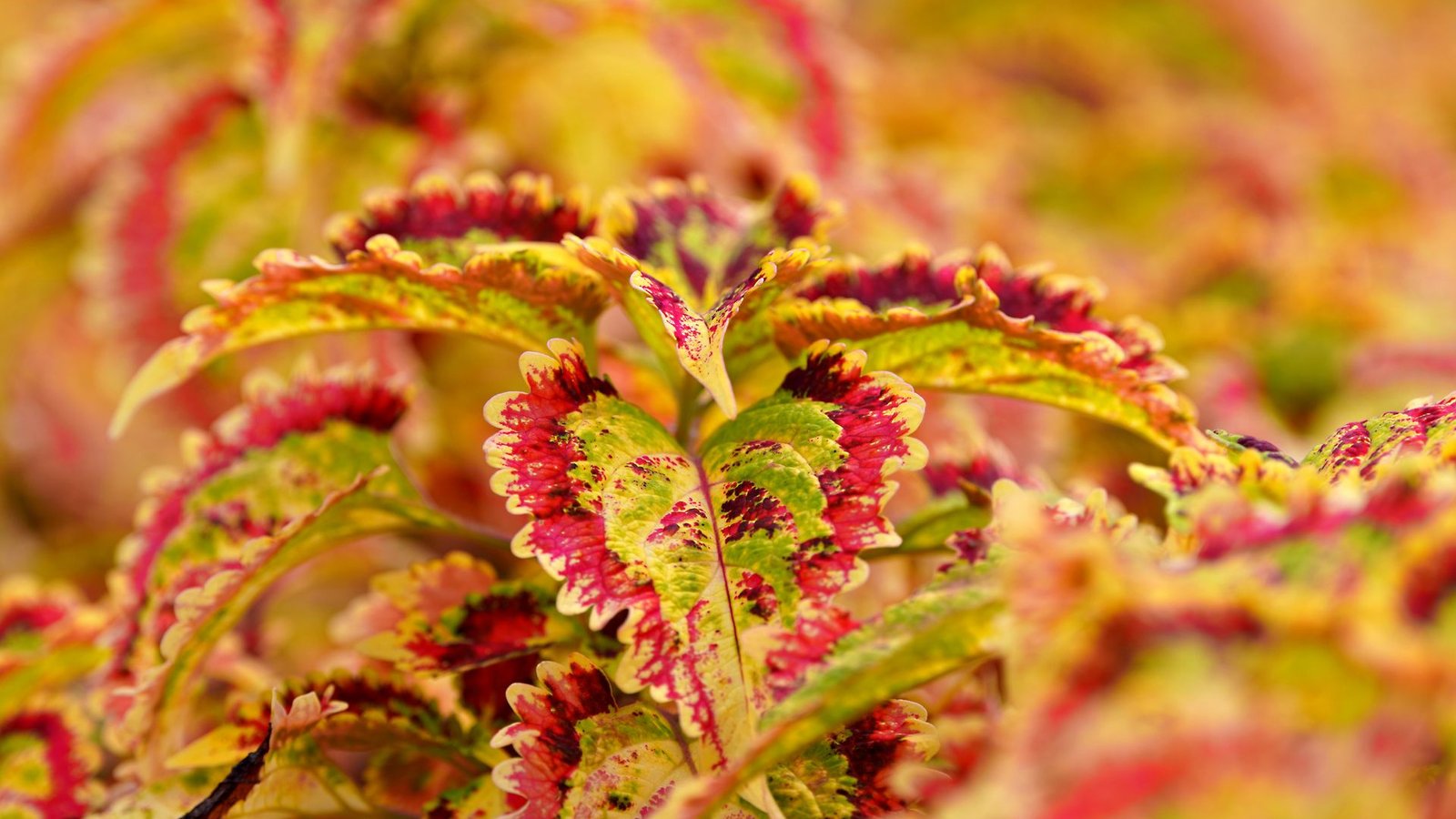
Upright coleus (Coleus scutellarioides) works the same way and handles deep shade to full sun. Its hardiness range is Zones 10a to 11b, so most gardeners grow it as an annual.
Fillers: mounds of color
Coral bells (Heuchera, Zones 3a to 9b) are the most versatile filler for shade. Their leaves run from lime to near-black, so one cultivar can echo the thriller and another can contrast it. Japanese painted fern (Athyrium niponicum ‘Pictum’, Zones 4a to 9b) adds silver and a finer texture.
Spillers: soft edges
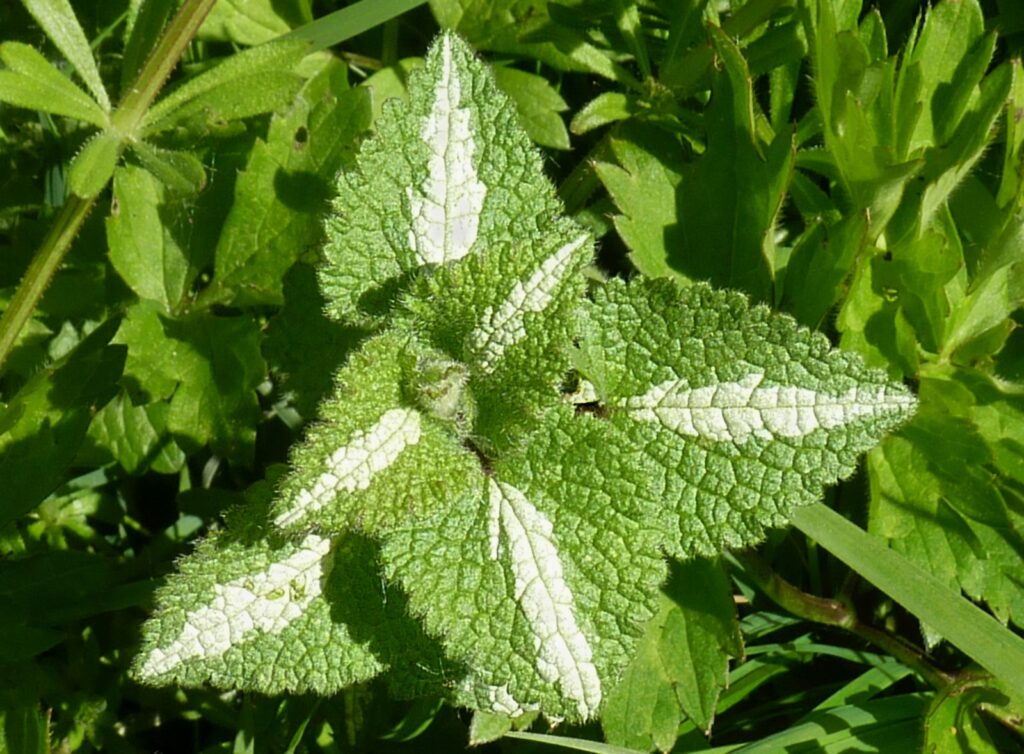
Spotted dead nettle (Lamium maculatum, Zones 3a to 8b) trails over the rim with silver-marked leaves. Japanese forest grass (Hakonechloa macra, Zones 5a to 9b) also works as a spiller. Its blades arch in one direction and pour over the edge of a tall pot.
Field note
Rutgers advises against a centered thriller ringed by other plants. Set it toward the back or one side, which leaves the front open for fillers and spillers.
Potted plants that love shade, at a glance
When selecting plants for shade pots, matching the container size to the root volume prevents the soil from staying soggy in low-light conditions. The table pairs each plant with its role and what happens to it in winter. Zones come from the NC State Extension Plant Toolbox.
| Plant | Role | USDA zones | Winter plan in Zones 5 and 6 |
|---|---|---|---|
| Caladium (Caladium bicolor) | Thriller | 9a to 10b | Dig and store tubers |
| Coleus (Coleus scutellarioides) | Thriller | 10a to 11b | Grow as an annual |
| Hosta | Thriller or filler | 3a to 9b | Can stay out in a large pot |
| Coral bells (Heuchera) | Filler | 3a to 9b | Can stay out in a large pot |
| Japanese painted fern | Filler | 4a to 9b | Shelter the pot or plant out |
| Japanese forest grass | Spiller | 5a to 9b | Shelter the pot or plant out |
| Spotted dead nettle | Spiller | 3a to 8b | Can stay out in a large pot |
Keeping perennials alive in pots over winter
Roots in a pot face colder winters than roots in the ground. Illinois Extension horticulture educator Ken Johnson explains that most plants’ roots are far less cold-hardy than their above-ground parts.
The general rule is to select plants that will survive two zones cooler than where the plant will be growing.
Ken Johnson, University of Illinois Extension
In a Zone 5 garden, that rule points to plants rated for Zone 3. Hosta, coral bells, and spotted dead nettle all reach Zone 3a and can stay outside in a large pot.
Japanese forest grass and painted fern fall short of that margin. Move their pots to an unheated garage in fall, or plant them in the ground.
Why it works
Soil in the ground buffers roots from the coldest winter air. A pot exposes its root ball on every side, so the roots track air temperature. Grouping pots together and using larger containers slows that heat loss.
Watering shade containers by touch
Pots in shade lose water more slowly than pots in sun, which makes overwatering the bigger risk. Rutgers warns against watering by the calendar. A pot may need nothing for days in cool weather, then water once or twice daily in hot, dry spells.
Push a finger an inch into the mix before you water. If it feels damp, wait a day. Leaf color gives a second signal, since yellowing lower leaves in a shady pot usually point to soggy roots.
Many of these plants come from forest understories, so foliage plants grown for their leaves suit shady pots. Start with one large pot built from a thriller, a filler, and a spiller. After one season you will know which plants earn a permanent place on your porch.
Questions & observations