

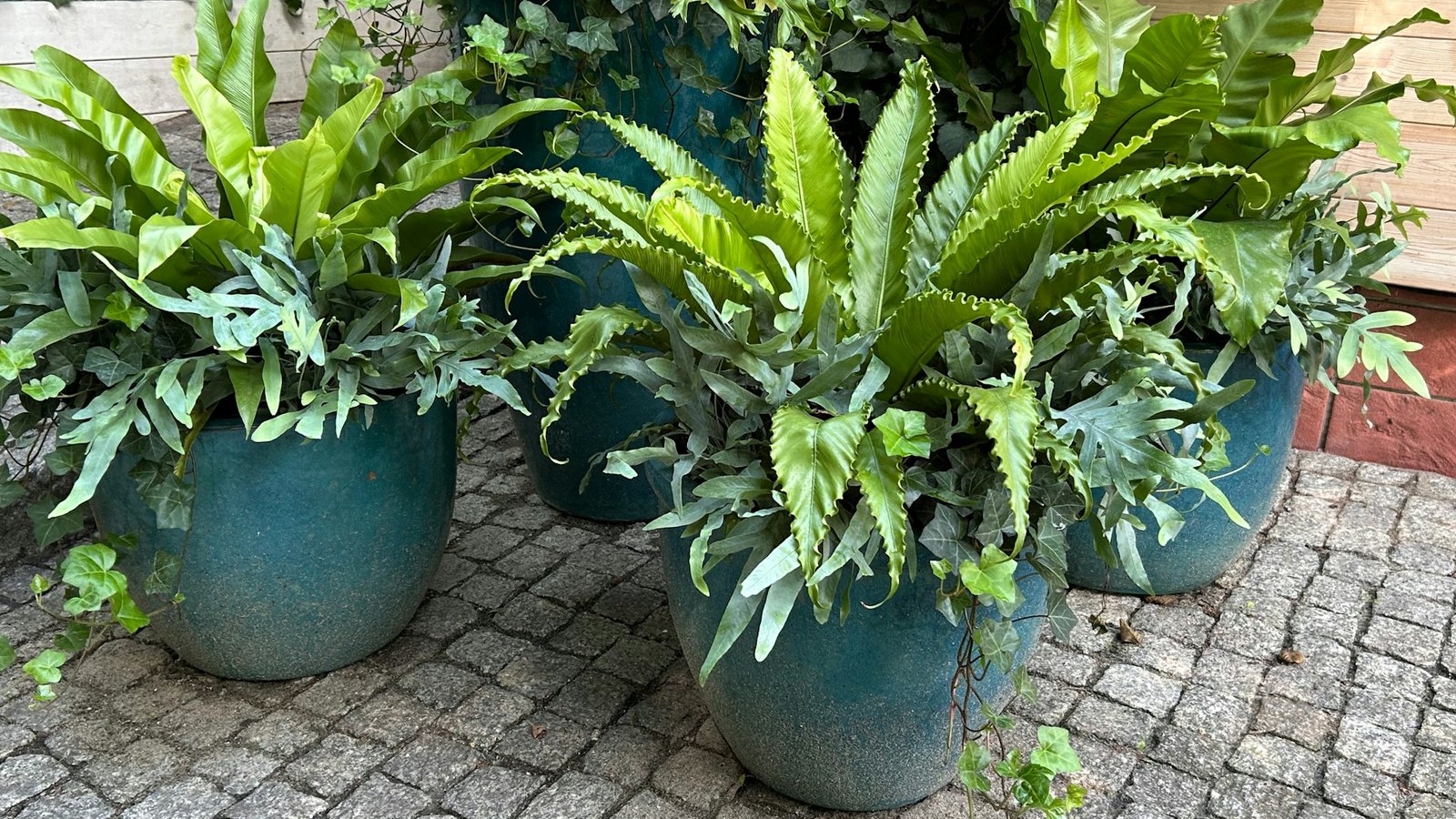
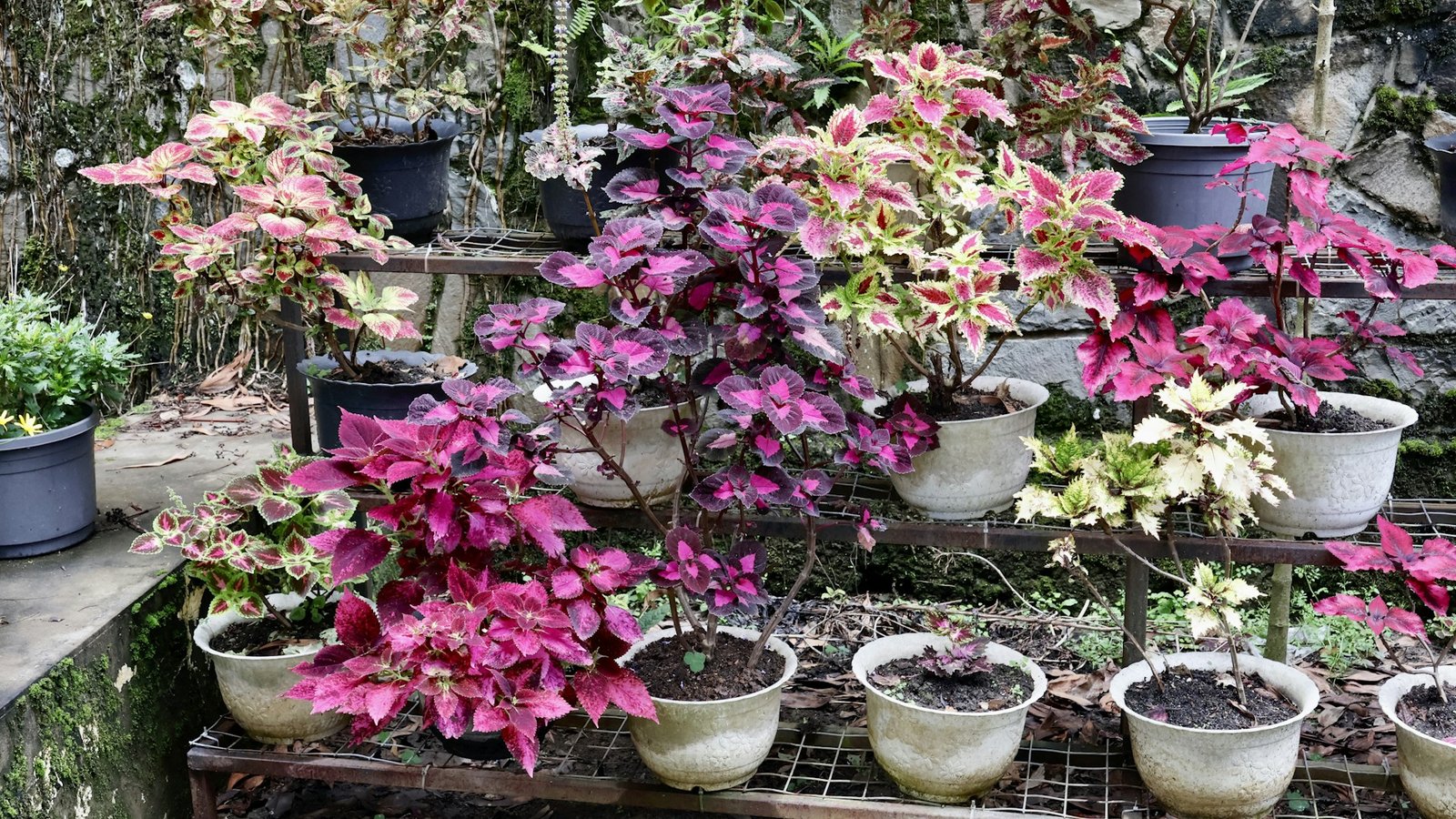
The best shaded flower pot ideas start with leaves rather than blooms. Group pots at different heights and repeat one plant across them. Then fill them with colored or patterned foliage that holds its look until frost.
“Flower pot” here means the container, whatever grows in it. Choosing the plants themselves is a separate job, covered in our guide to shade plants for pots and container combinations. This page is about arranging and styling them.
Why these shade flower pots are filled with foliage
Most flowering plants bloom less in shade, and their show is brief even when they do. Rutgers Cooperative Extension notes that plants with colorful or architectural foliage often give a longer period of interest. In shade, that advantage grows, because leaves keep their color in low light.
Phytophile covers plants grown for their leaves, so every idea below uses foliage. A hosta, a fern, and a coral bell can carry a pot from spring to fall without deadheading. Readers who want blooms will find the same styling principles apply.
Which pot material works best in shade?
Rutgers fact sheet FS1215 explains that terracotta and metal pots dry out quickly in summer heat. Glazed ceramic, plastic, and fiber do not. In a shady spot that dries slowly, a porous clay pot helps prevent soggy roots.
| Material | Drying speed | Weight | Best use in shade |
|---|---|---|---|
| Terracotta | Fast | Heavy | Moisture-sensitive plants such as coral bells |
| Glazed ceramic | Slow | Heavy | Ferns and hostas that like steady moisture |
| Plastic or fiber | Slow | Light | Large pots that need moving |
| Metal | Fast | Varies | Accent pots in bright shade only |
Rutgers adds that plastic containers weigh less than ceramic or clay. For a heavy glazed pot, it suggests setting it on casters before planting.
Shaded flower pot ideas that work with foliage
Each idea below can stand alone or combine with the others. Start with the first two, since they shape the whole arrangement.
Group three pots at three heights
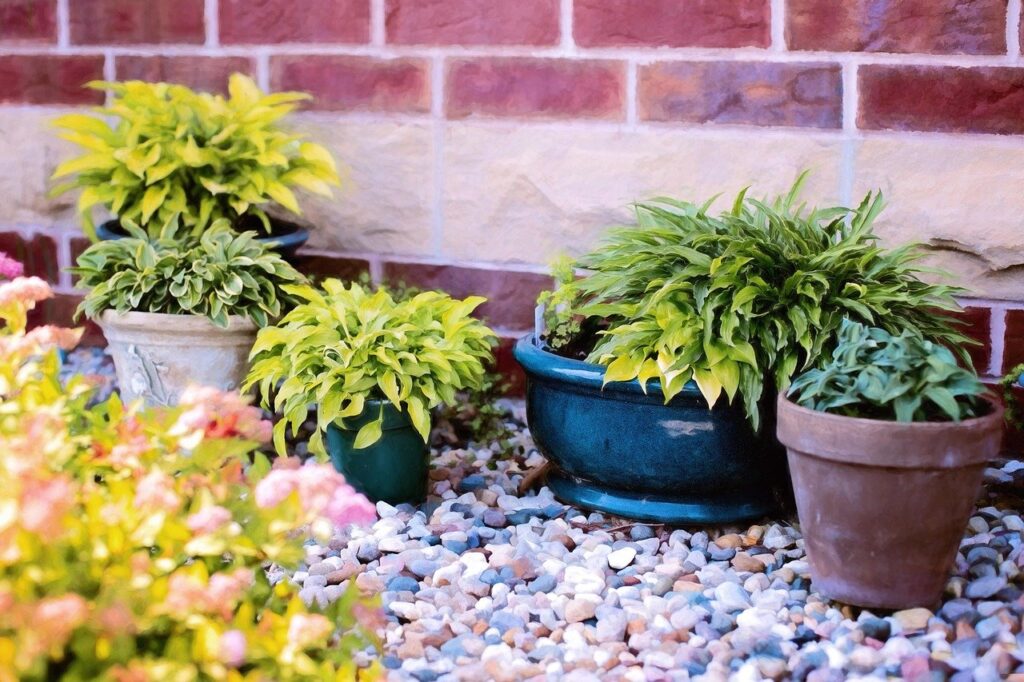
Rutgers recommends at least three pots of different heights and diameters for a layered look. Put the tallest at the back or against a wall, then step down toward the path. Odd groupings read as deliberate; a pair of matching pots reads as formal.
Repeat one plant across every pot
Repetition ties a group together, and Rutgers suggests only one or two focal plants per group. A gold hosta echoed by smaller gold leaves up front does more than five unrelated plants.
Just as with a garden, repetition of plants among the containers is essential for a unified and relaxing appearance.
Rutgers Cooperative Extension, FS1215
Light a dark corner with chartreuse and silver
Pale leaves reflect what little light a shady corner gets. Japanese forest grass (Hakonechloa macra ‘Aureola’, USDA Zones 5a to 9b) and lime-leaved coral bells glow against dark walls. Silver Japanese painted fern (Athyrium niponicum ‘Pictum’, Zones 4a to 9b) does the same in cooler tones.
Leaves with cream or white margins add the same lift. Those pale patches need more light than solid green, as our explainer on what variegated means in plants shows.
Contrast textures instead of colors
A green-only pot can still look rich. Rutgers recommends contrasting textures to build an interesting container. Set broad hosta leaves beside fine fern fronds and the arching blades of a sedge.
Variegated Japanese sedge (Carex oshimensis, Zones 5a to 9b) works well as the fine-textured layer. Its narrow leaves fall over the rim and soften a heavy pot.
Let one bold plant fill a large pot
A single specimen sometimes beats a combination, and cast-iron plant (Aspidistra elatior) is the classic choice for deep shade. NC State Extension rates it for Zones 7a to 11b. In colder zones, move the pot indoors for winter.
Match the pot color to the leaves
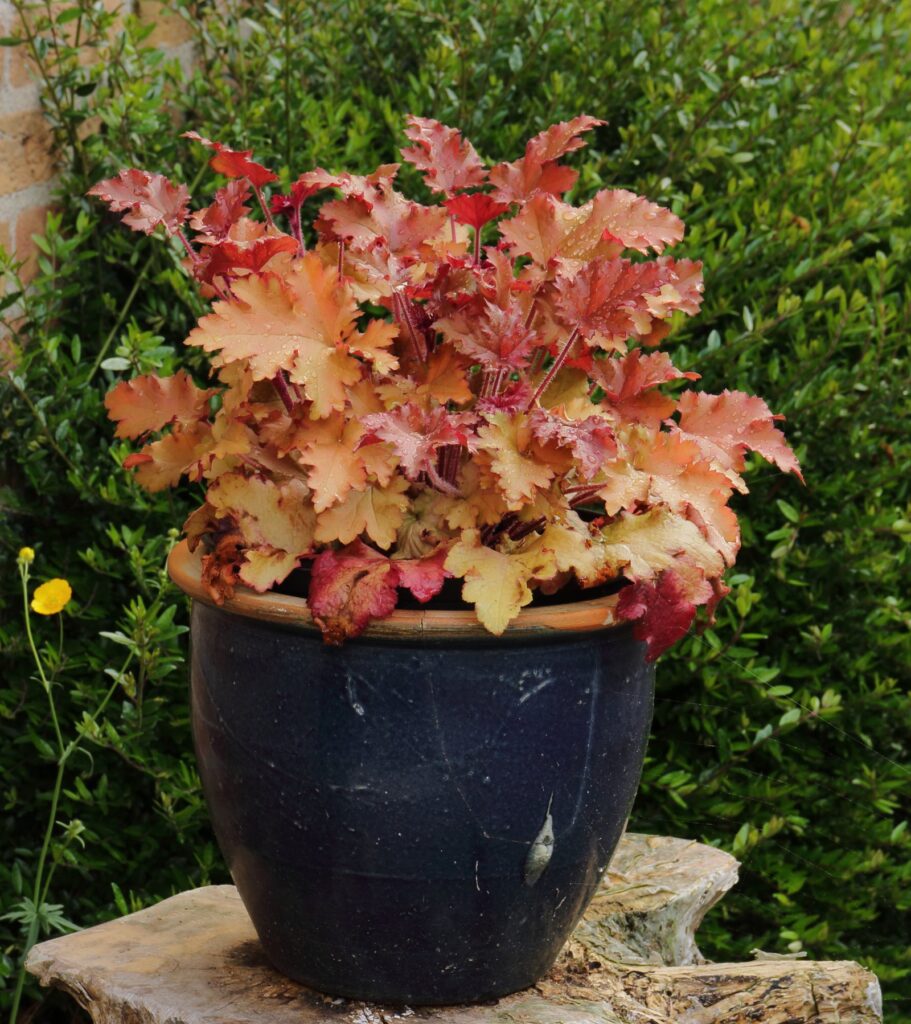
Rutgers describes blues, violets, and greens as cool and calming colors, and reds, oranges, and yellows as warm. A teal glazed pot calms a group of green ferns. An amber-leaved coral bell in a dark blue pot does the opposite and draws the eye.
Finish with pale gravel or mulch
A top dressing changes how a pot looks from above. In light shade, the RHS notes that pale mulches can reflect useful amounts of light back up. Pale gravel around a group of pots also hides bare soil and keeps leaves clean after rain.
Field note
Photograph your pot group from your usual seat before rearranging it. Shade groups are seen from one or two fixed spots. A photo shows gaps the eye skips over in person.
Keeping a styled pot group looking good
Styling fails when potted plants in shade outgrow their roles or sit in wet mix. Check moisture with a finger before watering, since shaded pots dry far more slowly than sunny ones. Trim any leaf that yellows or scorches so the group keeps its shape.
Caution
Repeated freezing and thawing strains pots and roots alike. Rutgers advises protecting containers that hold hardy perennials to reduce that impact. Move clay and glazed pots under cover before the first hard frost.
Plants for permanent outdoor groups should be rated well below your own zone. Our guide to garden plants that like shade lists zone ranges for these hostas, ferns, and grasses. Choose two or three from it and pick a pot material that suits your spot.
Questions & observations