

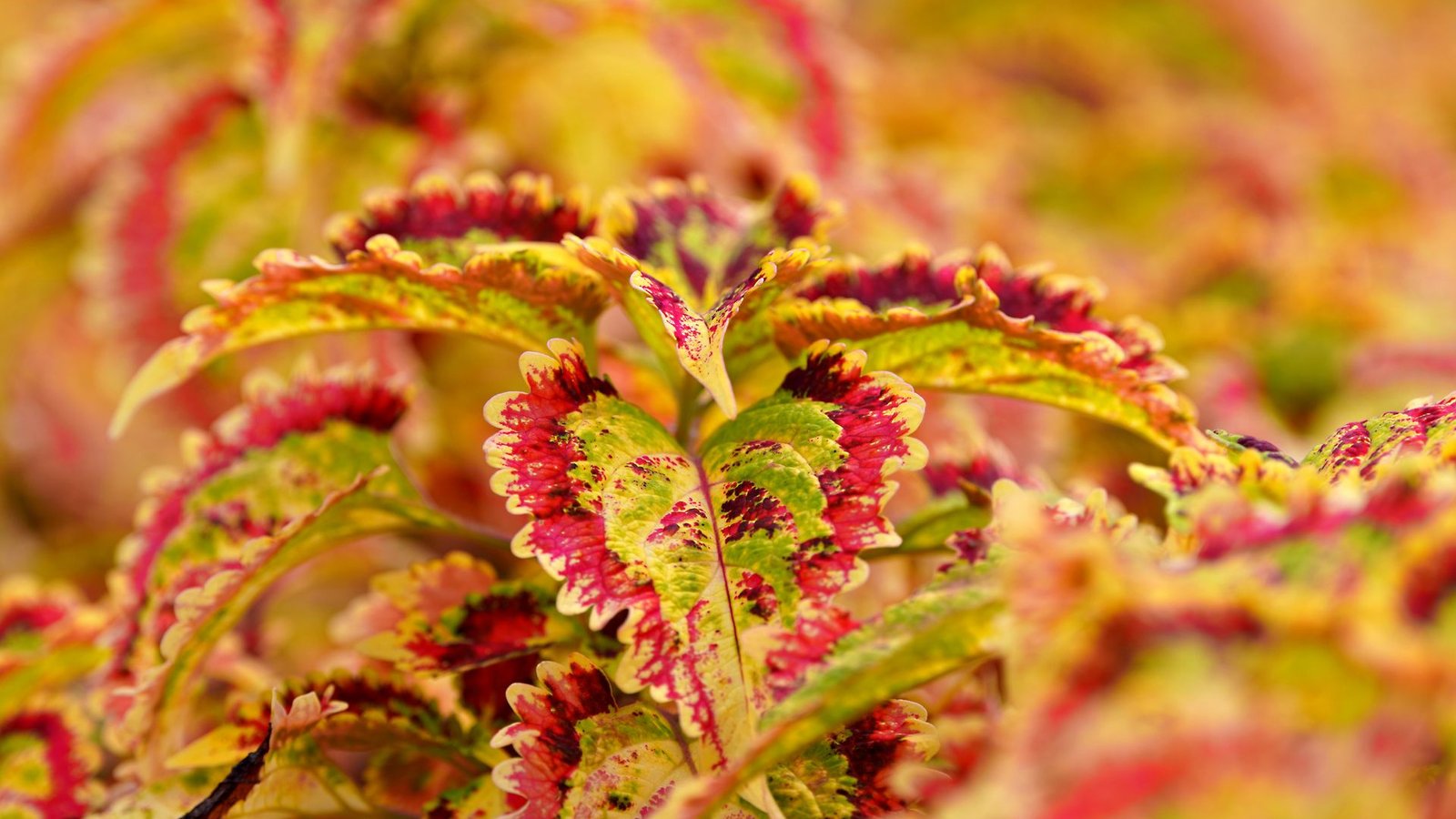
Plants with multicolored leaves carry two or more colors on a single leaf, as stripes, blotches, veins, or edges. Coleus, croton, caladium, and striped cannas are the boldest examples. In a modern landscape, a few of them do the work that a whole border of flowers used to do.
The catch is hardiness. Most of the brightest patterns come from tropical plants that die at the first frost outside USDA Zones 9 to 12. This list covers tropical accents, hardy shrubs, and how to combine them without visual noise.
What gives a leaf more than one color
A multicolored leaf combines pigments unevenly across its surface. Red and purple come from anthocyanins, yellow from carotenoids, and white or cream from tissue with little or no chlorophyll. Our overview of foliage plants explains why gardeners grow these plants for leaves first.
Cream and white patterns are a form of variegation, and the mechanisms behind them differ by plant. The details are covered in our explainer on what variegated means in plants. In British catalogs, the same group is sold as coloured leaves plants or coloured foliage.
Tropical accents with bright colored leaves
These plants give the strongest color but need warmth. North of Zone 9 or 10, grow them as annuals, in containers, or as houseplants brought outside for summer.
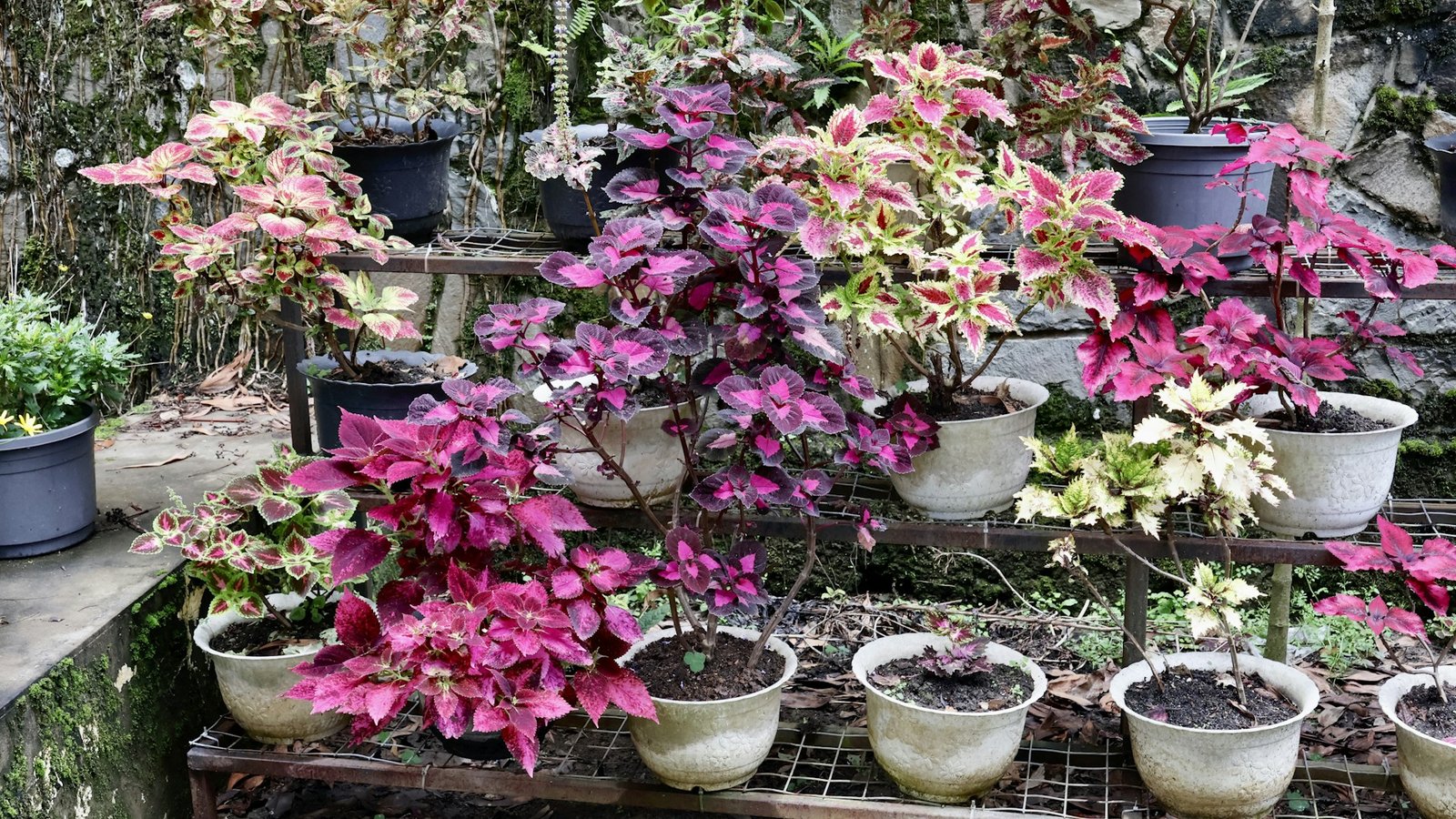
Coleus
Coleus, Plectranthus scutellarioides, comes in more leaf patterns than any other bedding plant. Missouri Botanical Garden notes it has been bred in most colors of the spectrum except true blue. It is winter hardy only in Zones 10 and 11.
Most coleus prefer part shade, though some newer cultivars tolerate full sun. Pinch stem tips to keep plants compact.
Croton
Croton, Codiaeum variegatum, carries leathery leaves streaked and blotched in yellow, orange, red, pink, and purple. It is native to Malaysia, Pacific islands, and northern Australia, and is hardy in Zones 11 to 12. It needs bright light with some direct sun for full color.
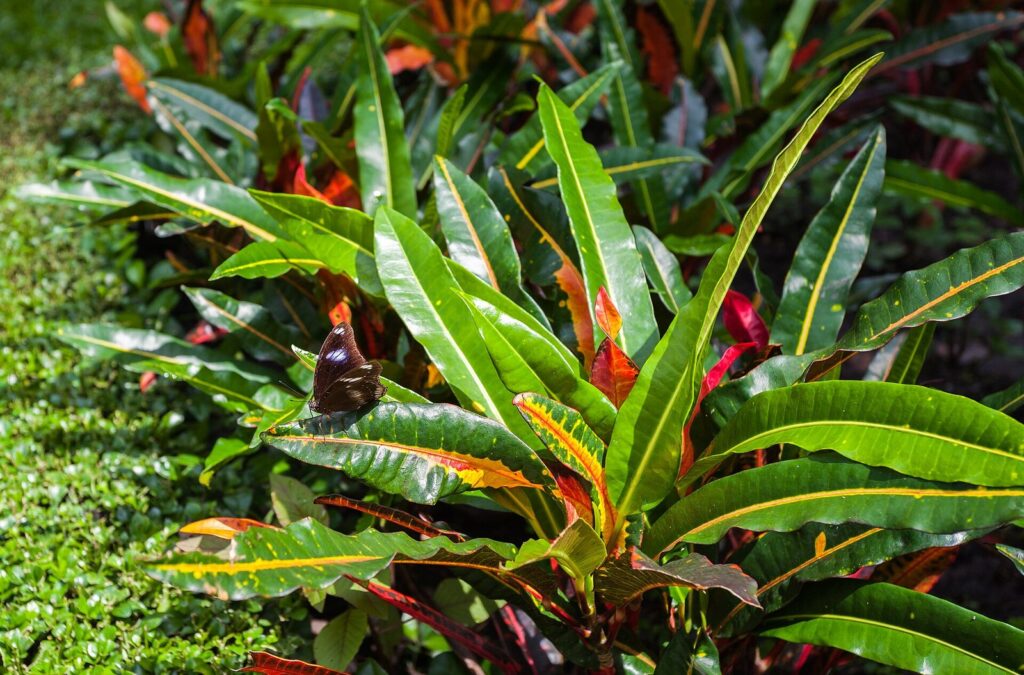
Missouri Botanical Garden is unusually candid about this plant’s looks. Its profile says it plainly.
Foliage color is distinctive, appearing somewhat gaudy at times.
Missouri Botanical Garden Plant Finder, Codiaeum variegatum
That is a fair warning. One croton in a pot by the door reads as an accent, while ten in a bed can overwhelm everything nearby.
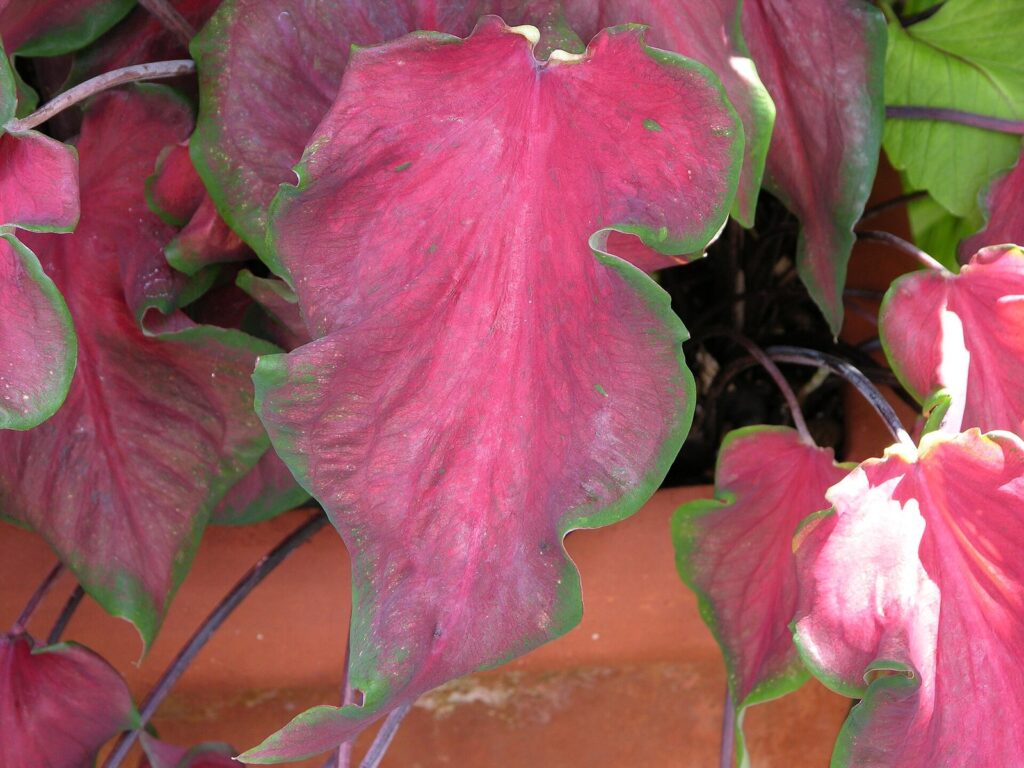
Caladium
Caladium, Caladium bicolor, is an aroid grown only for its arrowhead-shaped leaves, mottled in pink, red, white, and green. Missouri Botanical Garden rates it for Zones 9 to 10 and warns that direct sun scorches the leaves. It wants bright shade and soil that never dries out.
Bloodleaf and polka dot plant
Bloodleaf, Iresine herbstii, has purple-red leaves with light red veins and needs sun for its best color. It is hardy in Zones 10 to 12.
Polka dot plant, Hypoestes phyllostachya, is native to Madagascar and hardy in Zones 10 to 11. Its green leaves are spotted rose, pink, or lavender.
Canna ‘Tropicanna’ for sunny borders
Striped cannas bridge tropical and temperate gardens. Canna ‘Phasion’, sold as TROPICANNA, has orange-red leaves with contrasting green stripes. Its Plant Finder profile rates the rhizomes reliably hardy in Zones 7 to 10.
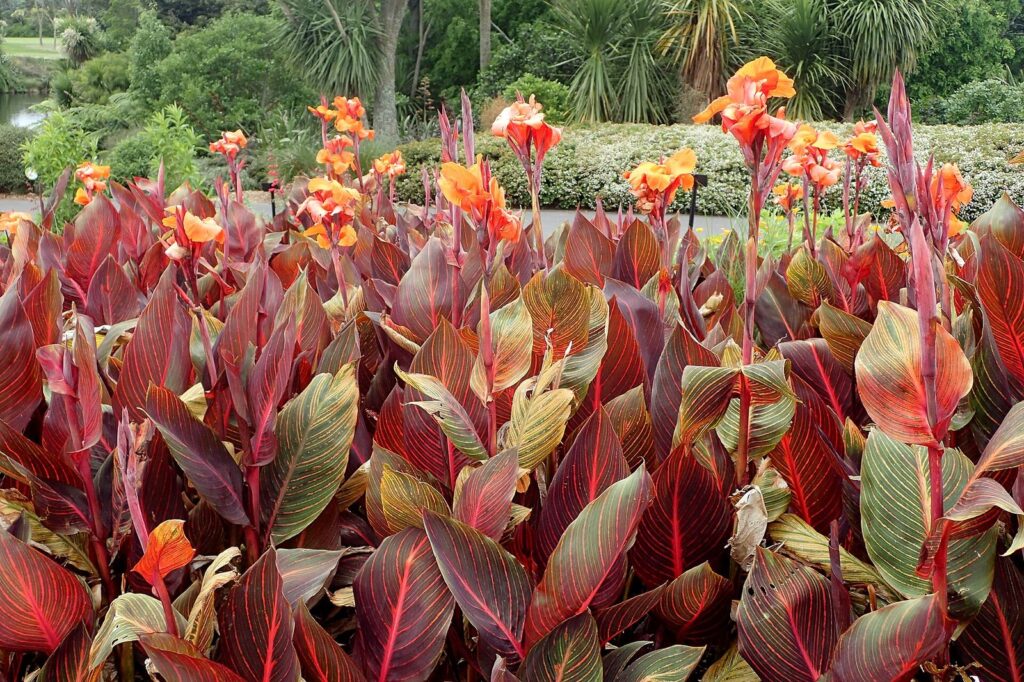
In colder zones, cut the plants down after the first frost and lift the rhizomes. Store them in dry peat or vermiculite somewhere that stays above 40°F.
Which multicolored plants come back every year?
Only hardy shrubs, trees, and perennials return reliably in Zones 3 to 8. The tropical plants above survive winter outdoors only in Zones 9 to 12. Canna rhizomes overwinter in the ground from Zone 7.
Woody plants are the backbone of year-round color. Two of them carry pattern well:
- Variegated Tatarian dogwood, Cornus alba ‘Bailhalo’ (IVORY HALO): white-edged leaves on red stems, rated for Zones 3 to 7. Missouri Botanical Garden notes it becomes stressed in hot summers south of Zone 7.
- Japanese maple, Acer palmatum: rated for Zones 5 to 8, with cultivars in red, purple, and variegated forms.
For low-growing color that returns each spring, see our list of colorful foliage perennials sorted by zone. Heucheras, sedges, and variegated Persicaria fill the gap between shrubs and annuals.
| Plant | Leaf colors | USDA zones | Light | Lifespan outside its zones |
|---|---|---|---|---|
| Plectranthus scutellarioides (coleus) | Most colors except blue | 10 to 11 | Part shade | Annual |
| Codiaeum variegatum (croton) | Yellow, orange, red, purple | 11 to 12 | Bright light, some sun | Annual or houseplant |
| Caladium bicolor | Pink, red, white, green | 9 to 10 | Bright shade | Lift tubers |
| Iresine herbstii (bloodleaf) | Purple-red | 10 to 12 | Sun | Annual |
| Hypoestes phyllostachya | Green spotted pink | 10 to 11 | Part shade | Annual |
| Canna ‘Phasion’ | Orange-red with green stripes | 7 to 10 | Full sun | Lift rhizomes |
| Cornus alba ‘Bailhalo’ | Green edged white | 3 to 7 | Sun to part shade | Hardy shrub |
| Acer palmatum | Red, purple, variegated | 5 to 8 | Sun to part shade | Hardy tree |
Using plants with multicolored leaves in a modern landscape
Modern landscapes rely on clean lines, gravel or concrete surfaces, and fewer plant varieties in larger groups. Multicolored leaves fit that style when they act as a repeated accent, not as a mix.
- Plant one cultivar in a block of five or more rather than five different cultivars.
- Repeat the same accent plant two or three times along a path or wall.
- Set busy patterns against plain surfaces, such as gravel, dark mulch, or smooth concrete.
- Pair a patterned leaf with a solid one that matches its strongest color.
Caution
Caladium tubers must be dug in fall where winters freeze. Missouri Botanical Garden advises storing them dry, at temperatures that stay above 45°F, until spring.
Color placement follows the same rules as any planting. Our guide to designing a foliage garden covers contrast, layering, and where bright leaves hold their color by light. Start with one patterned plant you love, repeat it, and let solid green carry the rest.
Questions & observations