

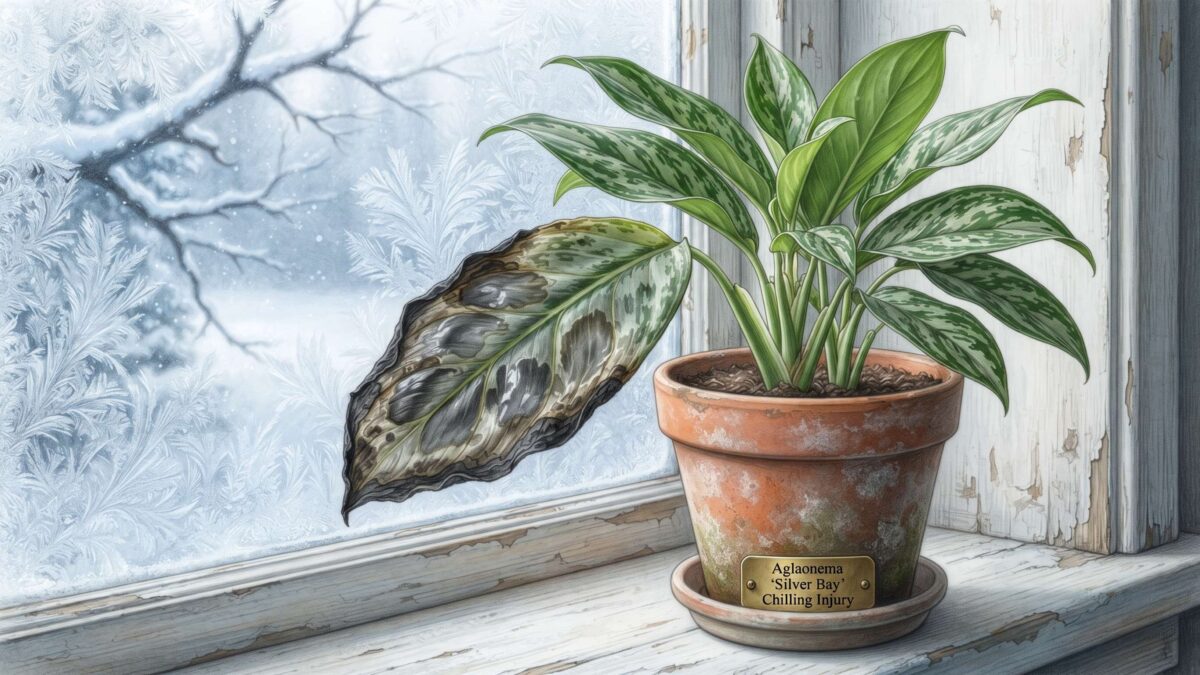
You do not need frost to kill a tropical leaf. Many tropical houseplants suffer severe chilling injury when temperatures drop between 35°F and 55°F (2°C to 13°C)—well above the freezing point of water. Within 24 to 72 hours of a cold draft near a window or a chilly autumn night on a porch, sensitive leaves develop water-soaked dark patches, turn limp, and blacken from the margins inward.
Understanding the difference between chilling injury and freezing injury explains why tropical foliage collapses in cool air—and how to protect container plants before winter arrives.
Chilling injury vs. freezing injury: The 55°F threshold
Gardeners often assume a plant is safe outdoors until the first 32°F (0°C) frost warning. That rule holds for temperate plants that survive winter and summer and cool-season crops covered in our guide on what plants grow in the winter, because those species evolved in climates with seasonal freezes.
Tropical and subtropical foliage plants evolved near the equator, where night temperatures rarely dip below 60°F (15°C). According to UF/IFAS Extension, chilling injury is physiological damage that occurs in tropical tissues at non-freezing temperatures between 32°F and 55°F (0°C–13°C):
- Freezing injury (below 32°F / 0°C): Ice crystals form between or inside plant cells, physically puncturing cell walls and dehydrating protoplasm.
- Chilling injury (35°F–55°F / 2°C–13°C): No ice forms. Instead, the cold slows cellular enzymes and stiffens cell membranes until the leaf cells leak their contents and die.
What happens inside a chilled leaf: Membrane phase transition
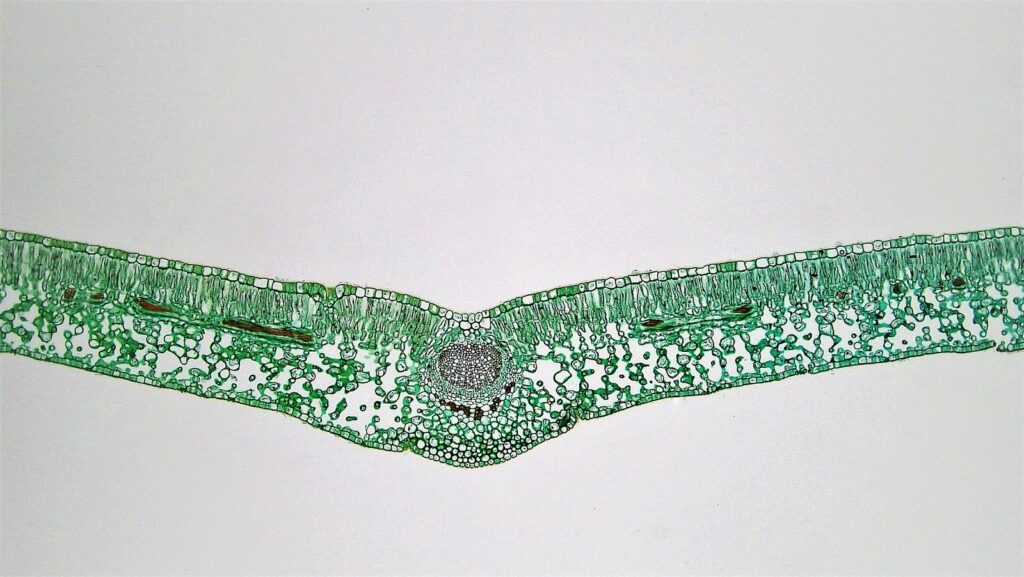
To see why 45°F air ruins an Aglaonema or Caladium leaf, look at how foliage leaves function at the cellular level. Every plant cell is wrapped in a plasma membrane—and every chloroplast is lined with thylakoid membranes—built from a double layer of lipid (fat) molecules.
In a healthy leaf at 70°F, those membrane lipids stay fluid and flexible, much like olive oil at room temperature. Tropical plants build their membranes with a high proportion of saturated fatty acids, which solidify at relatively warm temperatures (similar to how coconut oil turns solid in a cool pantry):
- The lipid phase transition: When leaf temperature drops below a species’ critical threshold (around 50°F–55°F for sensitive aroids and marantas), the saturated lipids in the cell membranes stiffen from a flexible liquid-crystalline state into a rigid gel state.
- Membrane cracking and ion leakage: As the membrane stiffens, microscopic cracks form around embedded transport proteins. Water, potassium ions, and cell sap leak out of the cytoplasm into the air spaces of the spongy mesophyll, creating dark, translucent, “water-soaked” blotches on the blade.
- Photosynthetic stall and oxidative damage: If a chilled leaf is hit by bright morning sun while its chloroplast enzymes are still cold-stalled, light energy cannot be processed into sugar. Instead, it generates reactive oxygen species (free radicals) that bleach chlorophyll and turn the tissue bronze or black.
Why It Works: Cold-hardy perennials survive winter because they remodel their cell membranes in autumn, replacing saturated fats with unsaturated fatty acids that stay fluid below freezing. Tropical foliage plants lack the genetic pathway to make that seasonal switch.
Which foliage plants are most sensitive to chilling?
Sensitivity varies by native elevation and latitude. Lowland equatorial species fail first, while subtropical species tolerate cooler nights.
| Sensitivity Band | Critical Temperature Threshold | Vulnerable Foliage Genera & Species | Typical Visual Symptoms |
|---|---|---|---|
| Extremely Sensitive | 50°F–55°F (10°C–13°C) | Aglaonema (Chinese evergreen), Dieffenbachia, Maranta, Goeppertia (Calathea), Episcia, Codiaeum (Croton), Caladium | Greasy water-soaked patches within 24–48 hours; rapid yellowing and black necrotic margins; lower leaf drop. |
| Moderately Sensitive | 40°F–50°F (4°C–10°C) | Monstera deliciosa, Philodendron spp., Epipremnum aureum (Pothos), Ficus lyrata, Alocasia, Begonia rex | Bronzing or dull gray-green cast on upper blade surfaces; sudden abscission (dropping) of older green leaves. |
| Lightly Sensitive (Subtropical) | 35°F–40°F (2°C–4°C) | Dracaena trifasciata (Snake plant), Zamioculcas zamiifolia (ZZ plant), Clivia miniata, Aspidistra elatior, Fatsia japonica | Pale sunken spots on blades if cold is combined with wet potting mix; slow recovery in spring. |
Data compiled from University of Maryland Extension and Missouri Botanical Garden indoor plant temperature guidelines.
How to treat a plant after cold exposure (and what not to do)
If a houseplant was left near an open winter window, caught in a cold delivery box, or left on the patio during an October cold snap, take these steps in order:
- Move it to a steady 65°F–70°F (18°C–21°C) room away from direct sun: Do not place a chilled plant in front of a heater vent or in a sunny window. Rapid warming accelerates water loss from leaky cell membranes, and bright light triggers photo-oxidative scorching in cold-stalled chloroplasts.
- Wait 5 to 7 days before pruning damaged leaves: Chilling damage takes several days to fully declare itself. Leaves that are merely yellowing at the margins may still resorb mobile nutrients back into the stem before they die. Trim only blades that have turned completely mushy, slimy, or crisp-black.
- Hold off on watering and never fertilize a chilled plant: Cold-shocked roots absorb water very slowly. Watering a cold root ball invites Pythium and Phytophthora root rot, which mimics why plant leaves turn yellow. Wait until the top inch of soil dries at room temperature, and use lukewarm water (around 68°F / 20°C).
- Keep ambient humidity moderate (50%–60%): Damaged cuticles lose water rapidly. Buffering the air—just as you would for humid tropical plants—prevents surviving leaves from crisping while the crown pushes new buds.
Preventing winter chilling indoors and on patios
- Bring summered pots indoors before nights hit 55°F: If you move green leaf plants outdoors or grow tender shade plants for pots like Coleus and Caladium on a porch, check nighttime lows in early autumn rather than waiting for frost.
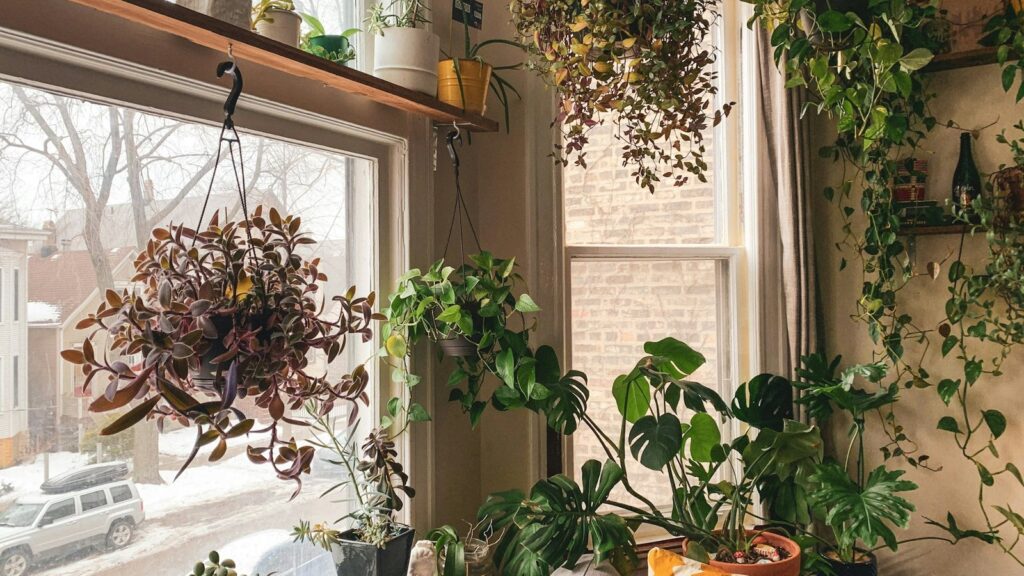
- Check window glass clearance in winter: The air trapped between a closed curtain and a single- or double-pane window can drop 15°F to 20°F colder than the center of your living room on a freezing night. Pull tropical pots 6 to 12 inches back from the glass so no leaf blade touches the pane.
- Water with room-temperature water: Icy tap water in midwinter can drop root-zone temperatures below 50°F in seconds, shocking fine root hairs even in a warm room.
Questions & observations