

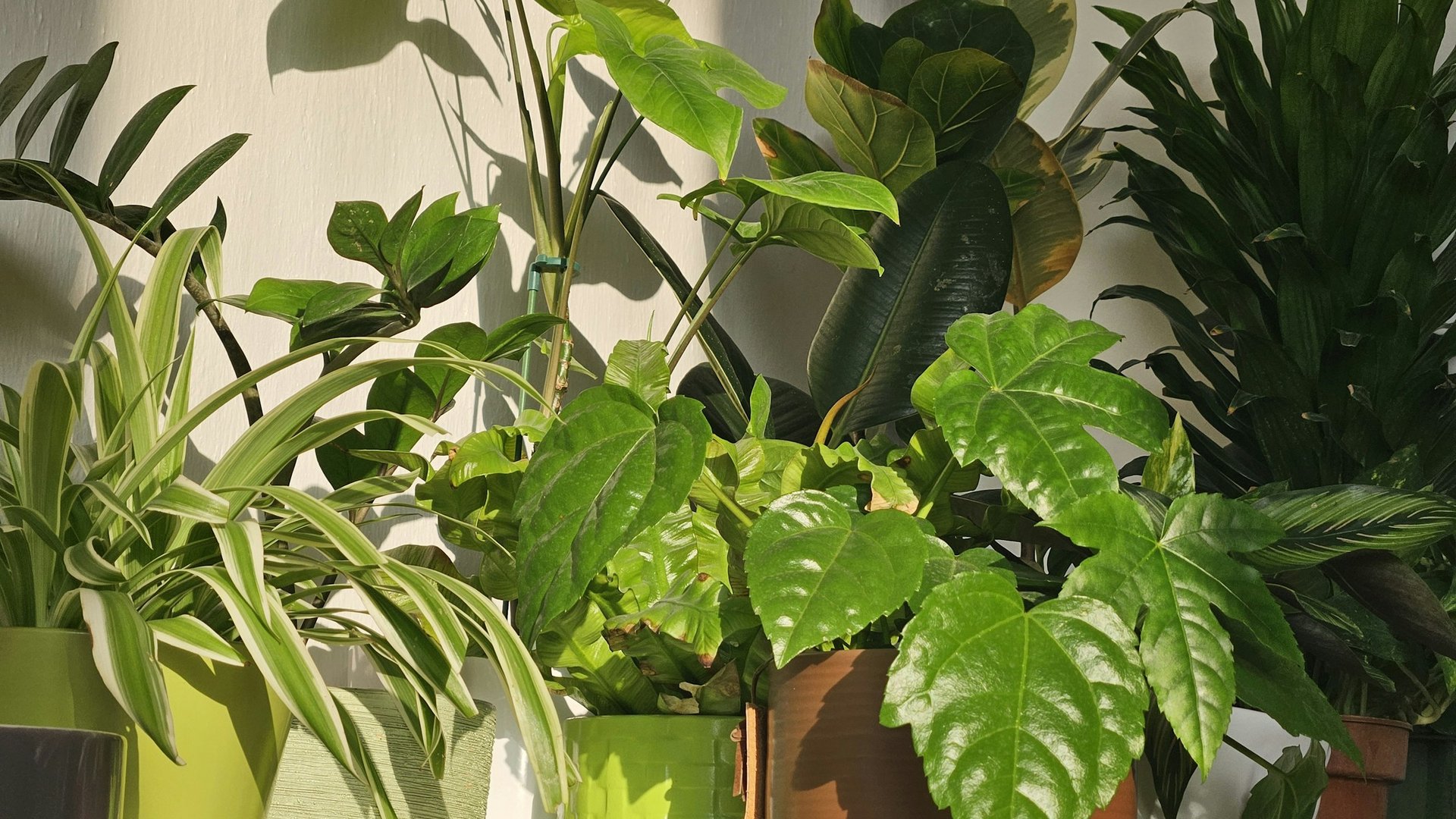
What are foliage plants? They are plants grown for their leaves rather than their flowers or fruit, and most houseplants sold today belong to this group. The label describes how gardeners use a plant, so a fern and a fig tree can both carry it.
That distinction shapes everything else. Once you know a plant earns its place through its leaves, you can predict its needs. Most want steady light, even moisture, and warmth close to the tropical forests they came from.
What are foliage plants in botanical terms?
A foliage plant is any plant valued mainly for the color, shape, pattern, or texture of its leaves. In the nursery trade, the term usually means tropical and subtropical species grown in containers for indoor use. Flowers may appear, but they are rarely the reason anyone buys the plant.
Horticulturists at the University of Florida draw the line in two places. Read literally, the phrase covers every plant grown for attractive leaves. In trade usage, it narrows to container plants produced in greenhouses and used mainly for interior decoration.
Foliage plants are ornamental plants grown chiefly for their leaves. UF/IFAS Extension counts more than 500 species in commercial production, most of them tropical or subtropical natives. Florida has supplied more than 55% of the US wholesale value of foliage plants since the 1960s.
People who search “what is foliage plants” or “leaf plants” are usually asking the same practical question. They want to know which plants stay attractive all year without depending on a bloom cycle.
Why leaves matter more than flowers in this group
Most foliage plants can flower, yet the flowers are rarely the draw. Aroids such as Philodendron and Monstera bear a hooded spathe around a spike called a spadix. Many of them seldom bloom indoors at all.
Leaves are the part you live with. They stay on the plant for months or years and respond visibly to light and water. A flowering plant can look plain for eleven months, while a good foliage plant looks finished every week of the year.
Leaf form also tells you a great deal about care. Thin, papery leaves lose water fast and need humidity, while thick, waxy leaves store water and forgive a missed watering.
Why it works
Pale and variegated leaf tissue carries less chlorophyll than solid green tissue. A variegated plant therefore captures less energy from the same window. It needs brighter light than its all-green relatives.
The main groups of foliage plants
Foliage plants come from dozens of plant families, but a handful of groups supply most of what you see in garden centers. Each group shares leaf traits that hint at its care needs.
Aroids (Araceae)
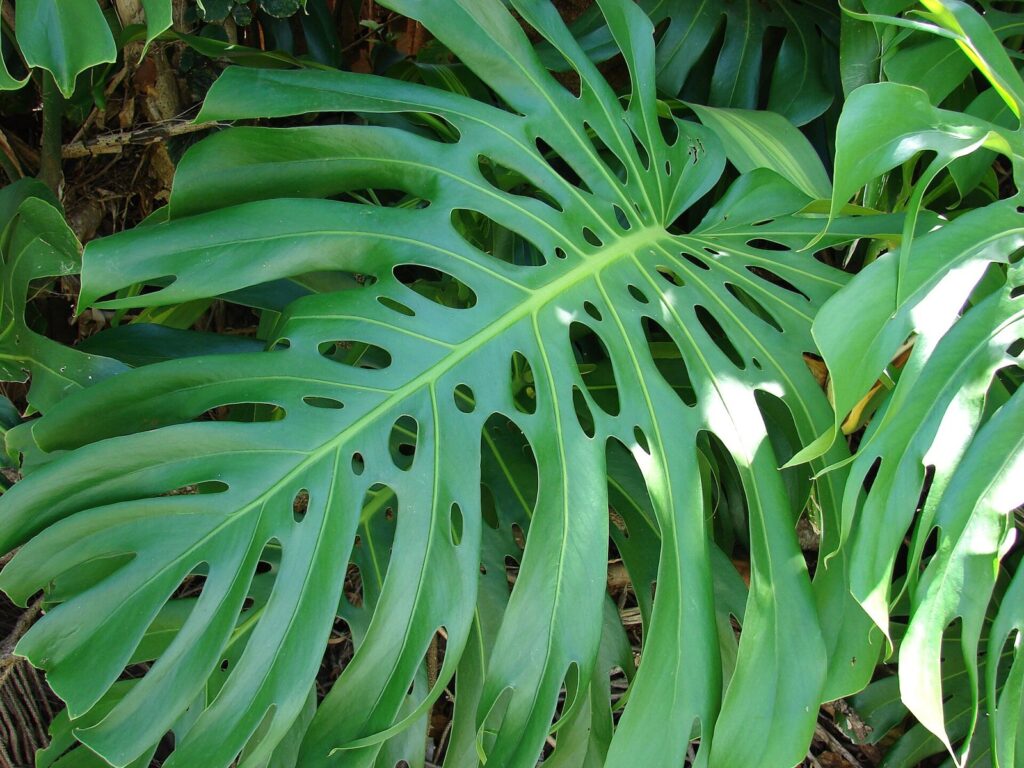
The arum family supplies a large share of popular houseplants. Monstera, Philodendron, Epipremnum, Aglaonema, Dieffenbachia, Syngonium, Zamioculcas, and the elephant ear genera Alocasia and Colocasia all belong here, and most are climbers or understory plants from humid tropical forests.
Monstera deliciosa shows how a leaf reflects its origin. Kew’s Plants of the World Online gives its native range as Mexico to Guatemala. There it grows as a liana in wet tropical forest.
Dracaenas and snake plants (Asparagaceae)
These are the upright, strappy, architectural plants. Kew now accepts the snake plant as Dracaena trifasciata, a name published in 2017 that moved it out of Sansevieria. Plant tags still use the old name, so expect to see both.
Figs (Moraceae)
Ficus elastica, the rubber plant, and Ficus lyrata, the fiddle-leaf fig, are woody foliage plants with large, leathery leaves. They handle dry indoor air better than thin-leaved plants. Moving them suddenly from bright light into shade often triggers leaf drop.
Prayer plants and their relatives (Marantaceae)
Maranta leuconeura folds its patterned leaves upward at night, which gives the group its common name. Many plants once sold as Calathea now sit in the genus Goeppertia. All of them want steady moisture and high humidity.
Ferns
Ferns reproduce by spores and never flower, so they qualify as foliage plants by definition. The Boston fern, Nephrolepis exaltata, is the classic indoor choice, though it needs more humidity than most heated homes offer in winter.
| Group | Family | Example species | Typical indoor light |
|---|---|---|---|
| Aroids (compact) | Araceae | Aglaonema commutatum, Epipremnum aureum | Low (25–75 fc) |
| Aroids (larger) | Araceae | Philodendron, Dieffenbachia, Syngonium podophyllum | Medium (75–150 fc) |
| Dracaenas and snake plant | Asparagaceae | Dracaena trifasciata, Dracaena fragrans ‘Janet Craig’ | Low (25–75 fc) |
| Cast-iron plant | Asparagaceae | Aspidistra elatior | Low (25–75 fc) |
| Figs | Moraceae | Ficus elastica, Ficus lyrata | Medium (75–150 fc) |
| Prayer plants | Marantaceae | Maranta leuconeura | Medium (75–150 fc) |
| Ferns | Nephrolepidaceae | Nephrolepis exaltata | Medium (75–150 fc) |
Light categories in the table follow the University of Arizona Cooperative Extension guide Indoor Plant Selection and Care (AZ1025). Botanical names follow Kew’s Plants of the World Online.
Reading light for green leafy plants
Light decides whether a foliage plant thrives or merely survives, and it is the hardest factor to change in a home. The University of Arizona Cooperative Extension sorts indoor light into three bands measured in foot-candles (fc):
- Low light, 25–75 fc: more than eight feet from a window, such as the center of a room, a hallway, or beside an inside wall.
- Medium light, 75–150 fc: four to eight feet from south and east windows, or near west windows that get no direct sun.
- High light, 150–1,000 fc: within about four feet of large southeast or west-facing windows.
Most green leafy plants fall in the low or medium bands. North-facing rooms often read as low light even beside the glass, so check with a light meter before you buy.
NC State Extension notes that variegated Monstera cultivars need more light than darker green ones. The Royal Horticultural Society warns that all-green reverted shoots grow more vigorously and can take over a plant. Prune those green shoots out as soon as they appear.
Foliage plants outdoors and USDA hardiness zones
Most indoor foliage plants can live outside year-round only in the warmest parts of the US. NC State Extension rates Monstera deliciosa for USDA Hardiness Zones 10a through 12b. That limits outdoor planting to places like south Florida, Hawaii, and coastal Southern California.
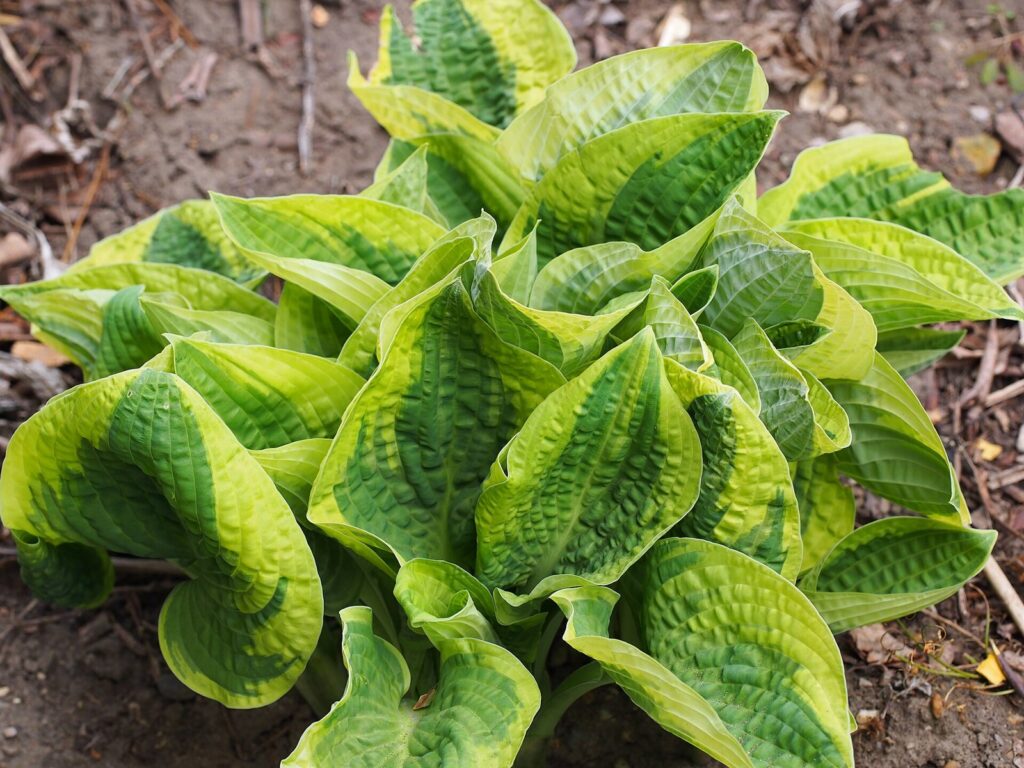
Gardeners in colder regions turn to hardy foliage perennials. Missouri Botanical Garden’s Plant Finder holds 145 hosta records. Cultivars such as Hosta ‘August Moon’ are rated for Zones 3 to 8 in part shade to full shade.
The air-purifying claim deserves less weight
A 1989 NASA study is the usual source for the idea that houseplants clean indoor air. Later research has not backed it up at household scale. In 2019, Drexel University engineers Bryan Cummings and Michael Waring reviewed a dozen studies spanning 30 years of research.
Their calculation was blunt. To match a building’s air handling system, you would need between 100 and 1,000 plants per square meter of floor space. Even a couple of open windows outperform a room full of pots.
“Plants are great, but they don’t actually clean indoor air quickly enough to have an effect on the air quality of your home or office environment.”
Michael Waring, Drexel University
Foliage plants are still worth growing for their own sake. Buy them for their leaves and the way they change a room. Leave the air quality work to ventilation and open windows.
Choosing your first leaf plants
Start with the light you actually have, then pick from the group that matches it. Buying a plant first and looking for a spot later usually ends with a plant in the wrong light. This sequence works for most homes:
- Measure light at midday in the spot where the plant will live, using a light meter app.
- For low light, choose Aglaonema, Epipremnum aureum, Dracaena trifasciata, or Aspidistra elatior.
- For medium light, try a Philodendron, Ficus elastica, or Maranta leuconeura.
- Check leaf texture before you buy, since thin leaves mean you will be managing humidity.
- Learn the plant’s current botanical name so care advice matches the right species.
The leaves will tell you the rest. Yellowing, curling, stretching, and fading each point to a specific cause. Learning to read those signals is the real skill behind keeping foliage plants healthy for years.
Questions & observations