

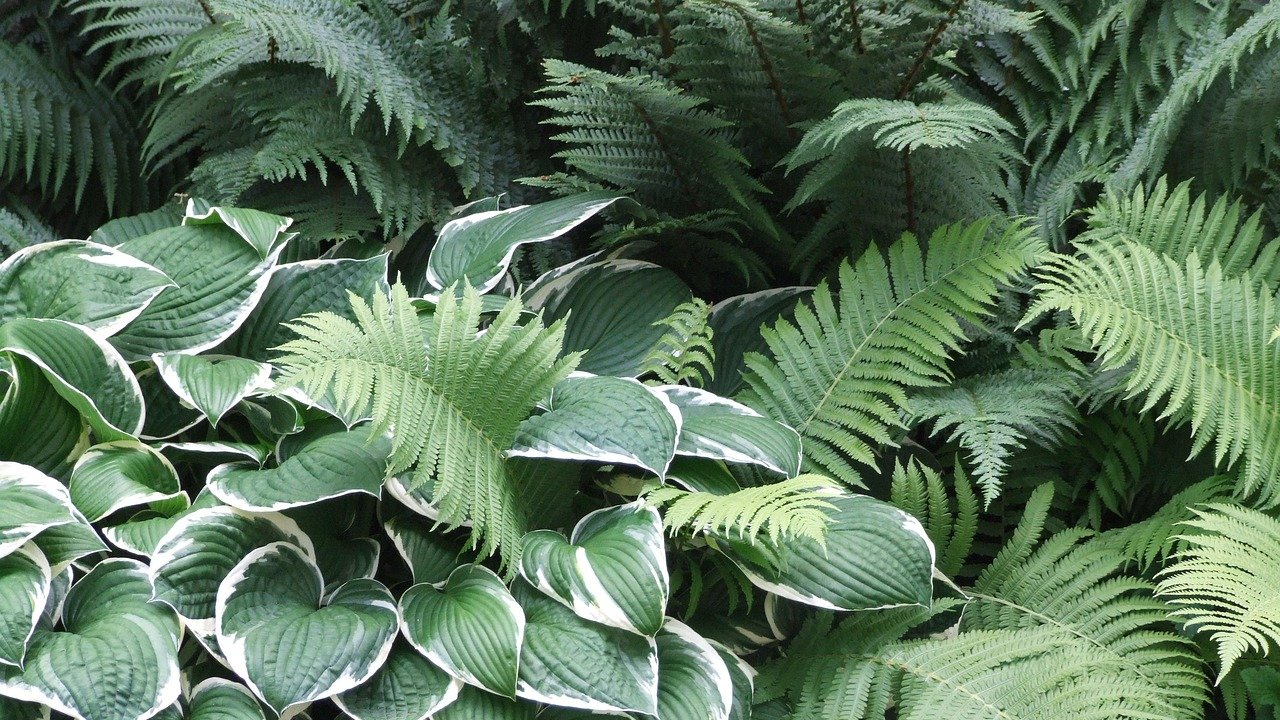
The garden plants that like shade best are woodland understory species: hostas, ferns, Japanese forest grass, and wild ginger. Your shortlist depends on two numbers. One is the hours of direct sun a bed gets in midsummer, and the other is your USDA hardiness zone.
Most of the reliable choices are grown for their leaves. Flowering takes energy, and shade supplies less of it. Shade is where choosing plants valued mainly for their leaves pays off fastest.
How much shade does your garden actually get?
Count the hours of direct sun a spot receives at midsummer, then match that number to a shade category. The Royal Horticultural Society uses these working definitions:
- Partial or semi-shade: three to six hours of direct sun per day at midsummer.
- Moderate shade: two to three hours of direct sun per day.
- Deep or heavy shade: less than two hours of direct sun per day.
- Dappled shade: mostly filtered light through a fairly open tree canopy all day.
- Light shade: open sky overhead, with direct sun blocked by a high wall or a group of trees.
Other sources draw the lines a little differently. NC State Extension’s plant database counts two to six hours as partial shade and anything less as deep shade. The overlap is close enough that either system will steer you to the right plants.
In practical terms if a site receives less than two hours of direct sun per day, it must be considered to be heavy shade.
Royal Horticultural Society, Shade gardening
Field note
Check a shady bed twice: once in early spring and again in midsummer. A bed under deciduous trees can get full sun in April and deep shade by July. The plants you choose must handle both.
Shade plants for the garden, sorted by shade level
Each plant below comes with the USDA zone range listed by NC State Extension. Zones measure winter cold only, so read them alongside the shade category rather than instead of it.
Partial shade (three to six hours of sun)
Coral bells (Heuchera) are the most forgiving starting point. NC State lists the genus for USDA Zones 3a to 9b and rates it for full sun through partial shade. Purple, amber, and lime-leaved cultivars give color without relying on bloom.
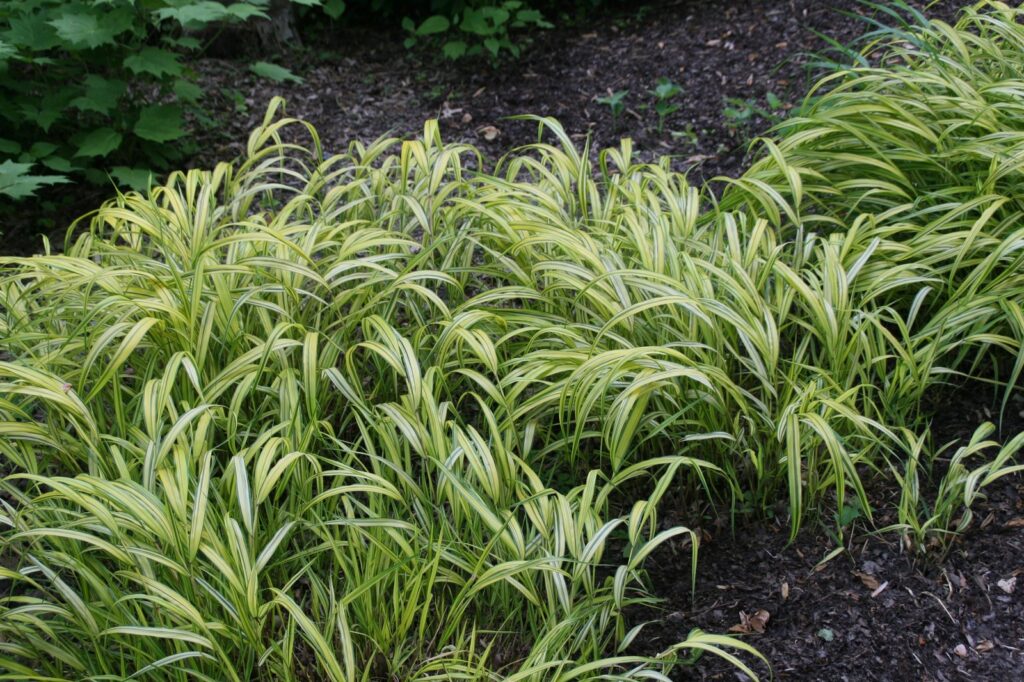
Japanese forest grass (Hakonechloa macra) handles the same light in Zones 5a to 9b. Its arching blades form low mounds that soften the edge of a path. The gold-striped cultivar ‘Aureola’ brightens a dim corner more than any green grass can.
Dappled shade under open trees
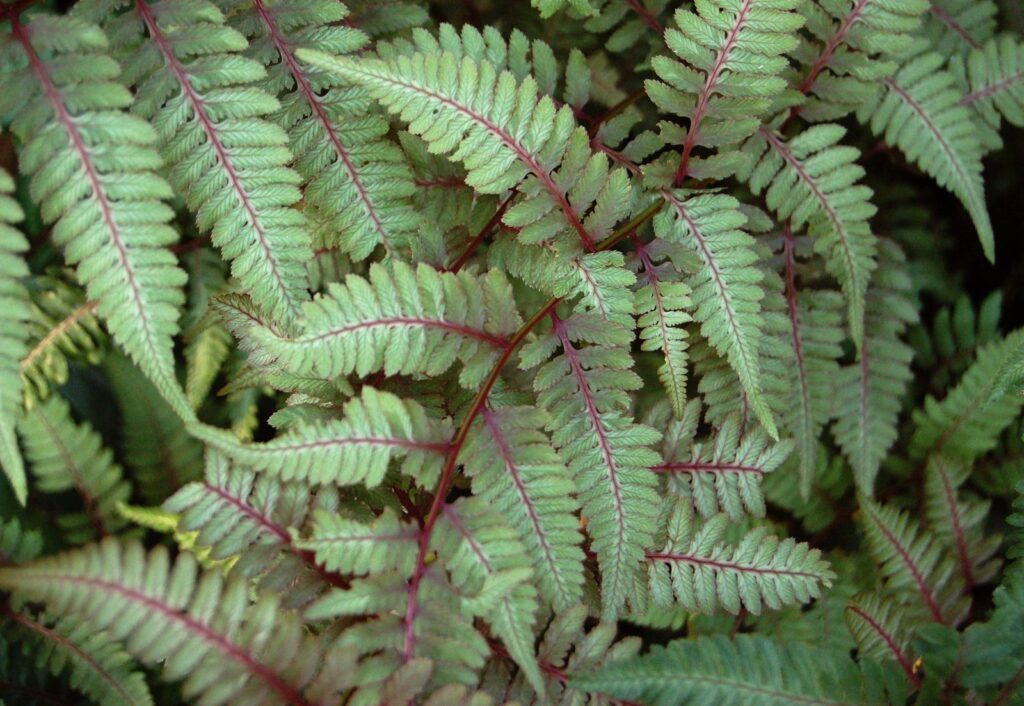
Filtered light suits plants with patterned or silvered leaves. Japanese painted fern (Athyrium niponicum ‘Pictum’) carries silver-gray fronds with wine-red stems. NC State rates it for Zones 4a to 9b.
Siberian bugloss (Brunnera macrophylla) and foamflower (Tiarella cordifolia) fill the same niche in colder gardens. Both are listed for Zones 3a to 8b. Silver-leaved Brunnera cultivars such as ‘Jack Frost’ reflect light back into the bed.
Deep shade (less than two hours of sun)
Very few plants grow well with almost no direct sun, and most of them have broad, dark leaves. Hostas lead this group. NC State gives the genus a range of USDA Zones 3a to 9b and lists it for deep shade.
Christmas fern (Polystichum acrostichoides) is an evergreen North American native rated for Zones 3a to 9b. Solomon’s seal (Polygonatum biflorum) adds arching stems at a similar range of Zones 3a to 9b. In warm gardens, cast-iron plant (Aspidistra elatior) survives outdoors in Zones 7a to 11b.
Why it works
Leaves that grow in shade tend to be broader and thinner than sun leaves of the same species. That shape spreads chlorophyll over a wider surface to catch scarce light. It also explains why shade plants scorch when they are moved into full sun.
Dry shade under trees and beside walls
Dry shade is the hardest condition to plant, because tree roots take the water and walls block rain. The RHS notes that soil within about 40 cm (16 in) of a wall is often dry. Planting 45 cm (18 in) out helps.
Barrenwort (Epimedium), rated for Zones 5a to 8b, copes with root competition better than most perennials. Japanese pachysandra (Pachysandra terminalis) covers ground in Zones 4a to 9b. NC State lists it as resistant to dry soil, deer, and heavy shade.
The worst case is ground under conifers and dense evergreens. There the soil stays dry year-round, and fallen needles make it acidic. The RHS warns that only a very limited selection of shade-tolerant plants will survive under them.
Garden plants that like shade, listed by USDA zone
The USDA Plant Hardiness Zone Map divides the country into 10°F zones and 5°F half zones. Each zone is based on the average annual extreme minimum winter temperature. The 2023 edition draws on data from 13,412 weather stations collected between 1991 and 2020.
That update moved about half of the country into the next warmer half zone. If your zone lookup predates November 2023, check again on the USDA map before buying any garden shade plant. Summer heat is a separate test, covered in our guide to plants that survive winter and summer.
| Plant | Botanical name | USDA zones | Best shade level |
|---|---|---|---|
| Coral bells | Heuchera | 3a to 9b | Partial shade |
| Japanese forest grass | Hakonechloa macra | 5a to 9b | Partial to dappled |
| Japanese painted fern | Athyrium niponicum ‘Pictum’ | 4a to 9b | Dappled to deep |
| Siberian bugloss | Brunnera macrophylla | 3a to 8b | Dappled to deep |
| Foamflower | Tiarella cordifolia | 3a to 8b | Dappled to deep |
| Hosta | Hosta | 3a to 9b | Dappled to deep |
| Christmas fern | Polystichum acrostichoides | 3a to 9b | Dappled to deep |
| Canadian wild ginger | Asarum canadense | 4a to 6b | Dappled to deep |
| Barrenwort | Epimedium | 5a to 8b | Dry shade |
| Japanese pachysandra | Pachysandra terminalis | 4a to 9b | Deep and dry shade |
| Cast-iron plant | Aspidistra elatior | 7a to 11b | Deep and dry shade |
Gardeners in Zones 3 and 4 have more choice than the table first suggests. Hostas, Christmas fern, Brunnera, and foamflower all reach Zone 3a. Canadian wild ginger stops at Zone 6b, which makes it a better fit for northern gardens than southern ones.
Setting up plants for a shaded garden
Shade beds fail more often from poor soil and dry roots than from low light. Follow this sequence when you plant a new bed:
- Record the hours of direct sun at midsummer and pick plants for that shade category.
- Confirm your USDA zone on the 2023 map and check each plant’s range against it.
- Dig in well-rotted manure, garden compost, or leafmould, which the RHS recommends for improving soil structure.
- Set plants at least 45 cm (18 in) from house walls to escape the driest strip.
- Water through the first growing season, even for plants sold as drought tolerant.
- Mulch with shredded leaves or bark to hold moisture and suppress weeds.
Caution
Hostas attract slugs and snails, and NC State notes that deer and rabbits eat the tender leaves. Ostrich fern (Matteuccia struthiopteris, Zones 3a to 8b) is tagged as aggressive and can take over a damp bed. Japanese pachysandra spreads by rhizomes into large colonies, so give it room or an edge.
Where containers and ground covers come in
Not every shady spot has soil worth planting. Patios, north-facing steps, and root-filled ground under mature trees often work better with pots. Heuchera, Japanese forest grass, and painted ferns all adapt to large containers.
Our guide to shade plants for pots covers pot sizing and winter care for each. For arranging the finished containers, see these shaded flower pot ideas built on foliage.
Large shady areas call for a different tool. Low, spreading perennials such as pachysandra, wild ginger, and Epimedium knit together into a living mulch. Once established, a low maintenance perennial ground cover shades out weeds and needs little more than a spring cleanup.
The real test of a shade garden comes in its third summer. By then you will know which plants spread, which sulk, and which spots get more sun than you measured. Which corner of your garden is waiting for the right plant?
Questions & observations