

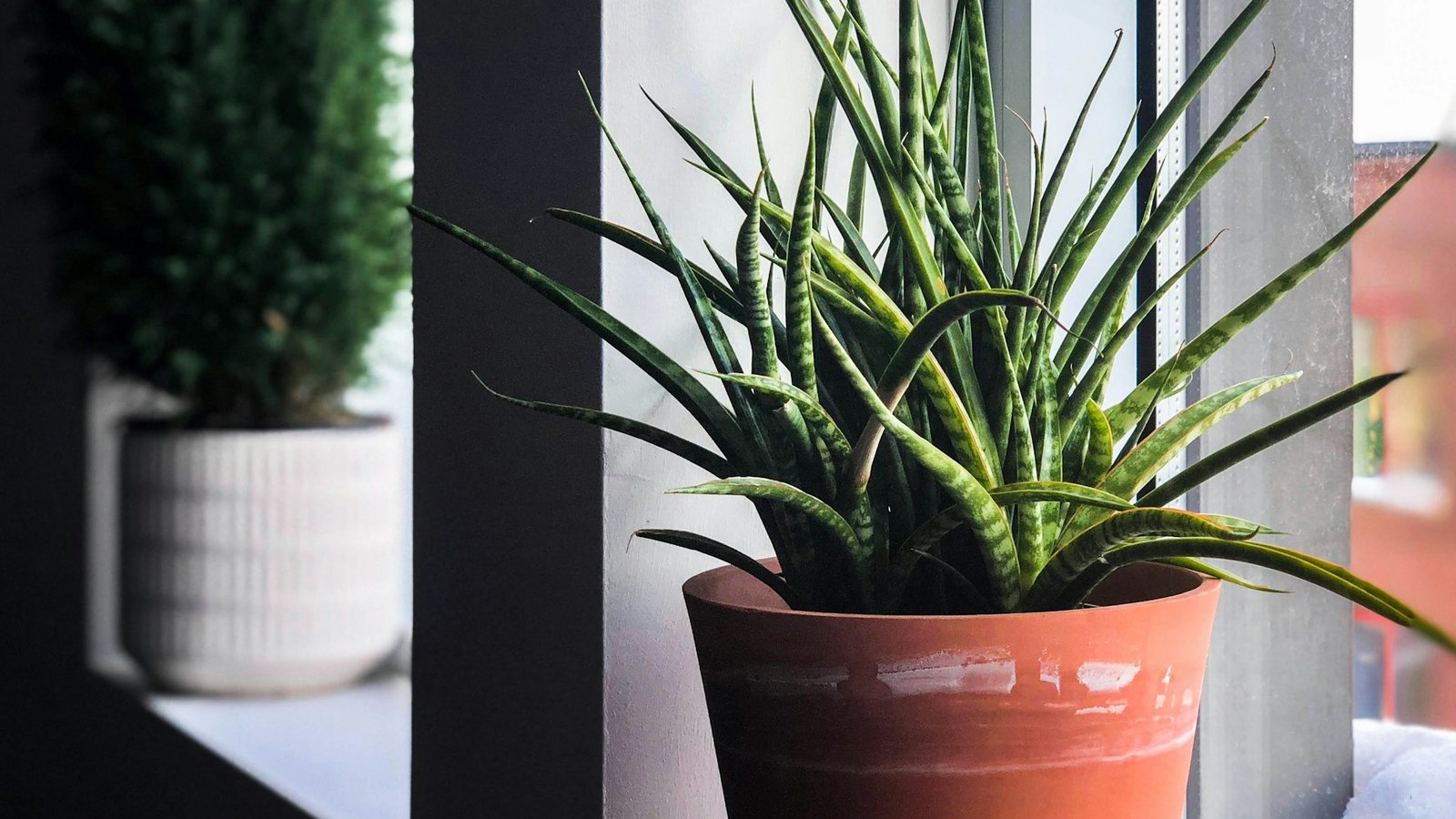
Long leafy plants carry leaves many times longer than they are wide, shaped like straps, swords, or narrow lances. Identifying them gets easy once you read a few clues. Check leaf shape, the stalk, the veins, and how thick the blade feels between your fingers.
This guide covers the long-leaved and thick-leaved species most often sold as houseplants or grown in warm gardens. Each entry lists the traits that separate it from look-alikes, with measurements from NC State Extension’s plant database.
Four clues for reading a long leaf
Leaf form is one of the main traits used to sort foliage plants grown for their leaves. Long leaves look similar at a glance, so compare the details below before you settle on a name:
- Shape: Linear leaves have parallel edges, lanceolate leaves taper at both ends, and sword-shaped leaves are stiff and pointed.
- Stalk: Some leaves attach directly at the base, while others rise on a long petiole.
- Veins: Many strap-leaved plants have parallel veins running tip to base, while ferns and dicots show a central midrib.
- Thickness: Thin blades bend easily, while fleshy or leathery ones feel stiff and hold their shape.
Growth habit adds a fifth check. Rosettes, fans, clumps, and single leaves rising from soil each point to different plant groups.
Long leafy plants with strap and sword leaves
These plants earn the “long leafy” label through length. Their leaves range from a foot to several feet long.
Spider plant (Chlorophytum comosum)
NC State Extension describes spider plant leaves as linear to lanceolate and grass-like, up to 12 to 18 inches long. They grow in a crowded rosette with no leaf stalks. Arching stems carrying small plantlets confirm the ID.
The species comes from tropical and southern Africa. Outdoors, it survives year-round only in USDA Hardiness Zones 9a through 11b.
Cast-iron plant (Aspidistra elatior)
Each leaf rises singly from the soil on a stalk 7 to 12 inches long. The whole leaf often reaches 20 to 24 inches, with a dark, leathery, glossy blade. No rosette forms, which separates it from spider plant at once.
Cast-iron plant is the hardiest plant in this guide. NC State rates it for Zones 7a through 11b in partial to full shade. That makes it a reliable choice among garden plants that like shade in the South.
New Zealand flax (Phormium tenax)
This is the giant of the group. NC State lists sword-shaped leaves 3 to 8 feet long and 3 to 6 inches wide, arranged in upright fans.
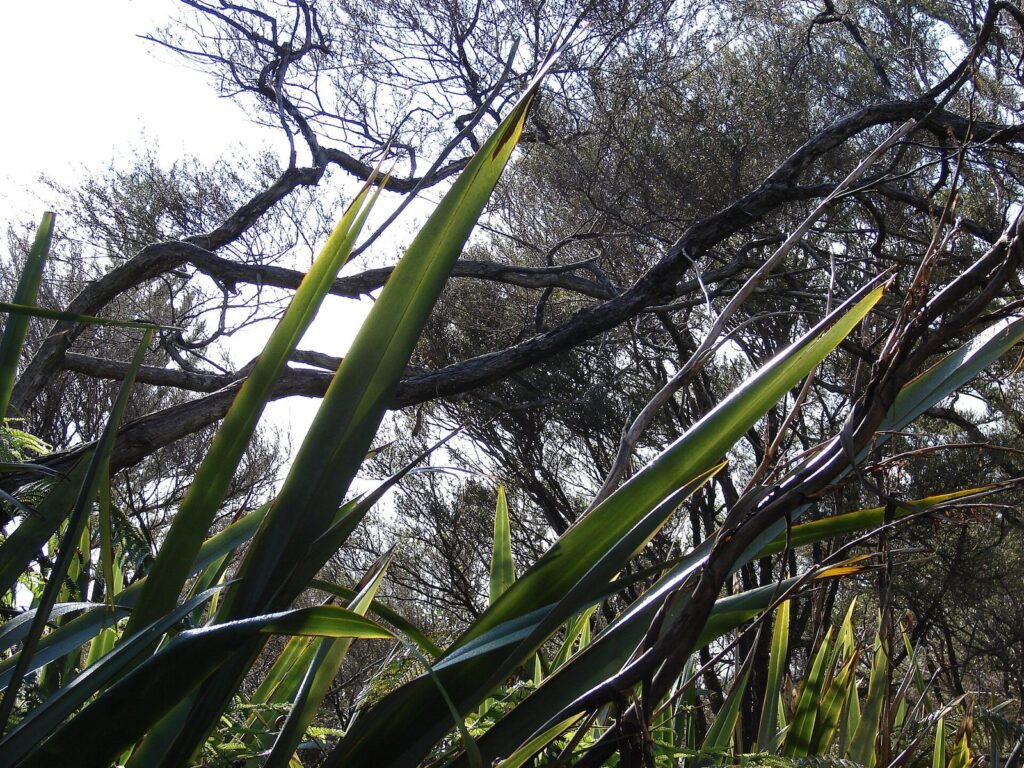
Phormium is a garden plant more than a houseplant. It is not reliably hardy below Zone 9a. Its variegated cultivars color best in partial shade.
Bird’s nest fern (Asplenium nidus)
Most ferns have divided fronds, which makes this one easy to spot. Its fronds are simple, strap-shaped, and wavy-edged, with a brown-black midrib down the center. In the wild they can reach 4 to 5 feet long and 8 inches wide, growing from a central “nest.”
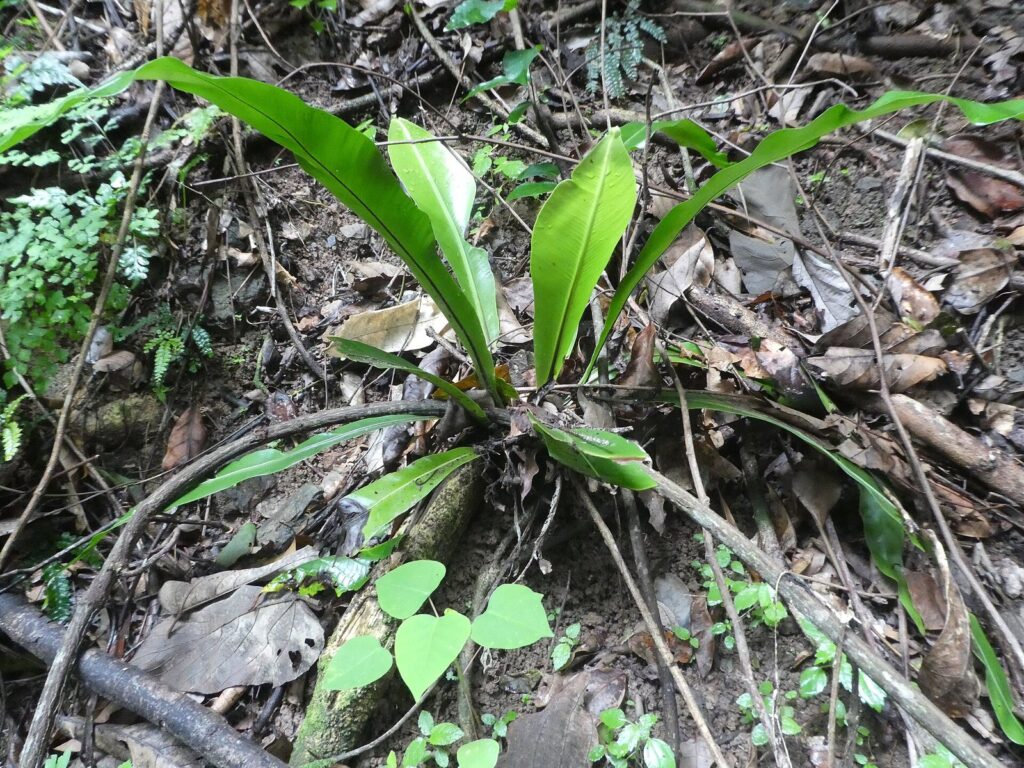
Indoors the fronds stay far smaller. Outdoors, bird’s nest fern needs Zones 11a through 12b, and too much sun turns it yellow.
Plants with thick green leaves
Thick leaves feel different the moment you touch them. They are fleshy, leathery, or waxy, and they hold water that thin leaves cannot.
Snake plant (Dracaena trifasciata)
Snake plant is both long and thick, which makes it the easiest plant in this guide to recognize. NC State describes stiff, upright, succulent leaves up to 4 feet long and 2 to 4 inches wide. Look for horizontal gray-green bands across the blade.
ZZ plant (Zamioculcas zamiifolia)
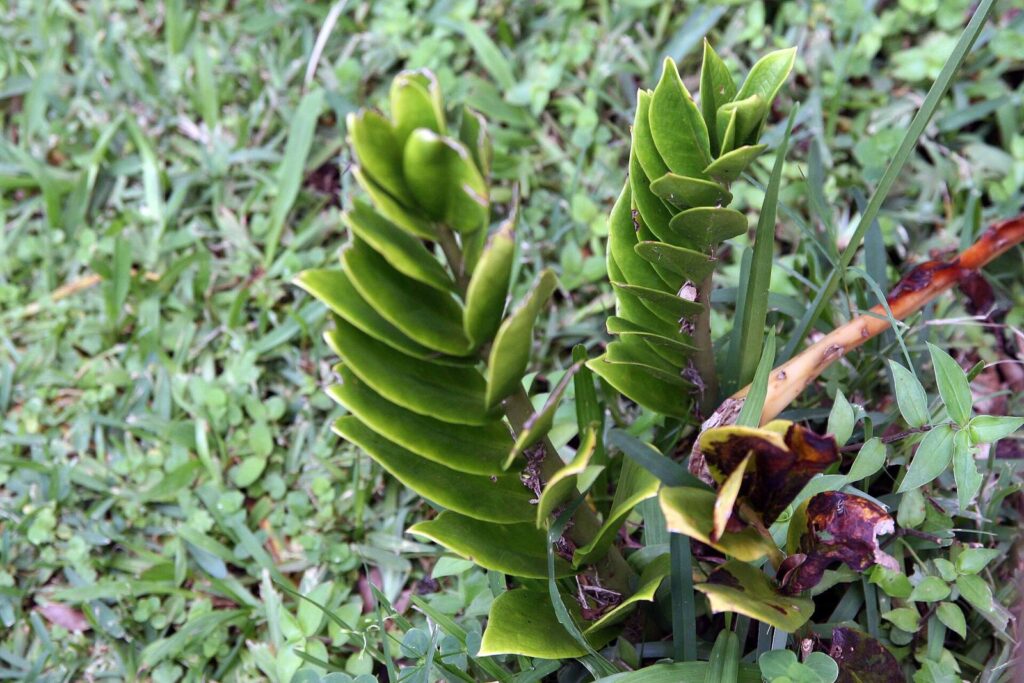
At first glance, each glossy stem looks like a row of separate leaves. In fact, each stem is one compound leaf, 2 to 4 feet long, with thick petioles and fleshy leaflets. NC State notes that the plant grows from thick rhizomes and stores water in its leaves.
Baby rubber plant (Peperomia obtusifolia)
The obovate, cupped blades run 2 to 6 inches long. NC State calls them “almost as thick as those of succulents.” The glossy, waxy surface helps separate it from small rubber trees.
Jade plant (Crassula ovata)
Jade has the thickest leaves on this list. They are oval, fleshy, and shiny, 1 to 3½ inches long, on brittle succulent stems. Unlike the shade-tolerant plants above, jade wants full sun or a sunny indoor spot with some afternoon shade.
| Plant | Leaf form | Typical leaf length | Texture | Outdoor USDA zones |
|---|---|---|---|---|
| Spider plant | Linear, no stalk, rosette | 12–18 in | Thin, flexible | 9a–11b |
| Cast-iron plant | Lanceolate, on long stalk | 20–24 in with stalk | Leathery | 7a–11b |
| New Zealand flax | Sword-shaped, in fans | 3–8 ft | Stiff, fibrous | 9a–11b |
| Bird’s nest fern | Simple strap frond, dark midrib | Up to 4–5 ft in the wild | Leathery, glossy | 11a–12b |
| Snake plant | Linear, upright, banded | Up to 4 ft | Succulent | 10a–12b |
| ZZ plant | Compound, glossy leaflets | 2–4 ft per leaf | Fleshy | 9a–10b |
| Baby rubber plant | Obovate, cupped | 2–6 in | Thick, waxy | 10a–12b |
| Jade plant | Oval, fleshy | 1–3½ in | Succulent | 11a–12b |
Why do some plants have thick green leaves?
Thick green leaves usually belong to plants from places with long dry spells or thin soil. The extra thickness is water-storage tissue, often sealed under a waxy surface that slows evaporation. A thick leaf works as a reservoir the plant draws on between rains.
Why it works
A ZZ plant can go weeks without water because its leaves and rhizomes hold reserves. NC State suggests watering about once a month in winter and up to twice a month in summer. Wait until the soil has dried out completely each time.
That storage also makes thick-leaved plants easy to overwater. Roots sitting in wet soil rot long before the leaves show thirst.
Caution
Soft, translucent, or mushy leaf bases on a snake plant, ZZ, or jade usually mean root rot from overwatering. Let the soil dry fully, and check the roots before you water again.
A quick identification key
Run through these questions in order. The first match is usually your plant:
- Arching, stalkless leaves in a rosette, with plantlets on long stems: spider plant.
- Single dark, leathery leaves rising straight from the soil on stalks: cast-iron plant.
- Stiff, upright, fleshy leaves with gray-green cross-bands: snake plant.
- Undivided fern fronds with a dark midrib, forming a nest: bird’s nest fern.
- Glossy leaflets lined up along thick stems: ZZ plant.
- Small cupped leaves, waxy and thick: baby rubber plant, or jade if the stems are woody.
- Huge sword leaves in fans in a garden bed: New Zealand flax.
Jade and baby rubber plant look alike from across a room. Yet jade wants full sun, and the peperomia burns in it. The leaf tells you which is which before the care label does.
Questions & observations