

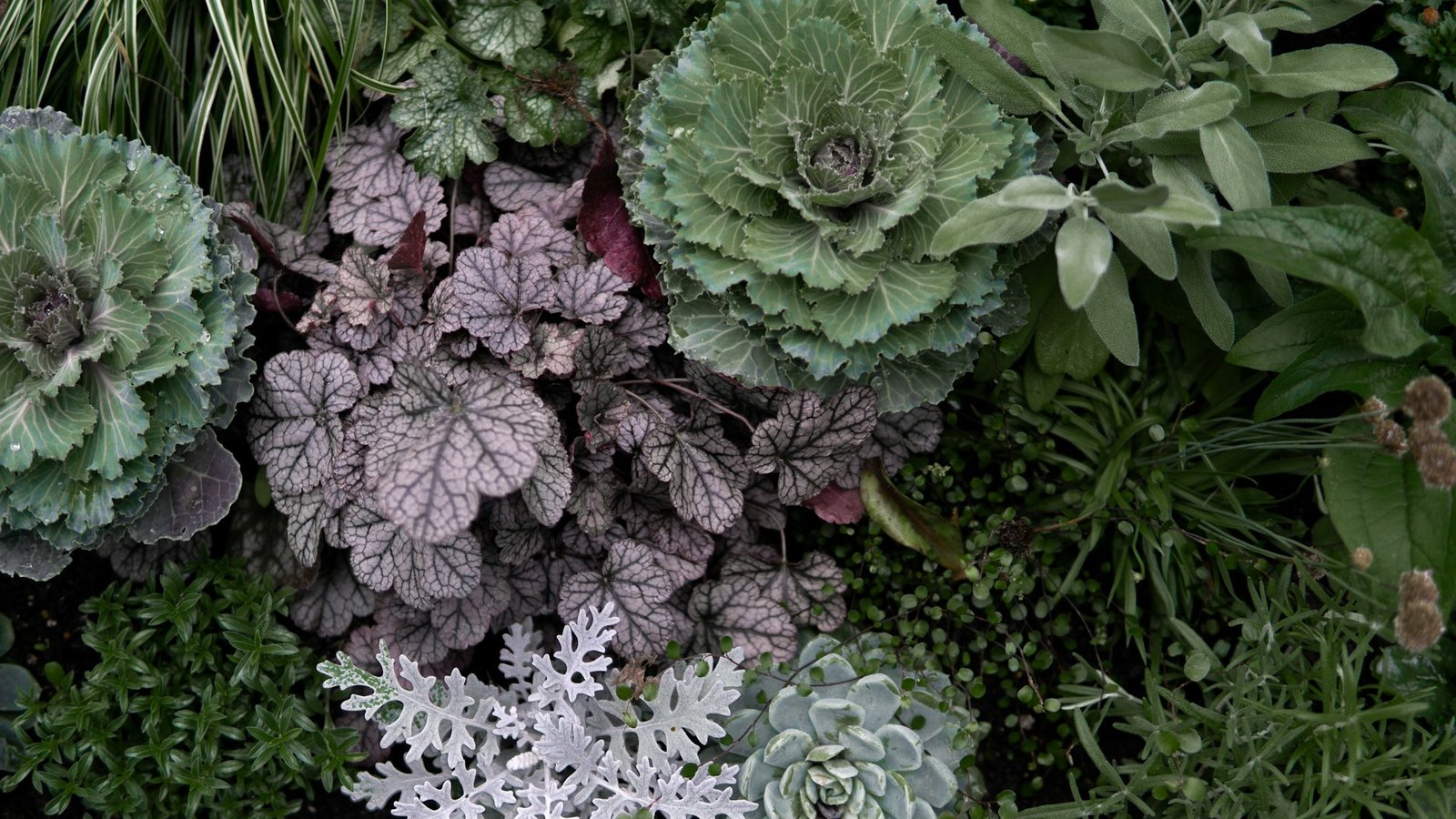
A foliage garden is planted for leaves first: their color, texture, and shape carry the design from spring to frost. Flowers can appear, but the bed has to look finished without them. That shifts the design work from bloom timing to contrast and placement.
The good news is that leaves stay put for months. Once you place colorful foliage well, the picture holds all season instead of changing every two weeks.
Three tools that shape a foliage garden
Every leafy bed is built from the same three properties. Texture, color, and form each change how a planting reads from a distance. Most beds that look busy or flat are getting one of them wrong.
If you are still sorting out which plants count as foliage plants, start there. The design rules below apply to any plant grown mainly for its leaves.
Texture sets the scale
Texture describes leaf size and surface: the fine fronds of a fern versus the broad, quilted leaf of a hosta. Designers treat it as a tool for changing how big a space feels. UF/IFAS Extension’s guide to landscape design puts it plainly.
Why it works
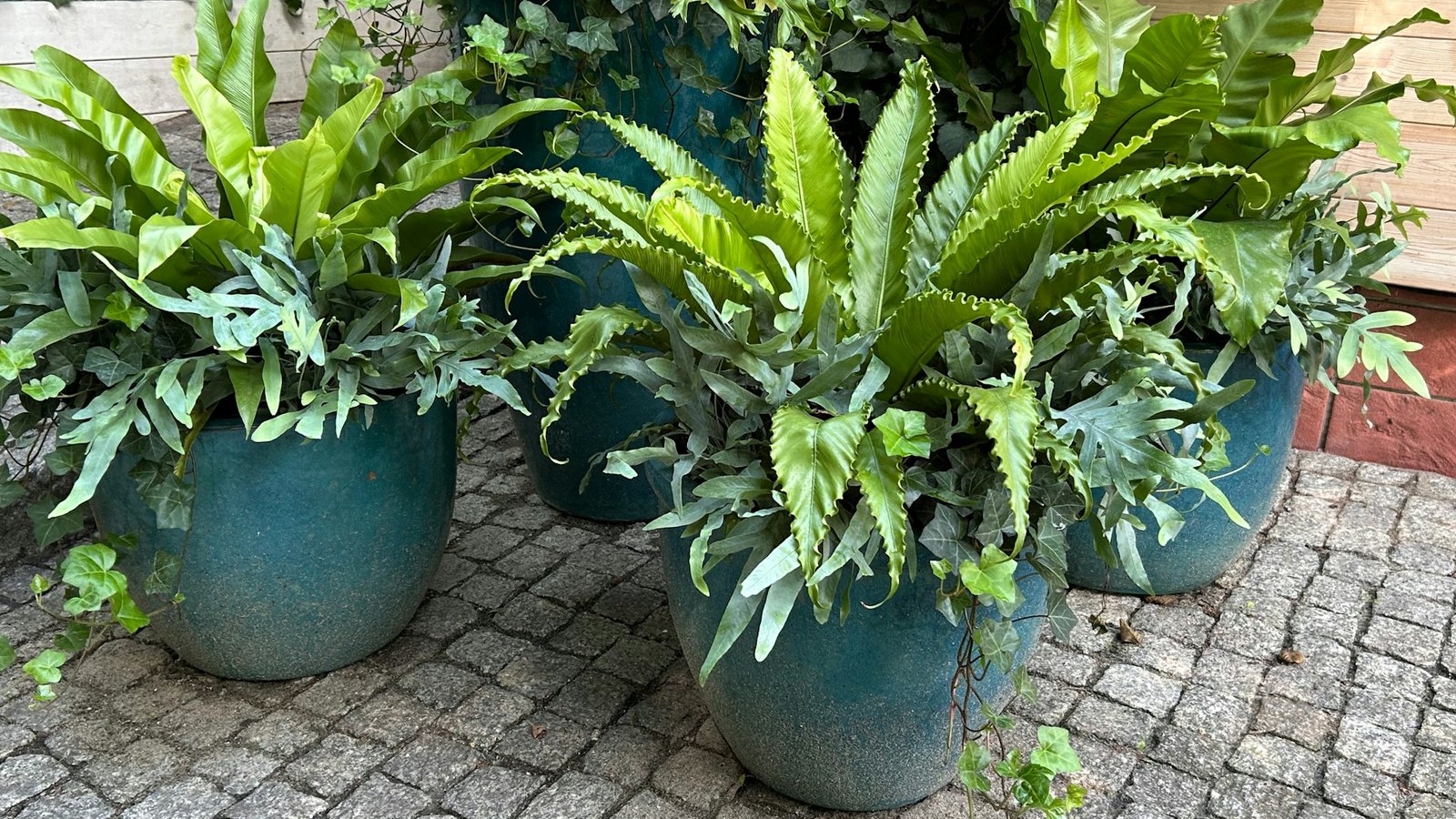
Fine texture exaggerates distance and makes a space feel larger. Coarse texture minimizes distance, so plants appear closer and the space feels enclosed. Put bold leaves near the viewer and fine leaves at the back to make a small yard read deeper.
Color changes how far away a bed feels
The same guide notes that warm colors advance and cool colors recede. Burgundy, copper, and orange leaves pull toward you. Blue-green, silver, and gray leaves drift back.
Chartreuse works differently. It reads as light, so a gold or lime plant in shade looks like a patch of sun.
Form gives the eye a place to rest
Form is the outline of the whole plant: upright, mounding, arching, or spreading. A bed of all mounds looks lumpy. One or two upright plants, such as an ornamental grass or a yucca, break that rhythm and give structure.
How do you layer a foliage garden?
Layer it in height bands, tallest at the back and lowest at the front, plus one vertical element. Each band should contrast with the one in front in texture or color. Four layers cover most home beds:
- Structure layer: shrubs or tall grasses that hold their shape all year.
- Middle layer: mounding perennials such as heucheras or hostas, usually 12 to 24 inches tall.
- Ground layer: low spreaders and edging plants that cover soil between the mounds.
- Vertical layer: vines on a fence, trellis, or wall behind the bed.
The bed in the photo below repeats three foliage colors in bands. Burgundy sits at the back, a variegated layer fills the middle, and solid green edges the front.
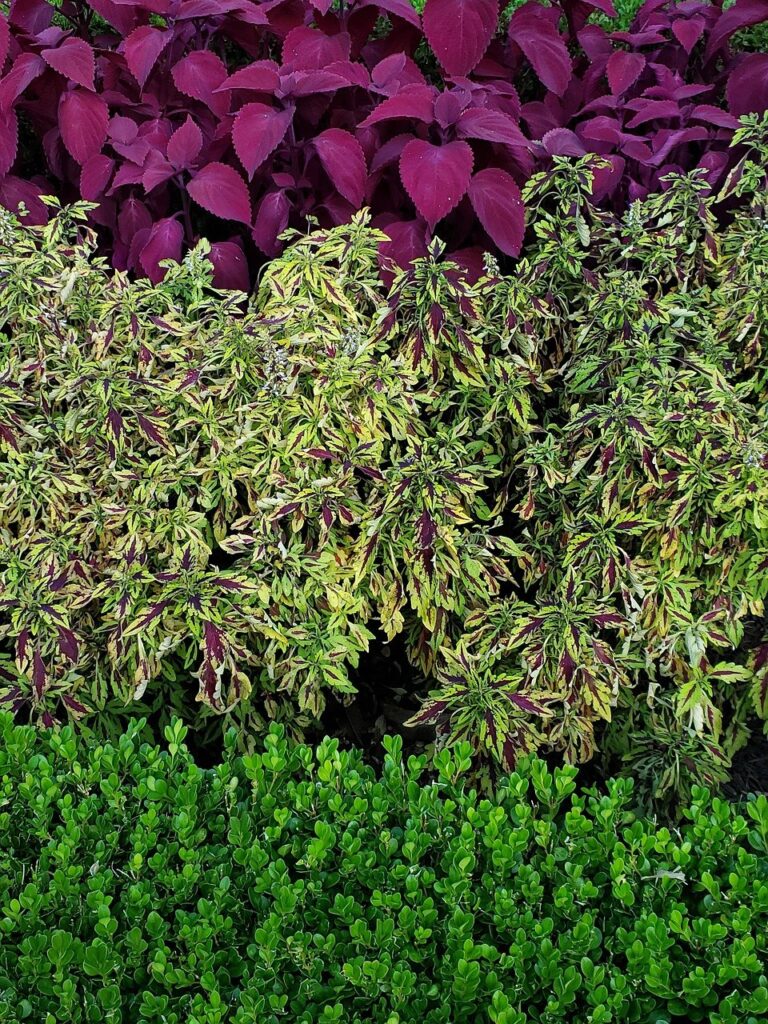
The middle layer usually carries the most color. Keep the structure layer calmer, often dark green or blue-green, so the colorful leafy plants in front have a backdrop. Our list of colorful foliage perennials sorts candidates for that middle layer by zone.
Where to put colorful leaves, by light
Leaf color depends on light, so placement is half the design. Gold and variegated leaves need enough light to hold their color, but many scorch in hot afternoon sun. Dark purple leaves can fade toward green in deep shade.
Japanese forest grass shows how fine the margin is. Missouri Botanical Garden reports that Hakonechloa macra ‘Aureola’ looks gold in part shade but turns lime green in deeper shade. Its foliage burns in full sun, and the cultivar is hardy in USDA Zones 5 to 9.
Variegated leaves carry less chlorophyll, which is why they want brighter spots than green plants. The science behind that is covered in our guide to what variegated means in plants.
| Garden spot | Light | Leaf colors that hold up | Example plant (USDA zones) |
|---|---|---|---|
| South-facing bed | Full sun, 6+ hours | Burgundy, blue-gray, silver | Festuca glauca (4 to 8) |
| East-facing bed | Morning sun, afternoon shade | Gold, chartreuse, variegated | Hakonechloa macra ‘Aureola’ (5 to 9) |
| Under deciduous trees | Dappled light | Silver, cream variegation | Athyrium niponicum var. pictum (3 to 8) |
| North wall | Open shade | Silver with green splotches | Pulmonaria ‘Berries and Cream’ (3 to 8) |
| Fence or arbor | Sun to part shade | Pink and white variegation | Actinidia kolomikta (4 to 8) |
The dappled-light row needs a note. Missouri Botanical Garden says the Japanese painted fern colors best in light shade, and its silvering peaks for several weeks in spring. Plan a second silver plant for late summer.
Beds with little or no direct sun need a different plant list. Our guide to garden plants that like shade sorts options by hours of light.
Colorful vines for the vertical layer
Vines add color above eye level, where few perennials reach. They also hide fences that would otherwise pull attention from the planting.
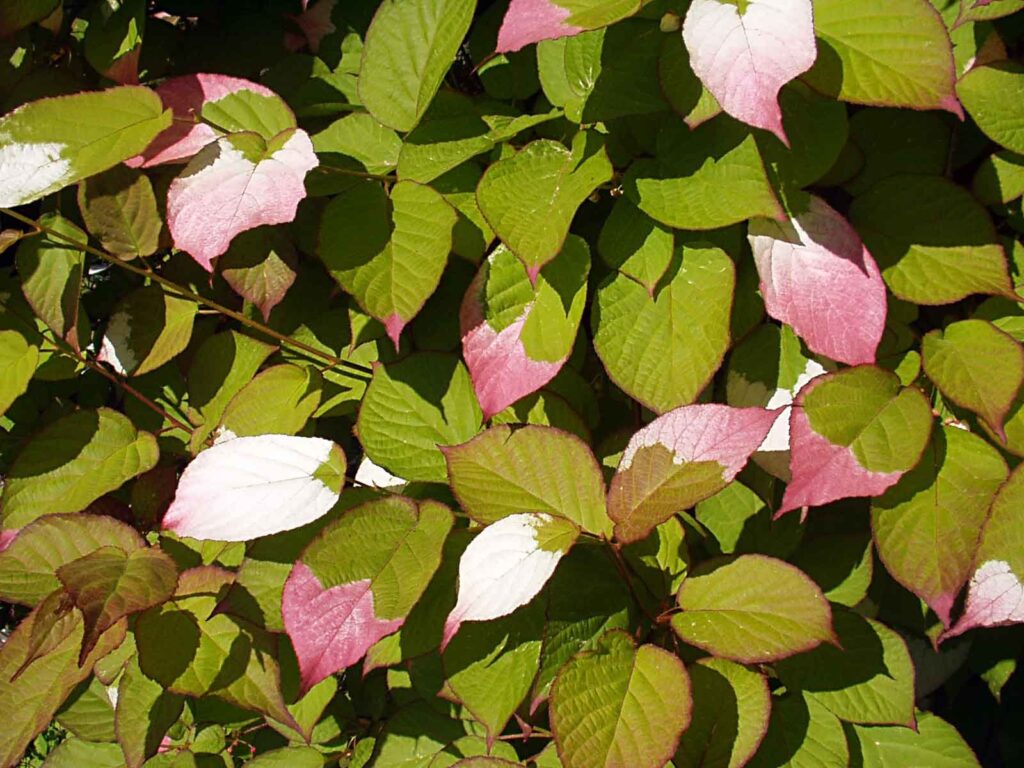
Actinidia kolomikta, the variegated kiwi vine, has heart-shaped leaves splashed with white and pink. Missouri Botanical Garden rates it for Zones 4 to 8 and notes that too much shade dulls the color. Male plants reportedly show better variegation than females.
Virginia creeper, Parthenocissus quinquefolia, works where the kiwi vine would struggle. It is native from eastern North America to Mexico, rated for Zones 3 to 9, and tolerates full shade. Its five-part leaves turn purple and crimson in fall, best in sun.
Caution
Virginia creeper clings by adhesive disks at its tendril tips and can reach 30 to 50 feet. Missouri Botanical Garden warns the holdfasts are hard to remove from wood or shingle walls. Keep it away from gutters, shutters, and wiring.
Repetition keeps the bed from looking random
The most common mistake is buying one of everything. Ten different plants with ten leaf colors read as clutter, even when each plant looks good alone.
Repetition must be used with care—too much repetition can create monotony, and too little can create confusion.
Gail Hansen, Basic Principles of Landscape Design, UF/IFAS Extension
The fix is to pick two or three leaf colors and repeat them across the bed. If burgundy appears at the left, echo it in the middle and on the right.
Field note
Before planting, set the pots out in their final spots and photograph the bed in black and white. If the photo looks flat, you need more contrast in texture or form, not more color.
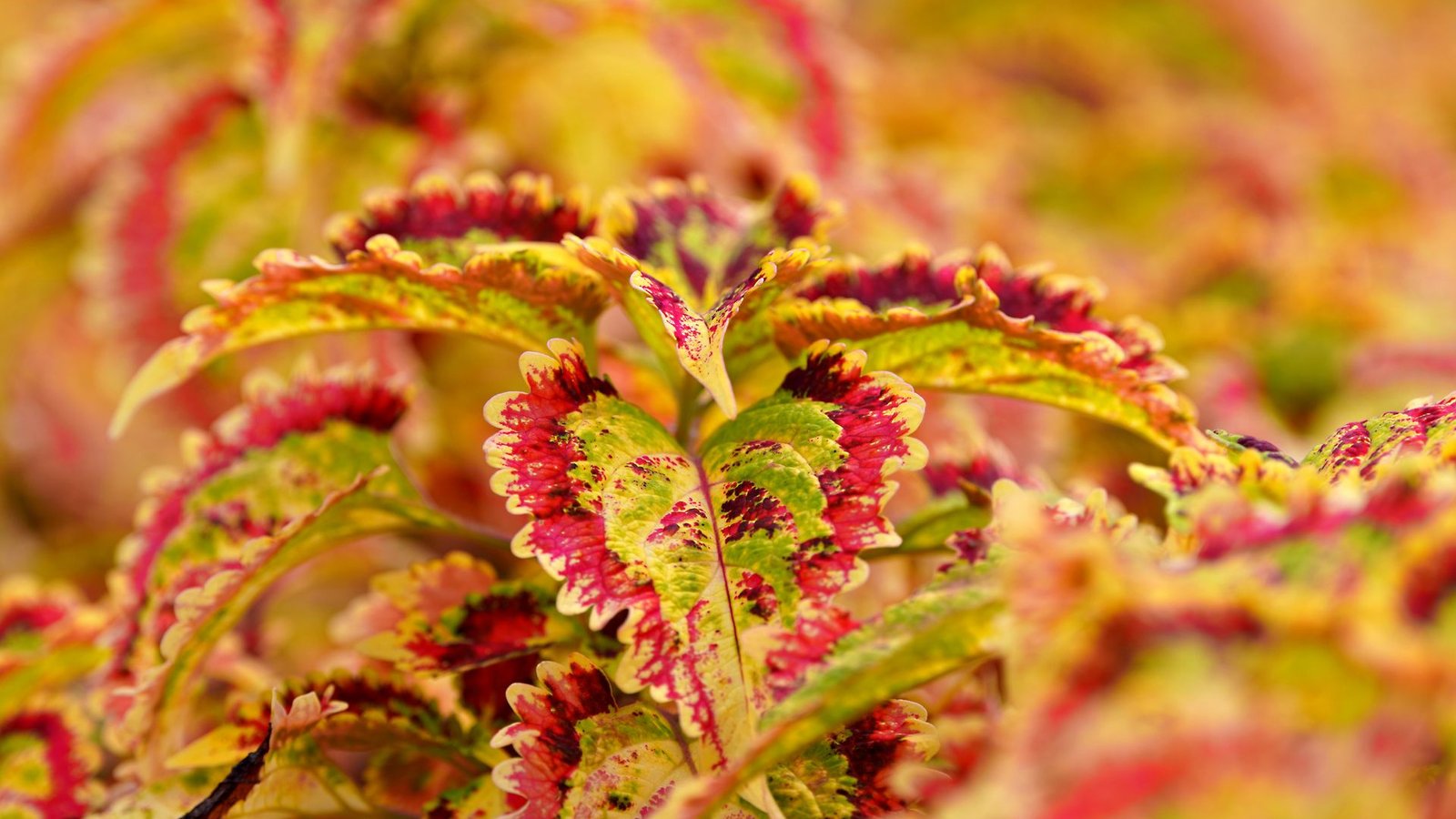
Plants with multicolored leaves earn their place when they repeat a color already in the bed. A coleus with burgundy veins can link a purple heuchera to a bronze grass. Chosen that way, every colorful leaf supports the rest of the planting.
Questions & observations