

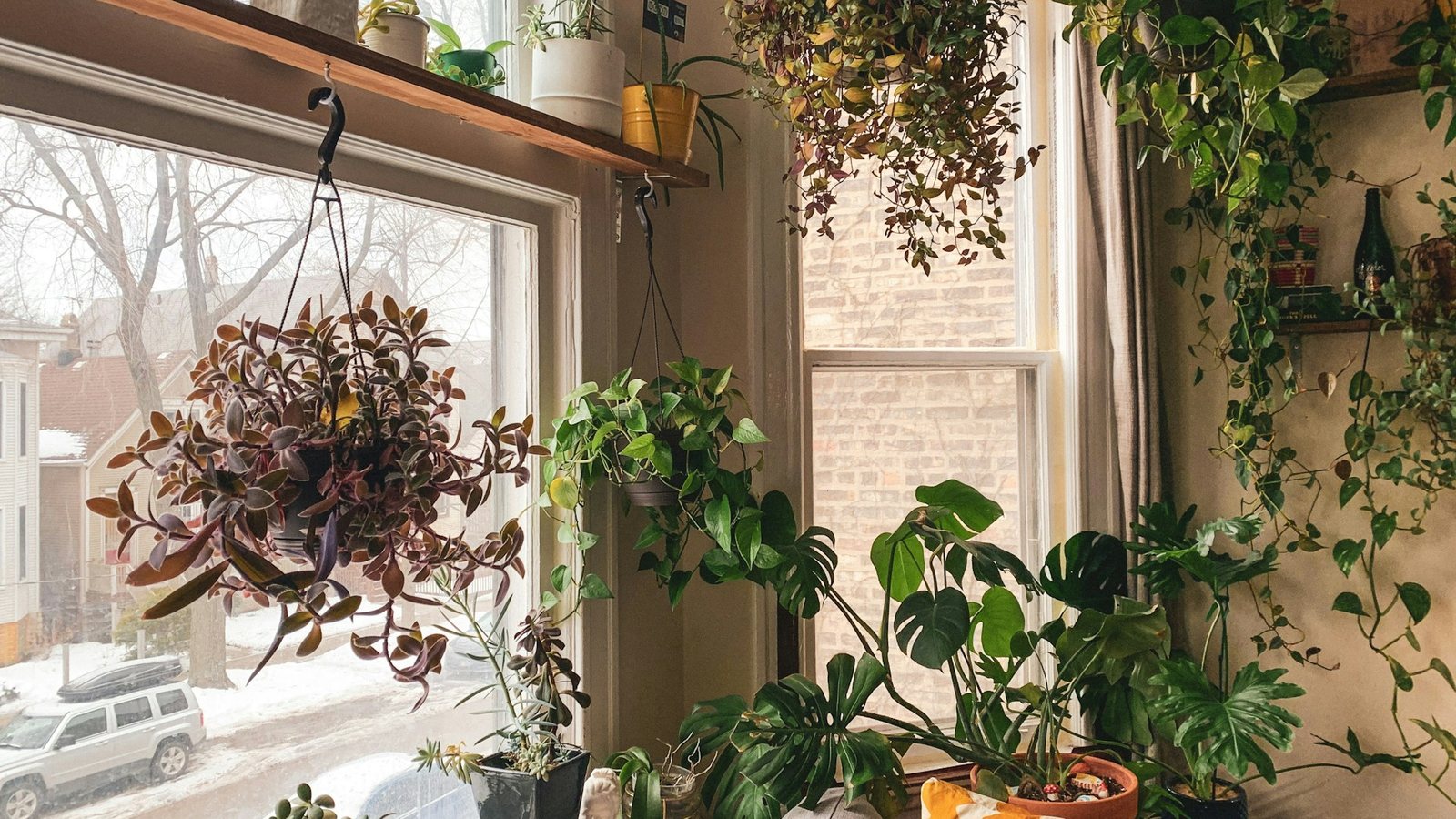
The easiest tropical houseplants for a first indoor jungle are pothos, heartleaf philodendron, ZZ plant, spider plant, parlor palm, and wax plant. Each tolerates ordinary indoor light and forgives a missed watering.
That combination matters more than looks when you are just beginning with tropical plants. A room full of fussy species fails within a season. A few forgiving ones fill out and give you room to experiment.
What makes a tropical houseplant beginner-friendly?
A beginner-friendly tropical houseplant survives medium or low indoor light and stores water in thick leaves or roots. It also tolerates average home humidity. Plants that need rainforest humidity belong on a second shopping list.
Light is the first filter. Most foliage plants sold for indoor use come from forest understories, so they handle bright, indirect light rather than direct sun.
Water storage is the second. A thick rhizome or succulent leaf buys you a week of grace when you forget the watering can.
Humidity is the third, and the one beginners underestimate. Thin-leaved species need humidity and temperature care for humid tropical plants that most first-time growers have not set up yet.
Tropical houseplants for a first indoor jungle
The six plants below come from NC State Extension’s Plant Toolbox, with pet ratings from the ASPCA. A seventh, the round-leaf calathea, is a step-up plant for once the basics feel easy.
| Plant | Native range | Pets (ASPCA) | Role in a jungle |
|---|---|---|---|
| Pothos (Epipremnum aureum) | Society Islands | Toxic to dogs and cats | Trailing |
| Heartleaf philodendron (Philodendron hederaceum) | Mexico to Bolivia and Brazil, Caribbean | Toxic to dogs, cats, horses | Trailing or climbing |
| ZZ plant (Zamioculcas zamiifolia) | Kenya to KwaZulu-Natal | Toxic (calcium oxalate, NC State) | Mid-height |
| Spider plant (Chlorophytum comosum) | Tropical West Africa to South Africa | Non-toxic to dogs and cats | Hanging |
| Parlor palm (Chamaedorea elegans) | Southern Mexico, northern Central America | Non-toxic to dogs and cats | Tall |
| Wax plant (Hoya carnosa) | Southeast Asia, Japan, Taiwan | Non-toxic to dogs and cats | Trailing or climbing |
Pothos
Pothos is the plant most indoor jungles start with. NC State Extension notes that its vines climb by aerial roots and can grow as long as 40 feet. Pots keep it far smaller.
“Pothos is very easy to grow. It prefers bright, indirect light and survives for long periods in low light.”
NC State Extension
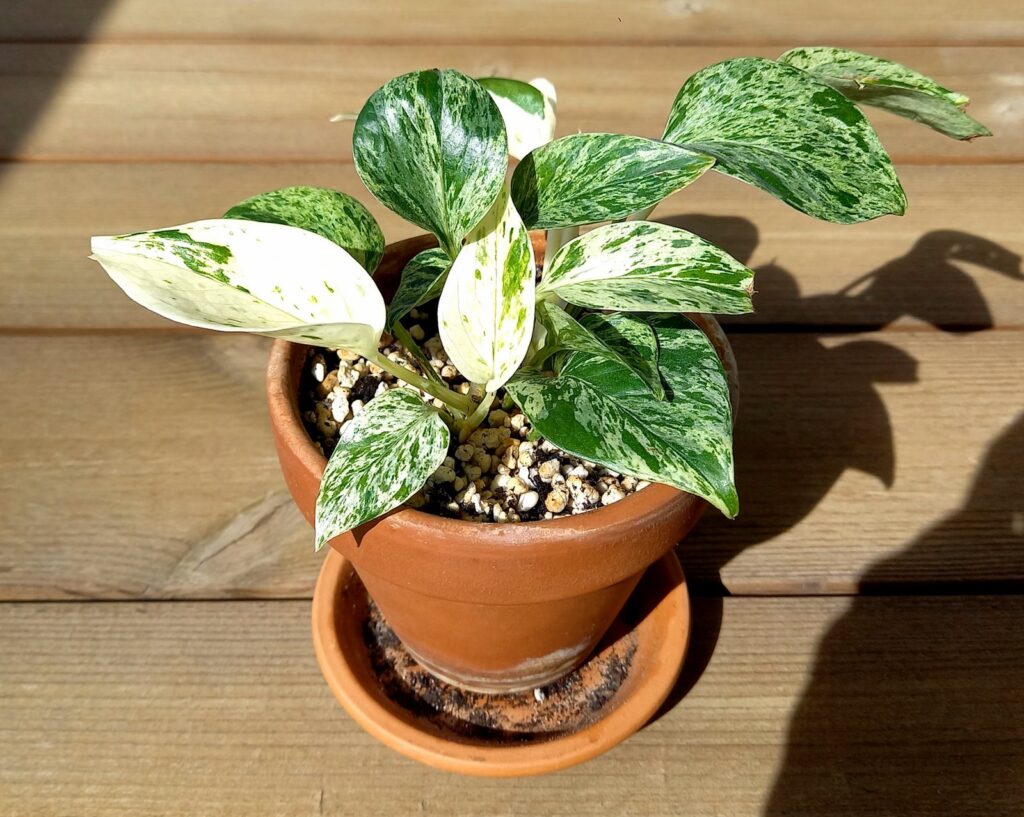
Variegated forms such as ‘Marble Queen’ usually need brighter light to keep their white patterning. The ASPCA lists pothos as toxic to dogs and cats because of insoluble calcium oxalates.
Heartleaf philodendron
Heartleaf philodendron looks similar to pothos but has softer, thinner, heart-shaped leaves. NC State Extension rates it for USDA Zones 11a to 12b, so it lives indoors almost everywhere in the US.
It trails from a shelf or climbs a moss pole, and NC State lists it for partial to deep shade. Like pothos, it is toxic to pets.
ZZ plant
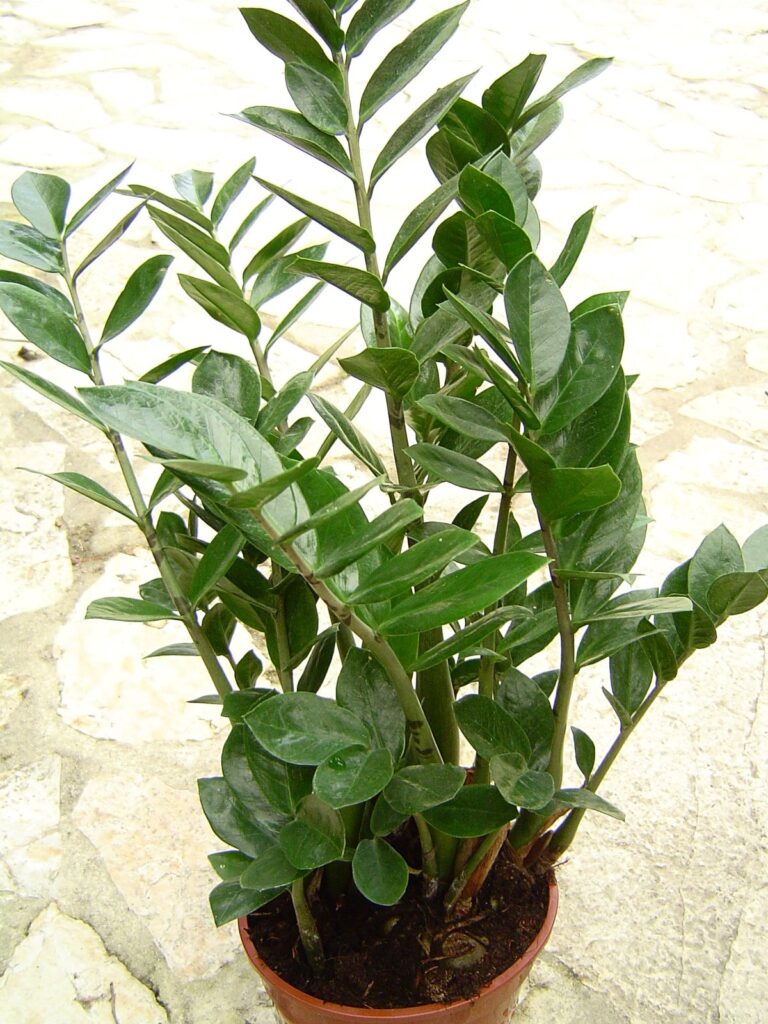
The ZZ plant is the closest thing to a houseplant that runs itself. NC State Extension describes fleshy rhizomes and glossy leaves that store water and make it highly drought tolerant.
NC State suggests watering about once a month in winter and twice a month in summer. Water only when the soil has dried completely. Growth is slow, eventually reaching 2 to 4 feet.
Why it works
A ZZ plant’s leaves rise from a thick underground rhizome that holds water between waterings. That stored reserve is why it tolerates neglect that would collapse a thin-leaved calathea. The same reserve is also why overwatering rots it fast.
Spider plant
The spider plant is the safest choice for homes with cats. The ASPCA lists it as non-toxic to dogs and cats, and NC State Extension rates it for USDA Zones 9a to 11b.
It produces hanging plantlets on long stems, which makes it a natural hanging-basket plant. NC State advises avoiding chlorinated tap water, which can cause brown leaf tips.
Parlor palm
A parlor palm gives an indoor jungle its tall layer without needing a sunroom, and a young one even fits a tall glass terrarium. NC State Extension rates it for USDA Zones 10a to 12b and recommends a spot near a north- or east-facing window.
Growers often pot several seedlings together for a fuller look. The ASPCA lists it as non-toxic to dogs and cats.
Wax plant
The wax plant is a slow climber with thick, succulent leaves and fragrant clusters of star-shaped flowers. NC State Extension notes that most plants do not flower until they are two or three years old.
Let the mix dry between waterings, since soil that stays too wet or too dry causes leaf drop. The ASPCA lists the wax plant as non-toxic to dogs and cats.
A step up: round-leaf calathea
Goeppertia orbifolia, still sold as Calathea orbifolia, has broad silver-striped leaves and comes from the rainforests of eastern Brazil. It is non-toxic to pets, yet it browns quickly in dry air.
Treat it as your second-year plant. Add it once a humidifier and a hygrometer are already part of your routine.
Layering an indoor jungle
An indoor jungle looks full when plants occupy three heights. Put a parlor palm or large ZZ on the floor, mid-height plants on stands and shelves, and trailers overhead.
Field note
Group plants by watering rhythm rather than by look. Keep the ZZ plant and wax plant together, away from the spider plant and calathea. Each cluster then needs only one watering rhythm.
Use this order when you buy:
- Start with one floor plant for height, such as a parlor palm.
- Add one or two mid-height plants, starting with a ZZ plant for low light.
- Hang a pothos, heartleaf philodendron, or spider plant from a ceiling hook or shelf.
- Fill gaps with smaller pots grouped in threes, which also raises local humidity.
- Add a calathea or other humidity-lover last, once the room’s conditions are steady.
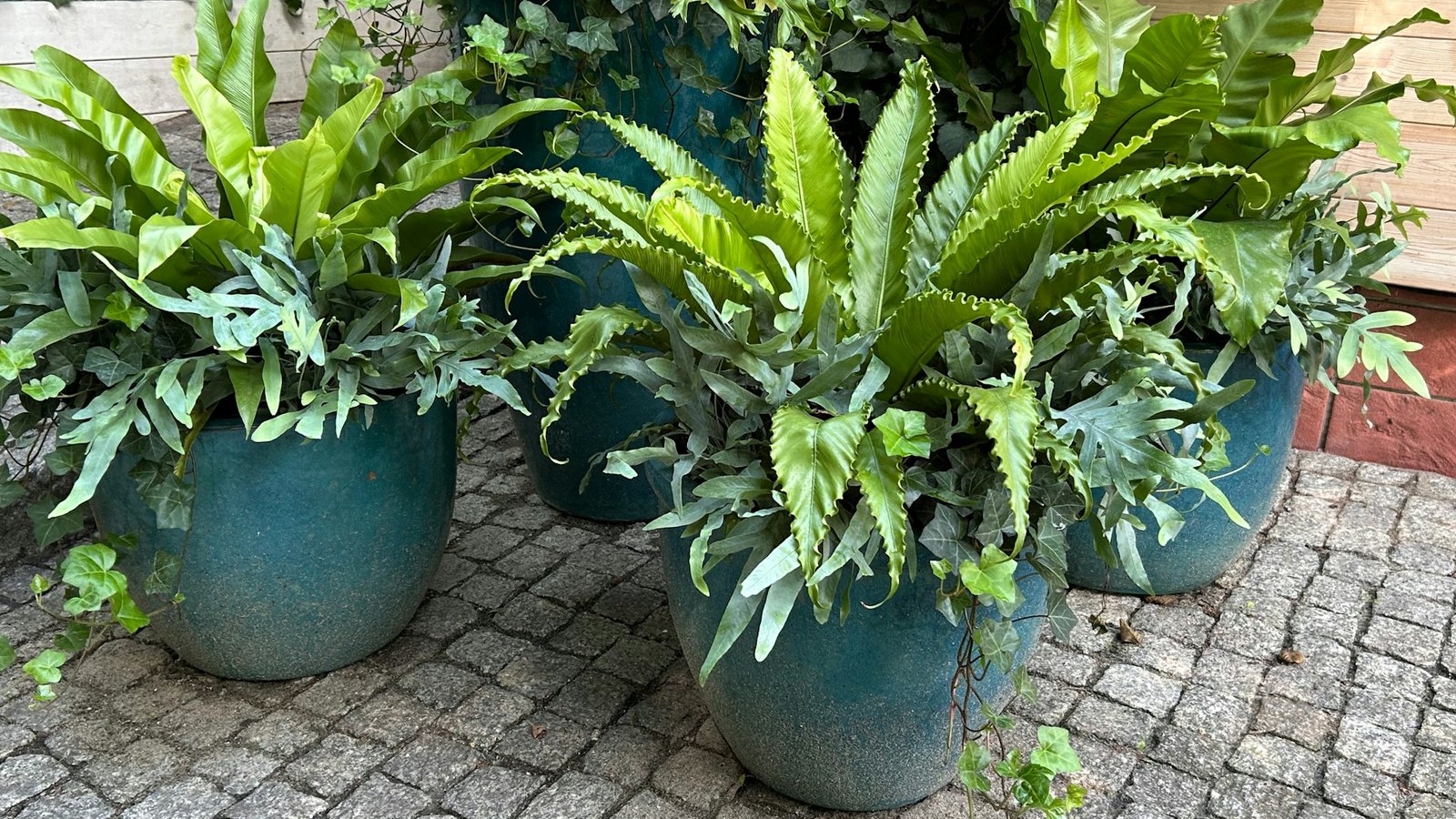
Container choice shapes the look as much as the plants do. The shade plant and container combinations that work on a porch follow the same height-and-trail logic indoors.
Caution
Pothos, heartleaf philodendron, and ZZ plant all contain calcium oxalate crystals. If you have a cat that chews leaves, build the jungle around spider plants, parlor palms, wax plants, and calatheas instead.
Starting small with an indoor tropical house plant
One healthy plant teaches more than ten struggling ones. Buy a pothos or ZZ plant first and keep it alive through one winter. Add plants as you learn your home’s light.
Within a year, the plants that thrive will show you which corners of your home behave like a forest floor. Those corners decide what your jungle can become.
Questions & observations