
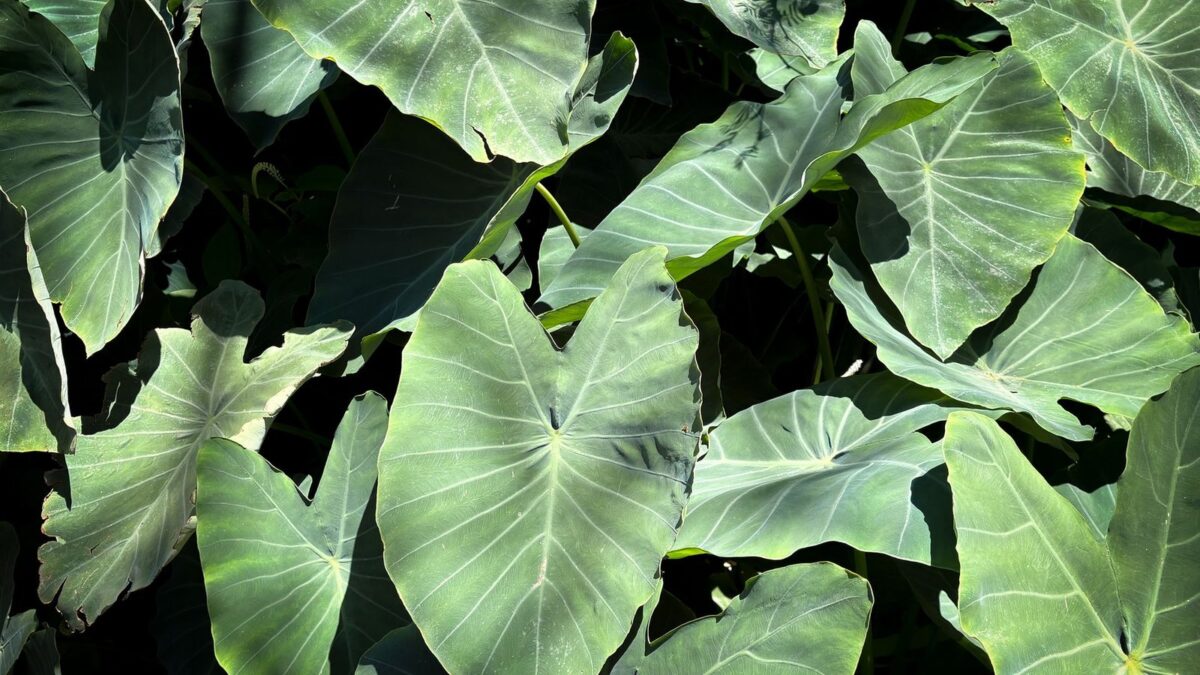
An elephant ear plant is a big-leaved aroid from one of three genera: Colocasia, Alocasia, or Xanthosoma. They look alike on a garden-center bench. They differ in leaf angle, cold hardiness, and how much wet soil they tolerate.
All three belong to the arum family, Araceae, and are grown for their leaves rather than their flowers. That puts them among foliage plants grown for leaf shape and size. Leaf structure is also the easiest way to sort them.
Elephant ear plant types at a glance
The label “elephant ear” carries little botanical meaning. The ASPCA even files the name under two different plants: one entry covers Colocasia esculenta, another covers Caladium. Read the botanical name on the tag before you decide where to plant.
| Genus | Leaf habit | Petiole attachment | Native range | USDA zones |
|---|---|---|---|---|
| Colocasia (taro) | Points down | Inside the blade (peltate) | India to southern China and Sumatra (C. esculenta) | 8–10 (Missouri Botanical Garden); 8a–11b (NC State) |
| Alocasia | Points up | Varies by species and leaf age | Tropical and subtropical Asia, eastern Australia | 10a–12b (NC State); 8A–11 (UF/IFAS) |
| Xanthosoma | Points down | At the base of the blade | Tropical America, exact range unclear | No extension rating found |
The zone ratings disagree between sources, so plan around the more cautious number where you live. Treat a borderline zone as a reason to mulch heavily or lift the corms in fall.
How do you tell Alocasia from Colocasia?
Look first at which way the leaf tip points. Clemson Cooperative Extension puts it simply: colocasia leaves point downward and alocasia leaves point upward.
Then flip a leaf over. On colocasia the petiole meets the blade a short way in from the notch, the arrangement botanists call peltate. Missouri Botanical Garden describes its leaves as “downward-pointing, peltate” and up to 2 feet long.
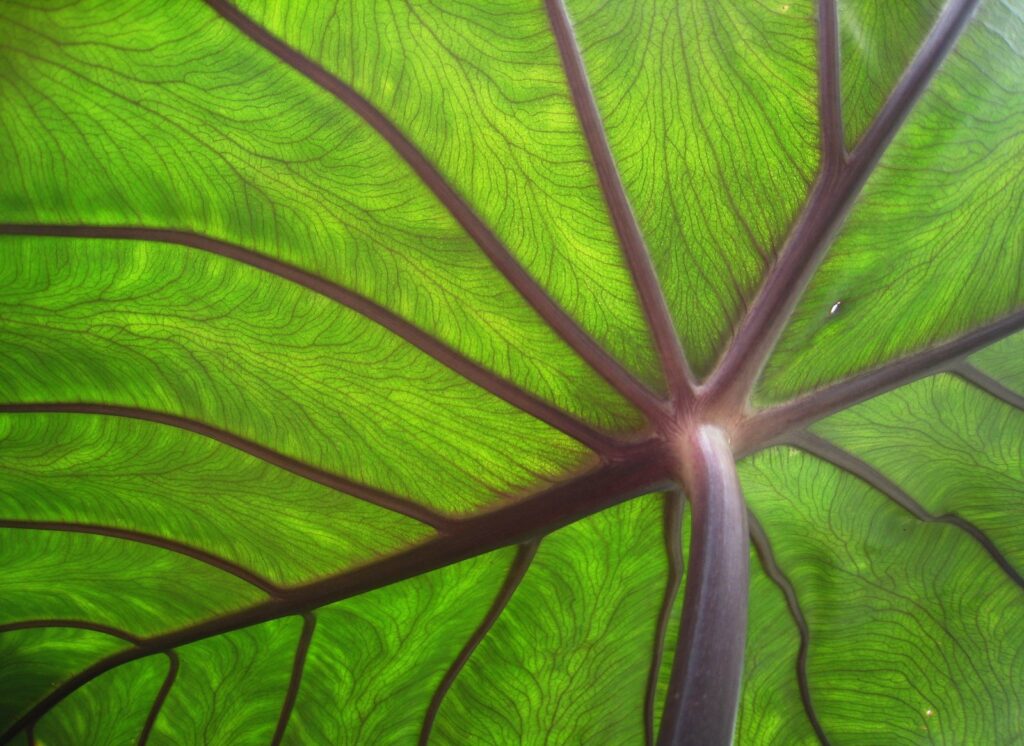
Soil tolerance is the practical difference. Clemson notes that colocasias tolerate wetter soils than alocasias, so a plant thriving in a boggy bed is almost certainly a colocasia. Named cultivars do not always follow the leaf-angle rule, so check more than one trait.
Colocasia, the taro elephant ear
Colocasia esculenta is the classic garden elephant ear and the same species grown as the root crop taro. The Plant Data card on this page describes this species, since it is the plant most buyers bring home under the name.
Plants of the World Online gives its native range as India to southern China and Sumatra. Missouri Botanical Garden rates it for USDA Zones 8 to 10. It grows 3 to 6 feet tall and wide in full sun to part shade.
Water and soil
Colocasia handles wet ground better than its look-alikes. NC State Extension says the plant “should not be allowed to dry out.” Missouri Botanical Garden rates its water needs as medium to wet, so a pond edge or rain garden suits it.
Caution
The UF/IFAS Plant Directory lists wild taro as a Category 1 invasive in Florida. The USDA brought it in around 1910 as a potato substitute, and it now lines streams and ditches. Keep it away from waterways in Zone 9 and warmer.
Alocasia, the upright elephant ear
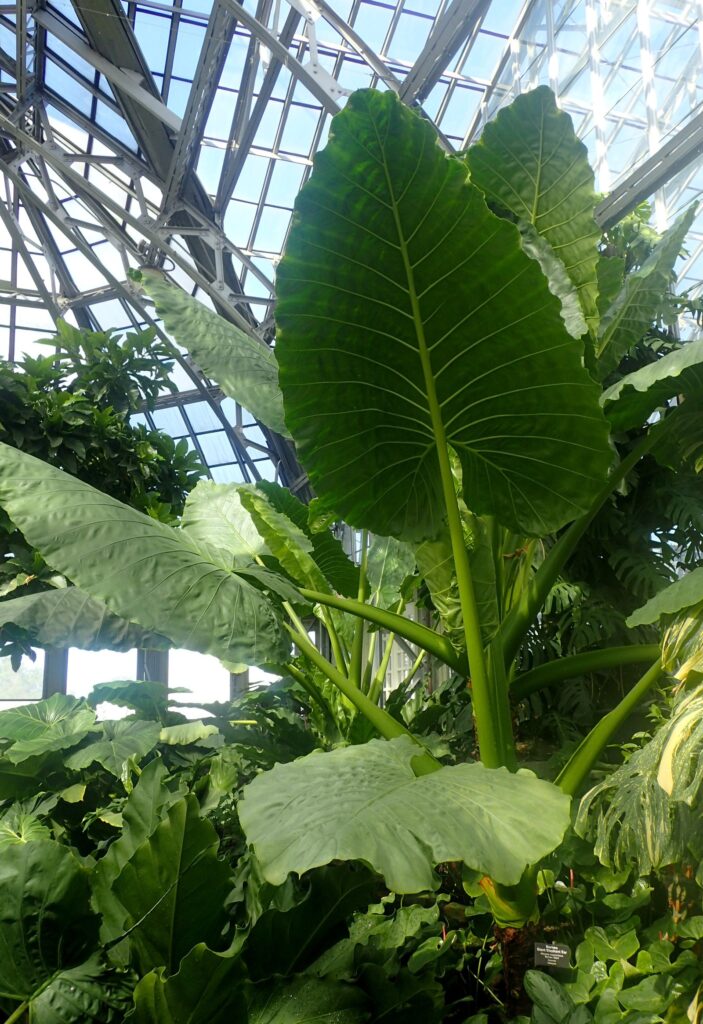
NC State Extension describes Alocasia as a genus of about 80 tuberous perennials. They come from tropical and subtropical Asia and eastern Australia. UF/IFAS counts over 91 species, so treat any species total as approximate.
NC State notes that plants in tropical areas can reach 10 feet, as the giant taro Alocasia macrorrhizos does. Houseplant alocasias stay much smaller, and they behave more like other tall, long-leaved foliage plants on a bright floor spot.
Alocasia indoors
The Royal Horticultural Society recommends bright, indirect light and warns that strong sun scorches the foliage. It also sets a firm floor: keep alocasias above 10°C (50°F) at all times.
- Water from spring to autumn once the top 5 cm (2 in) of compost has dried.
- Cut watering to a minimum in winter.
- Expect a few leaves to drop as the plant slows down in cooler months.
- Use a heavy terracotta pot for tall plants so they do not tip as they lean toward the window.
Why it works
Alocasias are tuberous, so the plant keeps its reserves below ground. UF/IFAS notes that frost kills the foliage, yet plants in Zone 8B and south regrow from the base when warm weather returns. The same buried tuber is why NC State warns that overwatering leads to root rot.
Xanthosoma, the overlooked third genus
Xanthosoma sagittifolium, also called tannia, malanga, or yautia, is grown as a food crop across the tropics. The UF/IFAS Plant Directory says its native distribution is unclear but probably lies in northern South America.
Its arrow-shaped leaves can reach 6 feet. UF/IFAS says the petiole is “attached directly at the base of leaf.” That alone separates it from the peltate colocasia leaf.
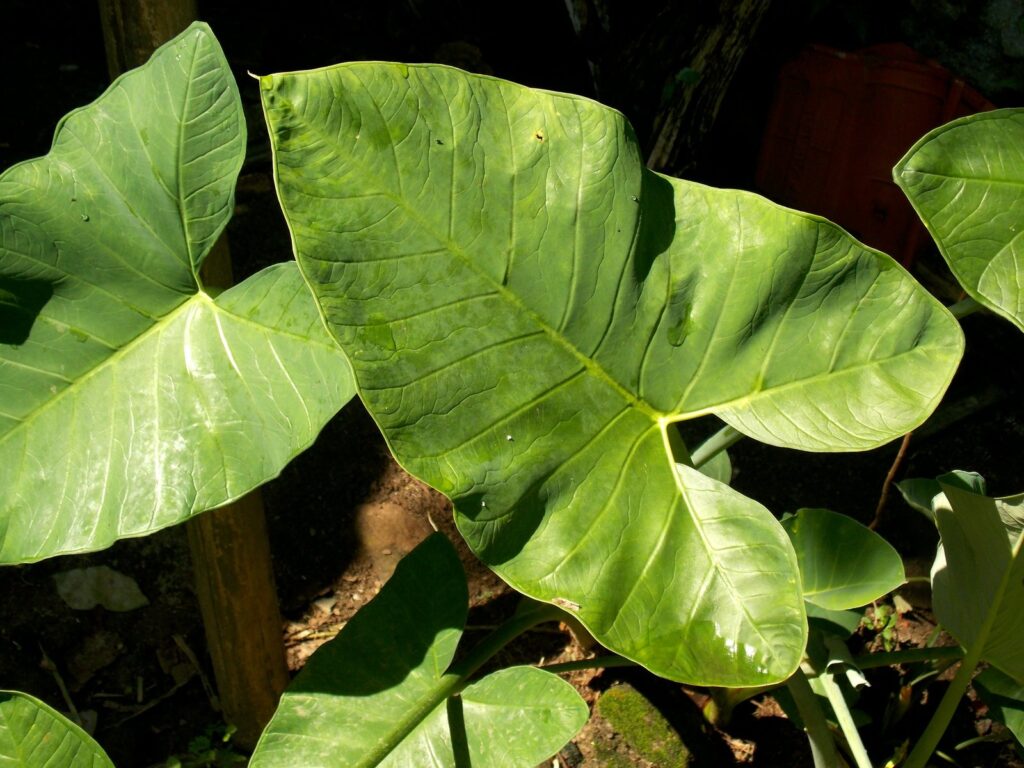
Florida lists it as a Category 2 invasive, a step below wild taro. A plant sold as “elephant ear” with a downturned arrowhead leaf and no peltate stalk may well be a xanthosoma.
Light, winter care, and toxicity across the genera
Clemson recommends a filtered sun or high shade spot for elephant ears in the garden. It adds that green-leaved cultivars tolerate more sun than dark-leaved ones.
Overwintering corms
Clemson rates elephant ears root hardy in USDA Zones 8 to 12 with a good fall mulch. In colder zones, lift the corms after the first frost and store them cool. Clemson’s target is 45 to 55°F, and the corms must not freeze.
Indoor plants face a different winter problem: dry heated air. Elephant ears respond to the same humidity and temperature routine as humid tropical plants, so check that guide rather than misting.
Pets and children
Colocasia and alocasia both contain insoluble calcium oxalate crystals. The ASPCA lists Colocasia esculenta as toxic to dogs, cats, and horses, and gives the same rating for Alocasia.
Oral irritation, pain and swelling of mouth, tongue and lips, excessive drooling, vomiting (not horses), difficulty swallowing.
ASPCA
NC State adds that colocasia and alocasia corms are edible only when thoroughly cooked. A chewed raw leaf can cause the burning mouth the ASPCA describes. Keep pots away from pets that graze on plants.
If you are buying one elephant ear this year, match the genus to your site first. A wet, sunny bed in Zone 8 points to colocasia, while a bright living room points to a compact alocasia.
Questions & observations